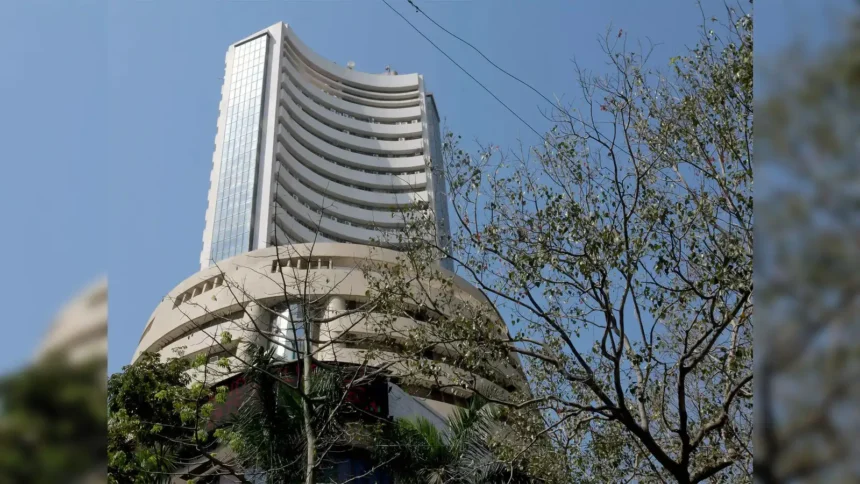
Indian stock markets saw a sharp sell off as Sensex and Nifty plunged deep into the red, signalling a clear risk off mood on Dalal Street. Heavy losses across frontline indices were driven by weak global cues, tariff related uncertainty and broad based profit booking.
The Indian equity market witnessed one of its weakest sessions in recent weeks as benchmark indices cracked under sustained selling pressure. The Sensex fell sharply while the Nifty slipped below key psychological levels, reflecting rising nervousness among investors amid global macro stress and trade policy jitters.
Global cues trigger broad based selling
The primary trigger for the sell off came from overseas markets. Asian equities opened weak following volatility in US futures and cautious sentiment in European markets. Renewed concerns around global trade tariffs, particularly involving the US and major trading partners, dented risk appetite.
Investors are increasingly worried that fresh tariff actions could slow global growth, disrupt supply chains and impact corporate margins. Indian markets, which have seen strong inflows in recent months, were vulnerable to profit booking as foreign institutional investors turned cautious.
Media and pharma stocks lead the decline
Sectorally, media and pharma stocks emerged as the worst performers. Media stocks corrected sharply after recent rallies, with investors locking in gains amid concerns around advertising demand and high valuations. Several mid cap media names saw steep intraday cuts.
Pharma stocks also came under pressure due to uncertainty around pricing regulations, export demand and currency volatility. With a large share of revenues linked to global markets, pharma counters tend to react quickly to global risk sentiment, which remained negative throughout the session.
Financials and IT fail to provide support
Heavyweight financial stocks offered little support to the benchmarks. Private banks and non banking financial companies saw steady selling as bond yields remained firm and expectations around near term rate cuts softened. PSU banks also traded weak, mirroring the broader risk off mood.
Information technology stocks were mixed to negative. While the rupee showed some weakness, which typically supports IT exporters, concerns around global tech spending and US economic uncertainty capped any upside in the sector.
Volatility rises as investors turn defensive
Market volatility spiked as selling pressure intensified through the day. The India VIX moved higher, indicating growing fear among traders. Defensive sectors like FMCG and select utilities showed relative resilience but were not immune to the broader market weakness.
Market participants shifted focus towards capital preservation, with higher cash levels and selective exposure. Short term traders reduced leverage, while long term investors adopted a wait and watch approach amid unclear global signals.
What this means for the near term
The sharp plunge does not necessarily indicate a trend reversal but highlights how sensitive Indian markets remain to global developments. With tariff related headlines, US economic data and central bank commentary lined up, volatility is likely to persist in the near term.
Investors are expected to track foreign fund flows closely, along with movement in bond yields and currency markets. Stock specific action may dominate, especially as earnings season approaches and companies begin reporting quarterly results.
Takeaways
Sensex and Nifty fell sharply as global risk off sentiment dominated trading
Media and pharma stocks were the biggest laggards after recent rallies
Financials and IT failed to cushion the fall amid macro uncertainty
Near term market direction will hinge on global cues and FII activity
FAQs
Why did Sensex and Nifty fall sharply today
The fall was driven by weak global cues, renewed tariff concerns and broad based profit booking across sectors.
Which sectors were most affected in the sell off
Media and pharma stocks led the losses, followed by financials and select IT stocks.
Is this fall a sign of a market crash
No, the move reflects short term risk aversion. It does not indicate a structural breakdown in the market.
What should investors watch next
Investors should monitor global market trends, foreign fund flows, bond yields and upcoming corporate earnings.