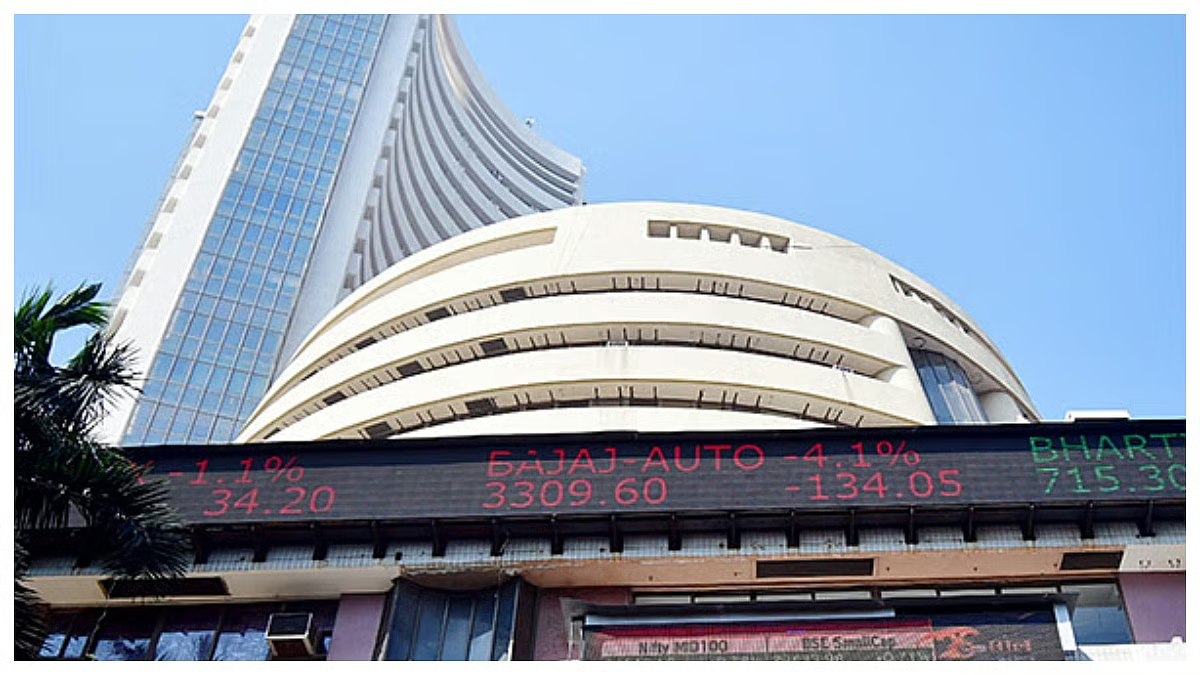
Sensex Nifty open weak in early trade as regulatory concerns and continued pressure on IT stocks weigh on benchmark indices. Cautious institutional flows and selective profit booking kept market breadth negative despite stability in select defensive sectors.
Sensex Nifty open weak at the start of the trading session, reflecting investor caution amid regulatory overhang and sustained selling in the information technology sector. The benchmark BSE Sensex and NSE Nifty 50 both slipped in opening deals, tracking subdued global cues and sector specific headwinds within domestic equities.
Regulatory Concerns Weigh on Market Sentiment
One of the key drivers behind the weak opening is regulatory uncertainty across select sectors. Markets tend to react swiftly when policy signals lack clarity, especially in capital intensive or highly regulated industries such as financial services, telecom, and technology.
Recent commentary and compliance scrutiny in certain segments have led investors to reduce short term exposure. Foreign portfolio investors, who are highly sensitive to regulatory signals, often adjust positions quickly when policy direction appears uncertain.
Domestic institutional investors have provided partial support, but the broader tone remains cautious. Traders are waiting for clearer communication before committing fresh capital at current valuation levels.
IT Sector Drag Pressures Benchmarks
The IT sector drag has emerged as a significant factor in the Sensex Nifty open weak narrative. Large cap technology stocks hold considerable weight in both indices. Even modest declines in these heavyweights can exert outsized pressure on the benchmarks.
Indian IT companies derive a substantial portion of revenue from global clients, particularly in the United States and Europe. Concerns around global tech spending, pricing pressure, and currency movement often influence investor sentiment toward the sector.
In recent sessions, IT stocks have faced profit booking after earlier rallies. Investors are also assessing the impact of artificial intelligence adoption on traditional outsourcing models. While AI presents growth opportunities, it also raises questions about margin structures and service mix evolution.
Cautious Institutional Flows Dominate Trading
Cautious flows dominate trading activity as both foreign and domestic investors adopt a measured stance. Volume data indicates selective buying in defensive sectors such as FMCG and healthcare, while cyclical and export oriented segments witness selling pressure.
Foreign portfolio investors tend to calibrate allocations based on global risk appetite, currency stability, and relative valuations. A stable rupee provides some comfort, but global uncertainties can still influence positioning decisions.
Retail participation remains active, yet it is not sufficient to offset broader institutional caution. Intraday volatility has increased as traders respond quickly to sector specific cues rather than broad macro triggers.
Broader Market Breadth and Sector Rotation
Although Sensex Nifty open weak, broader market action is not uniformly negative. Midcap and smallcap indices show mixed performance, indicating ongoing sector rotation rather than systemic risk.
Banking stocks are trading within a narrow range, supported by stable asset quality trends and credit growth. However, expectations of potential policy shifts by the Reserve Bank of India influence financial sector sentiment.
Energy and infrastructure names have shown pockets of resilience, driven by steady domestic demand and government capex momentum. This divergence highlights how sector allocation continues to shape index direction.
Global Cues and Macro Backdrop
Global market trends also contribute to domestic caution. When international equities display volatility, emerging market indices often mirror the mood. Commodity prices, currency movement, and US economic data influence cross border capital flows.
Inflation trends in major economies and expectations around global interest rates affect foreign investor appetite for Indian equities. A stable macro environment at home provides structural support, but short term fluctuations remain inevitable.
Corporate earnings season further shapes sentiment. Investors closely examine management commentary on demand outlook, margin pressure, and capital expenditure plans before taking directional calls.
What Investors Should Watch
Market participants are monitoring regulatory clarity, IT sector guidance, and foreign fund flow trends. If policy communication improves and global tech spending stabilizes, the IT drag could ease, providing relief to benchmarks.
Support levels in Sensex and Nifty will be technically important in the near term. A sustained break below key levels could trigger additional selling, while stability may encourage value buying.
For now, the weak opening reflects caution rather than panic. Liquidity conditions remain stable, and domestic economic fundamentals continue to show resilience compared to several global peers.
Takeaways
Sensex Nifty open weak due to regulatory concerns and IT sector pressure.
Large cap technology stocks are significantly influencing benchmark direction.
Institutional investors are adopting a cautious stance amid global and domestic uncertainties.
Sector rotation is visible with selective strength in defensive and infrastructure stocks.
FAQs
Why did Sensex and Nifty open weak today?
Regulatory concerns and selling pressure in IT stocks weighed on the benchmarks during early trade.
How does the IT sector affect indices?
Large IT companies have high weightage in both indices, so declines in these stocks significantly impact overall index performance.
Are foreign investors pulling out?
Foreign portfolio investors are cautious and adjusting positions selectively rather than exiting broadly.
Is this weakness a long term concern?
The current trend reflects short term sentiment and sector specific factors. Long term direction depends on earnings growth and policy clarity.