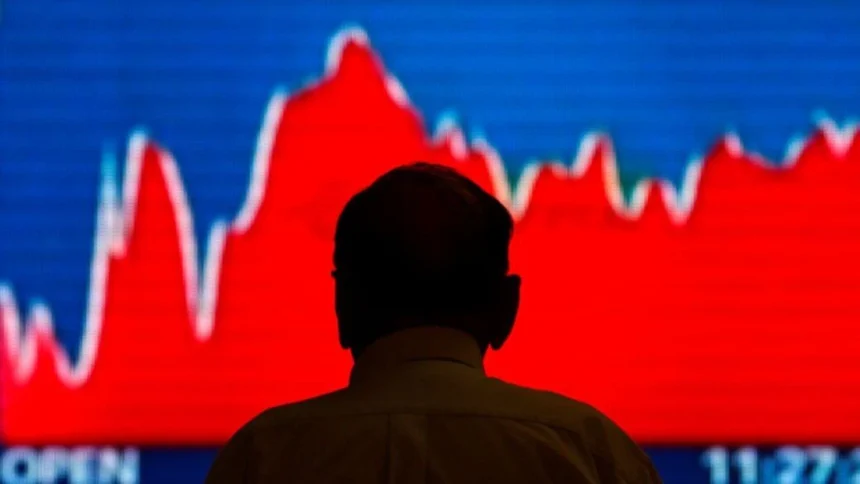
The Sensex rebound on Dalal Street saw the index surge over 600 points as investors brushed aside the recent Wall Street tech selloff. Selective sector buying in banking, capital goods, and auto stocks helped lift sentiment across Indian equity markets.
The Sensex rebound marked a sharp shift in investor mood after recent volatility triggered by weakness in global technology stocks. Dalal Street opened firm and extended gains through the session, with the benchmark index rising more than 600 points as traders rotated into domestic facing sectors. The move reflects improving risk appetite and selective accumulation rather than broad based euphoria.
Broader indices also participated, though gains were more measured in midcap and smallcap counters. Market breadth improved compared to previous sessions, suggesting that the recovery was not limited to a handful of heavyweight stocks.
Banking and Financial Stocks Lead the Rally
The banking sector played a central role in the Sensex rebound. Large private lenders and select public sector banks attracted strong buying interest as investors focused on stable credit growth, improving asset quality, and steady net interest margins.
Domestic institutional investors were active in financials, supporting the index even as foreign flows remained cautious. Financial services stocks benefit from India’s structural credit expansion cycle, and this long term theme appears intact despite short term global volatility.
Auto and capital goods stocks also advanced. Improved domestic demand signals, ongoing infrastructure spending, and order book visibility have kept these sectors in focus. The rally highlighted a shift away from export heavy technology names toward businesses with stronger domestic earnings visibility.
Wall Street Tech Selloff and Global Cues
The recent Wall Street tech selloff had rattled global markets, especially companies linked to high growth and AI driven themes. Rising concerns over stretched valuations and global macro uncertainty triggered profit booking in US technology counters, which spilled over into Asian markets earlier.
However, Dalal Street showed resilience as investors differentiated between global tech exposure and India’s domestic growth story. While IT stocks remained volatile, the broader market absorbed the shock. Traders interpreted the global correction as sector specific rather than systemic.
Stable crude prices and a relatively steady rupee also helped calm nerves. With no immediate negative domestic triggers, investors used the dip to accumulate quality stocks in sectors backed by earnings momentum.
Selective Sector Buying Signals Strategic Rotation
The phrase selective sector buying defined the day’s trade. Instead of chasing momentum across the board, investors targeted specific pockets such as financials, infrastructure linked companies, and consumption plays.
This rotation reflects a more tactical approach. Market participants are reassessing sector weightings in light of changing global narratives. Technology and export driven sectors face questions around demand and margins, while domestic cyclicals are seen as beneficiaries of government capital expenditure and resilient consumer demand.
Defensive sectors such as FMCG and healthcare also witnessed mild buying, indicating that portfolios are being balanced rather than aggressively risked. The 600 point spike in the Sensex was therefore driven by concentrated strength in heavyweights combined with broader stability.
Investor Sentiment and Near Term Outlook
The Sensex rebound does not automatically signal the end of volatility. Global developments, including interest rate expectations and corporate earnings trends in developed markets, remain critical for risk assets worldwide.
In India, upcoming corporate earnings updates and macro data will shape direction. If profit growth in banking and industrial sectors sustains, the index could consolidate at higher levels. However, any renewed weakness in global equities or risk off flows from foreign investors could reintroduce pressure.
For now, Dalal Street has demonstrated the ability to decouple from short term global turbulence. The 600 plus point surge underscores that domestic fundamentals continue to attract capital when valuations appear reasonable.
Takeaways
• Sensex surged over 600 points as Dalal Street recovered from global tech driven volatility
• Banking and financial stocks led gains supported by stable credit growth outlook
• Selective sector buying highlighted rotation toward domestic focused industries
• Near term direction will depend on global cues and upcoming earnings momentum
FAQs
Q1: What triggered the Sensex rebound?
The rebound was driven by selective buying in banking, auto, and capital goods stocks as investors looked past the Wall Street tech selloff.
Q2: Did all sectors participate equally in the rally?
No. Gains were concentrated in financials and domestic cyclicals, while IT stocks remained relatively volatile.
Q3: Is this rally sustainable?
Sustainability will depend on continued earnings strength, stable global conditions, and consistent institutional flows.
Q4: How did global markets influence Dalal Street?
While global tech weakness created initial pressure, Indian markets differentiated based on domestic growth visibility and sector rotation.