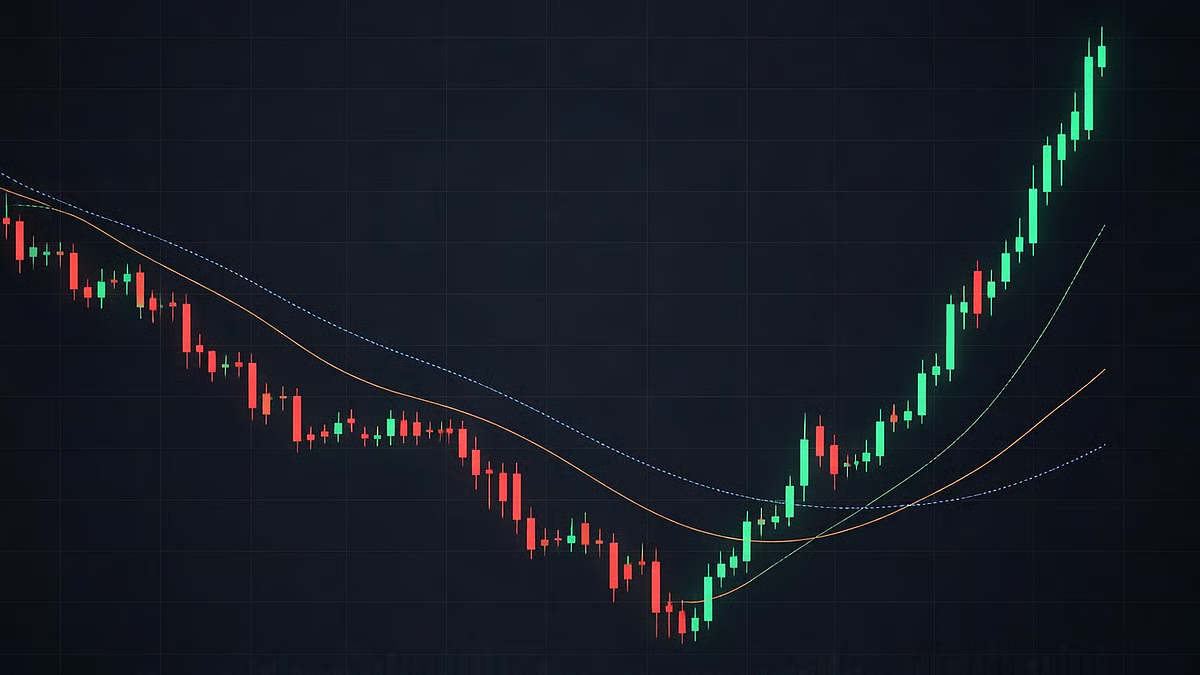
The Sensex rebound after a sharp selloff has brought temporary relief to investors, but volatility continues to dominate Dalal Street. The sudden recovery highlights fragile market sentiment driven by global cues, oil price shocks, and cautious institutional participation.
The Indian equity markets staged a strong comeback in the latest trading session, with the Sensex rising over 700 points after witnessing a steep decline earlier. While the recovery signals resilience, it also underscores the heightened volatility that continues to define the current market environment.
Sharp Selloff Followed by Aggressive Buying
The previous session saw heavy selling pressure across sectors, triggered by rising global uncertainty and concerns around crude oil supply disruptions. Banking, IT, and auto stocks bore the brunt of the correction, dragging benchmark indices lower.
However, the rebound was equally sharp. Investors stepped in to buy quality large-cap stocks at lower valuations, leading to a broad-based recovery. This pattern reflects a classic market behavior where corrections are quickly followed by opportunistic buying.
Market participants are increasingly reacting to short-term triggers rather than long-term fundamentals. This shift is amplifying price swings and making intraday movements more pronounced.
Global Cues Driving Market Volatility
Global developments remain the primary driver behind the Sensex volatility. Rising tensions in key oil-producing regions have pushed crude prices higher, directly impacting inflation expectations and corporate cost structures.
Additionally, uncertainty in global equity markets has made foreign institutional investors more cautious. FII flows have turned inconsistent, adding to the unpredictability of Indian markets.
US market signals, bond yield movements, and central bank commentary are also influencing investor sentiment. When global risk appetite weakens, emerging markets like India tend to see sharper reactions.
Sectoral Movement Signals Mixed Sentiment
The rebound was led by banking and financial stocks, which saw renewed buying interest after recent corrections. Large-cap IT companies also contributed to the recovery, supported by relatively stable earnings outlooks.
On the other hand, sectors sensitive to input costs such as FMCG and aviation remain under pressure due to rising fuel prices. Midcap and smallcap stocks continue to show higher volatility compared to benchmark indices.
This divergence across sectors indicates that investors are being selective rather than broadly bullish. Stock-specific action is dominating over index-wide trends.
Retail Participation Keeps Momentum Alive
Retail investors have played a significant role in cushioning market declines. Consistent participation through SIPs and direct equity investments has provided liquidity support during volatile phases.
Unlike previous cycles where panic selling intensified downturns, the current market structure shows a more stable base. However, retail investors are also becoming more active in short-term trading, contributing to rapid price fluctuations.
The rise of digital trading platforms and easy access to market data has increased participation but also added to speculative activity.
What This Means for Investors Now
The recent Sensex rebound does not necessarily signal a sustained uptrend. Instead, it highlights a market that is reacting quickly to news and external triggers.
Investors need to focus on fundamentals rather than short-term movements. Companies with strong balance sheets, consistent earnings, and pricing power are likely to outperform in volatile conditions.
Risk management becomes critical in such an environment. Diversification across sectors and asset classes can help mitigate sudden market swings.
Market experts suggest that while corrections create buying opportunities, timing the market remains challenging. A disciplined investment approach is more effective than reactive decision-making.
Takeaways
• The Sensex rebound reflects short-term buying, not a confirmed trend reversal
• Global factors like oil prices and geopolitics are driving volatility
• Sector-wise divergence shows selective investor confidence
• Retail participation is supporting markets but also increasing fluctuations
FAQs
Q1. Why did the Sensex fall before rebounding?
The fall was triggered by global uncertainty, rising oil prices, and selling pressure in key sectors like banking and IT.
Q2. Is the current rebound a sign of a bull market?
Not necessarily. It appears to be a short-term recovery driven by value buying rather than a sustained upward trend.
Q3. Which sectors are performing well in this volatility?
Banking and IT stocks have shown resilience, while FMCG and aviation are facing pressure due to rising costs.
Q4. Should investors buy during this market phase?
Investors can consider staggered investments in fundamentally strong stocks while avoiding aggressive short-term bets.