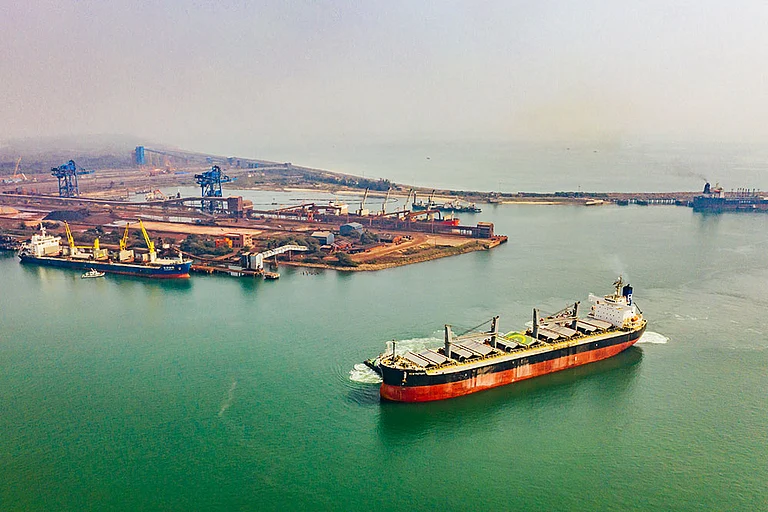
SMFCL sanctions ₹4,300 crore in its first maritime NBFC loan rollout, marking a significant step in India’s effort to deepen shipping finance. With a targeted ₹8,000 crore loan book for FY26, the new institution is positioning itself as a long term capital provider for a capital intensive and underserved sector.
SMFCL sanctions ₹4,300 crore at a time when access to structured, sector specific finance remains a constraint for Indian shipping and maritime infrastructure companies. The rollout signals a shift in policy execution from intent to deployment, as India looks to build domestic shipping capacity and reduce dependence on foreign tonnage.
What the First Sanctions Reveal About SMFCL’s Strategy
The initial ₹4,300 crore sanctioned by SMFCL provides early insight into its operating model. Rather than spreading exposure thinly, the institution appears to be prioritizing larger, asset backed loans with predictable cash flows. Early beneficiaries are understood to include shipping companies, port linked infrastructure players, and maritime logistics operators with established operating histories.
This approach aligns with the risk profile of the sector. Shipping assets are capital intensive, cyclical, and sensitive to global trade conditions. By focusing on secured lending and established operators in the first phase, SMFCL is laying the foundation for a stable loan book before scaling exposure.
The sanction figure also indicates that pipeline visibility is stronger than initially expected. For a first year rollout, crossing the ₹4,000 crore mark suggests pent up demand for maritime focused credit that traditional lenders have been cautious to serve.
Why India Needed a Dedicated Maritime NBFC
India’s maritime sector has long faced a structural financing gap. While shipping is critical to trade, energy security, and industrial supply chains, domestic lenders have typically viewed it as high risk due to global exposure and asset volatility. This has forced Indian shipping companies to rely heavily on overseas financing, often at higher costs and with currency risk.
SMFCL is designed to address this gap. As a sector focused NBFC, it brings domain understanding into credit assessment, allowing for more realistic evaluation of shipping cycles, charter contracts, and asset lifecycles. This specialization is expected to improve credit availability without compromising prudence.
The broader policy objective is strategic. Expanding India owned shipping capacity supports trade resilience, reduces freight outflows, and strengthens the country’s maritime ecosystem, including ports, shipyards, and logistics providers.
Loan Book Target of ₹8,000 Crore and Growth Visibility
SMFCL’s stated goal of building an ₹8,000 crore loan book by FY26 implies aggressive but measured expansion. To achieve this, the institution will need consistent deal flow across shipping, ports, inland waterways, and ancillary maritime services.
Growth is likely to be phased. The first year is expected to focus on term loans and refinancing for existing assets. Over time, the product mix could expand to include vessel acquisition finance, port equipment funding, and working capital solutions tailored to maritime operators.
The ₹8,000 crore target also reflects confidence in execution capacity. Building a loan book of this size requires not just capital but also robust risk management, sector expertise, and coordination with regulators and maritime authorities.
Impact on Shipping Companies and Maritime Infrastructure
For shipping companies, SMFCL’s entry changes the financing equation. Access to rupee denominated loans reduces currency risk and improves balance sheet stability. It also enables longer tenure financing aligned with vessel life cycles, which has historically been difficult to secure domestically.
Port operators and maritime infrastructure developers also stand to benefit. Projects such as berth expansion, mechanization, and coastal logistics hubs often struggle to secure long term financing due to gestation risks. A specialized lender with sector familiarity can accelerate project timelines and improve financial closure rates.
Over time, this could translate into improved asset quality across the maritime value chain, as operators gain access to appropriately structured capital rather than relying on short term or mismatched funding sources.
Risk Management and Market Cyclicality
Shipping remains a cyclical business, influenced by global trade volumes, freight rates, and geopolitical disruptions. SMFCL’s challenge will be balancing growth with credit discipline across cycles. Concentration risk is another factor, given the relatively small number of large Indian shipping players.
Early indications suggest a conservative underwriting stance. Asset backed lending, diversified charter exposure, and stress testing against rate volatility are expected to be central to credit decisions. This is critical not only for SMFCL’s balance sheet but also for maintaining confidence among policymakers and market participants.
Strategic Significance for India’s Maritime Ambitions
Beyond lending numbers, SMFCL’s rollout is symbolically important. It reflects India’s intent to build financial institutions aligned with strategic sectors rather than relying solely on generic credit frameworks. If executed well, the model could be extended to other infrastructure intensive domains.
The ₹4,300 crore sanction milestone positions SMFCL as an active participant rather than a policy placeholder. The next twelve months will be crucial in determining whether it can scale responsibly while navigating the complexities of global maritime markets.
Takeaways
SMFCL’s ₹4,300 crore sanctions confirm strong latent demand for maritime finance
The ₹8,000 crore FY26 loan book target signals confidence in deal pipeline and execution
Shipping and port infrastructure firms gain access to sector specific, rupee based funding
Risk management will be critical given the cyclical nature of maritime markets
FAQs
What is SMFCL’s role in the maritime sector?
SMFCL operates as a dedicated NBFC providing financing to shipping, ports, and maritime infrastructure companies.
Why is the ₹4,300 crore sanction significant?
It marks the first large scale deployment of capital by India’s first maritime focused NBFC, indicating strong early traction.
How will this help Indian shipping companies?
It improves access to long term, rupee denominated funding and reduces reliance on foreign lenders.
Is the ₹8,000 crore FY26 target achievable?
The target appears realistic if SMFCL maintains disciplined underwriting and continues to build a strong deal pipeline.