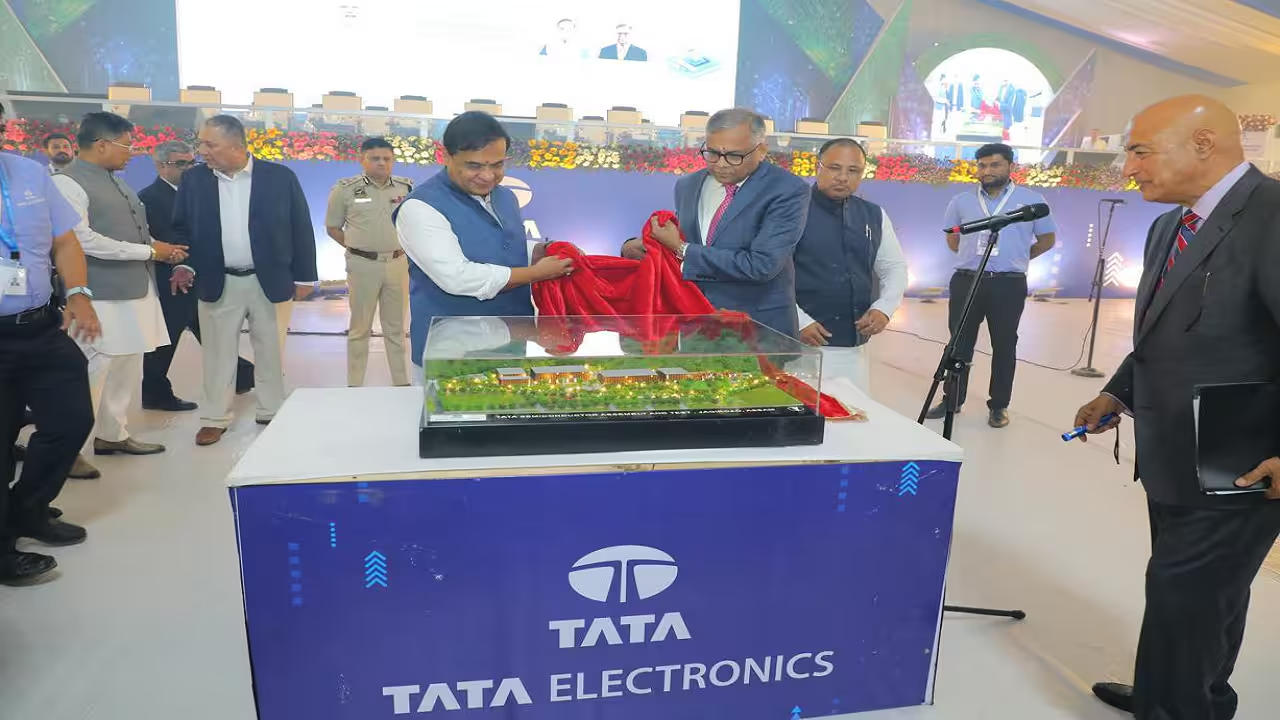
Tata Group is accelerating its semiconductor ambitions as it engages in fresh discussions with the Indian government over incentives. The move highlights India’s push to build a domestic chip ecosystem amid global supply chain shifts and rising strategic importance of semiconductors.
Tata Group semiconductor plans are gaining momentum as policy support and incentives become central to execution. With India aiming to reduce import dependence and position itself in the global chip value chain, these discussions mark a critical phase for both industry and government.
India Semiconductor Mission Gains Momentum with Tata Push
India’s semiconductor ambitions have been formalized through initiatives like the India Semiconductor Mission, which aims to attract large-scale investments in chip manufacturing and design. Tata Group has emerged as one of the most serious domestic contenders in this space.
The conglomerate has already outlined plans to invest in semiconductor fabrication and assembly units, positioning itself as a long-term player. However, chip manufacturing is capital-intensive and requires sustained policy support, making government incentives a decisive factor.
Talks between Tata Group and policymakers are focused on refining incentive structures, including capital subsidies, tax benefits, and infrastructure support. These elements are critical for making semiconductor projects financially viable in India.
Government Incentives Key to Semiconductor Manufacturing Viability
Semiconductor manufacturing requires billions of dollars in upfront investment, along with stable power supply, water resources, and advanced logistics. India’s current incentive framework offers financial support, but industry players are seeking more clarity and faster approvals.
Tata Group’s discussions with the government are likely centered around improving the predictability of these incentives. This includes clarity on disbursement timelines, eligibility criteria, and long-term policy consistency.
Global competition is intense, with countries like the United States, Taiwan, and South Korea offering aggressive subsidies to attract chipmakers. For India to compete effectively, its incentive structure needs to match global benchmarks while ensuring efficient execution.
The outcome of these talks could set the tone for other companies considering semiconductor investments in India.
Tata’s Strategy Focuses on Full-Stack Semiconductor Ecosystem
Tata Group is not limiting its semiconductor ambitions to fabrication alone. The company is exploring a broader ecosystem approach that includes chip design, packaging, and testing.
This integrated strategy aligns with global trends where value creation extends beyond fabrication. Assembly, testing, and packaging units require relatively lower investment compared to fabs and can be scaled faster.
Tata Electronics, a key arm driving these initiatives, has already made progress in electronics manufacturing and is now looking to move up the value chain. Partnerships with global technology firms are also being explored to bring in expertise and accelerate execution.
This approach reduces risk while building capabilities across multiple segments of the semiconductor value chain.
Global Supply Chain Shifts Create Opportunity for India
The push for semiconductor manufacturing in India is also influenced by global supply chain realignment. Disruptions during the pandemic and geopolitical tensions have exposed vulnerabilities in concentrated chip production.
Countries are now prioritizing domestic or diversified semiconductor supply chains. India is positioning itself as an alternative destination for investments, leveraging its large talent pool and growing electronics market.
Tata Group’s accelerated plans come at a time when global companies are actively scouting for new manufacturing bases. A successful execution could attract additional investments and partnerships into India’s semiconductor ecosystem.
However, challenges remain, including infrastructure readiness, skilled workforce availability, and ecosystem development.
Execution Risks and Long-Term Outlook
While the intent and policy direction are clear, execution will determine the success of India’s semiconductor ambitions. Large-scale fabs have long gestation periods and require consistent support over several years.
Tata Group’s ability to navigate regulatory processes, secure technology partnerships, and manage capital investments will be critical. Any delays in approvals or incentive disbursement could impact timelines.
Industry experts believe that even partial success in semiconductor manufacturing could significantly boost India’s strategic and economic position. It would reduce reliance on imports and support sectors like electronics, automotive, and telecommunications.
The current round of talks between Tata Group and the government signals a more coordinated approach, which could improve execution outcomes.
Takeaways
- Tata Group is accelerating semiconductor plans with active government discussions
- Incentive clarity and policy stability are critical for project viability
- The strategy includes fabrication, design, and packaging capabilities
- Global supply chain shifts are creating opportunities for India
FAQs
Why is Tata Group investing in semiconductors?
Tata aims to enter a strategic sector with high growth potential and support India’s goal of reducing import dependence.
What role do government incentives play?
Incentives help offset high capital costs and make semiconductor projects financially viable.
Will India become a major chip manufacturing hub?
It has potential, but success depends on execution, infrastructure, and global competitiveness.
What challenges does Tata Group face?
Key challenges include high investment requirements, technology access, and policy execution risks.