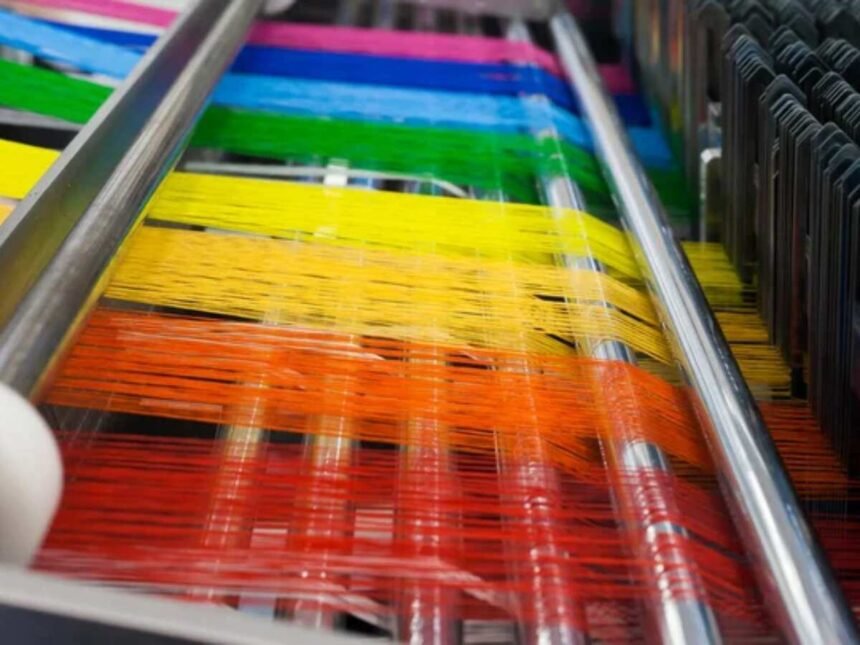
Textile stocks are under pressure following tariff fallout after a US Supreme Court trade ruling, triggering mixed reactions across export oriented counters. Investors are recalibrating positions as clarity emerges on duty structures and global trade implications.
Textile stocks witnessed heightened volatility after a US Supreme Court trade ruling altered the tariff landscape for certain imported goods. The decision has revived debate over the legality and scope of prior trade measures, leading to swift reactions in export heavy sectors. Indian textile companies, which derive a meaningful share of revenue from the US market, are closely tracking how revised tariff structures could impact pricing, margins, and order flows.
Immediate Market Reaction in Textile Counters
The first response was visible in share price swings across listed textile exporters. Companies with significant exposure to the US apparel and home textile markets experienced sharp intraday moves. Some counters fell on concerns over renewed uncertainty, while others gained on expectations that tariff relief could improve competitiveness.
Investors tend to price in trade policy shifts quickly because export businesses operate on thin margins. Even minor changes in duty rates can alter order allocation between competing manufacturing countries. Portfolio managers are therefore reassessing revenue forecasts and margin assumptions for the upcoming quarters.
The broader market reaction reflects caution rather than panic. While volatility increased, long term positioning remains dependent on how quickly clarity is established around implementation timelines and compliance norms.
Understanding the US Trade Ruling and Tariff Fallout
The US Supreme Court ruling centers on the authority under which certain tariffs were imposed in earlier trade actions. Legal challenges have questioned whether executive powers were exercised within statutory limits. The latest judgment has prompted a re evaluation of specific tariff lines, potentially affecting duty levels on selected imported goods.
For textile exporters, the core issue is predictability. Businesses negotiate contracts months in advance. Sudden tariff changes can disrupt pricing strategies and shipment schedules. If duties are reduced or rolled back, exporters may gain pricing flexibility. Conversely, prolonged legal and administrative processes can create short term uncertainty.
Indian textile firms compete with manufacturers from Bangladesh, Vietnam, China, and other Asian economies. Relative tariff positioning often determines sourcing decisions by large US retailers and brands.
Impact on Indian Textile Exporters
India’s textile and apparel sector is a major employment generator and export contributor. The United States remains one of its largest export destinations. Products ranging from home furnishings to garments are deeply integrated into global supply chains.
Companies that operate in value added segments such as technical textiles or branded home products may be better insulated than pure commodity exporters. Integrated players with strong balance sheets can absorb temporary disruptions more effectively.
Currency movements also influence competitiveness. If tariff adjustments coincide with favorable exchange rate trends, exporters could offset part of the volatility. However, firms with heavy reliance on a single geography face concentration risk during trade policy shifts.
Mixed Reactions Across the Sector
Not all textile stocks reacted uniformly. Some companies with diversified export markets beyond the US showed relative resilience. Investors differentiated between businesses heavily dependent on US orders and those with broader geographic spread.
Additionally, companies that had already factored conservative assumptions into guidance may see limited downward revision. Firms operating with long term contracts at pre negotiated rates may not feel immediate impact.
Analysts are closely examining order books, client concentration, and hedging policies. Businesses that have built strong relationships with global retailers often enjoy better negotiation leverage during tariff transitions.
Broader Trade Policy Implications
The tariff fallout extends beyond textiles. It highlights the evolving intersection between trade policy and judicial oversight in major economies. Export oriented sectors worldwide monitor such developments because they influence supply chain decisions.
In recent years, global trade flows have been shaped by tariffs, counter tariffs, and strategic sourcing shifts. Companies have diversified production bases to mitigate geopolitical risk. The current ruling reinforces the importance of agility in global trade strategy.
For India, the development may renew focus on trade negotiations and market access discussions. Policymakers often engage in dialogue to ensure stable export conditions for key sectors.
What Investors Should Watch Next
Going forward, clarity on implementation timelines will be critical. If administrative agencies move quickly to adjust tariff schedules, uncertainty may fade. Prolonged ambiguity, however, could keep textile stocks volatile.
Quarterly earnings commentary will provide insight into order visibility and pricing dynamics. Investors will also track guidance revisions, if any, from management teams. Margin commentary and cost pass through ability will be central themes.
In the medium term, structural drivers such as global demand recovery, supply chain diversification, and domestic policy support will shape the trajectory of textile exporters more than a single ruling.
Takeaways
• Textile stocks reacted sharply to US tariff related developments
• Export exposure to the US market is a key differentiator among companies
• Margin sensitivity makes the sector vulnerable to duty changes
• Long term outlook depends on trade clarity and demand conditions
FAQs
Why did textile stocks become volatile after the ruling
The US trade ruling created uncertainty around tariff structures, directly affecting exporters reliant on the American market.
Does the ruling automatically reduce tariffs
Implementation details depend on administrative follow through. Markets react first to headlines, while final duty adjustments may take time.
Which textile companies are most affected
Firms with high revenue exposure to the US and limited geographic diversification are more sensitive to tariff changes.
Is this a long term risk for the sector
Trade policy shifts can create short term volatility, but long term performance depends on competitiveness, demand trends, and diversification.