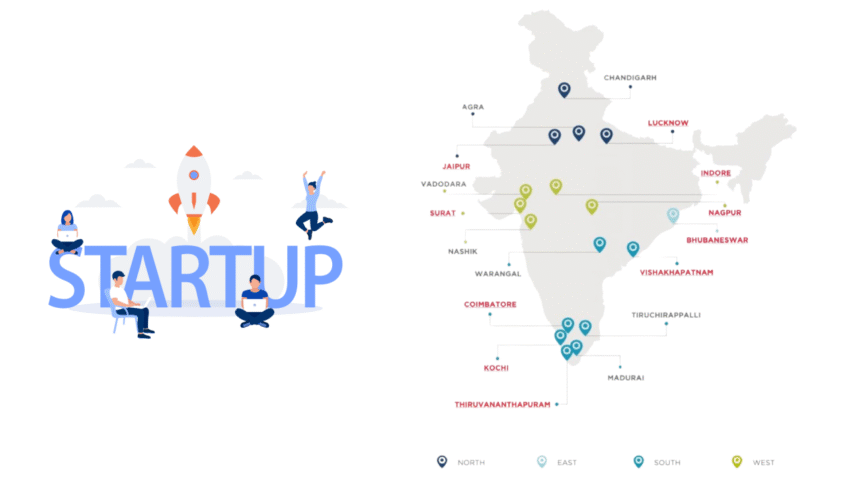
Tier II India startup hubs like Kochi, Jaipur and Indore are emerging as the next wave for capital flows as investors look beyond saturated metros. Lower costs, strong talent pipelines and improving policy support are reshaping how venture capital is allocated across India.
Tier II India startup hubs (Kochi, Jaipur, Indore) emerge as next wave for capital flows at a time when investors are recalibrating risk, returns and long term scalability. With metro valuations stretched and operating costs rising, capital is increasingly moving toward smaller cities that offer efficiency without compromising on ambition. This shift is altering India’s startup geography in measurable ways.
Why investors are rethinking metro centric startup bets
For years, Bengaluru, Mumbai and Delhi NCR dominated startup funding due to network effects and capital concentration. That advantage is narrowing. High burn rates, intense competition for talent and valuation inflation have reduced margin for error. Investors are now prioritizing capital efficiency, predictable growth and longer runways.
Tier II cities fit this revised investment thesis. Startups in these hubs typically operate with lower fixed costs, slower but steadier scaling and stronger focus on profitability. This aligns with the current venture environment, where follow on funding is more selective and governance standards are tighter. As a result, capital is flowing toward regions where disciplined execution matters more than headline growth.
Another factor is risk diversification. Funds are spreading exposure across geographies to reduce dependency on a few crowded ecosystems. Tier II hubs offer fresh deal flow with less competition at the entry stage.
Kochi gains ground with SaaS and deep tech focus
Kochi has steadily built a reputation as a technology and SaaS focused hub. Strong digital infrastructure, proximity to global markets through its diaspora and a growing base of engineering talent have helped the city attract early and growth stage capital. Startups here are often product led, serving global customers while operating from a cost efficient base.
The presence of incubators, technology parks and state backed innovation programs has reduced friction for founders. Kochi based startups are increasingly visible in sectors such as enterprise software, fintech platforms, maritime tech and health technology. Investors value the city’s disciplined founder mindset and relatively low attrition rates.
Kochi’s ecosystem also benefits from strong academic institutions and a collaborative startup culture. This has enabled deeper specialization rather than surface level diversification, which is attractive for funds looking for defensible business models.
Jaipur builds momentum across consumer and B2B startups
Jaipur’s startup story is driven by a blend of consumer brands, B2B platforms and traditional business digitization. The city’s access to talent from Rajasthan and nearby regions, combined with lower operating costs, has enabled founders to scale efficiently.
Consumer focused startups in Jaipur have leveraged regional demand and digital channels to build national brands. At the same time, B2B startups serving logistics, supply chain and SME digitization needs have found traction. Investors see Jaipur as a testing ground where products can be refined before national expansion.
Policy initiatives have also played a role. Startup incentives, easier compliance and local procurement opportunities have improved the operating environment. Jaipur’s growing founder network and mentorship access have further strengthened confidence among early stage investors.
Indore emerges as a cost efficient growth hub
Indore has quietly become one of the most cost efficient startup hubs in central India. Its strengths lie in commerce, logistics, agritech and services driven startups. The city’s location offers access to multiple regional markets, making it suitable for distribution led business models.
Startups in Indore tend to focus on execution and revenue generation early in their lifecycle. This practical approach resonates with investors seeking downside protection. Lower employee costs and stable workforce dynamics allow startups to maintain lean teams without sacrificing output.
Local government engagement has supported ecosystem growth through incubation support and startup friendly policies. While the scale of funding is still smaller compared to metros, deal activity is rising steadily, especially at the seed and pre Series A stages.
Capital flows follow talent, not just geography
A key driver behind the rise of Tier II hubs is talent mobility. Skilled professionals are increasingly willing to work outside metros, supported by hybrid work models and improved urban infrastructure. This has reduced the historic disadvantage smaller cities faced in attracting senior talent.
For investors, this means startups can now build capable teams without relocating. Capital follows execution, and execution increasingly comes from non metro locations. Funds are also setting up local scouting teams and partnerships to tap into these ecosystems early.
Importantly, exits are no longer constrained by geography. Startups built in Tier II cities can still access national and global markets, making location less relevant in valuation outcomes.
Challenges that still shape investor decisions
Despite momentum, Tier II hubs face constraints. Access to late stage capital remains limited, often forcing startups to engage with metro based investors. Ecosystem depth varies by sector, and not all cities can support hardware or deep research oriented startups yet.
Founder exposure to global markets and regulatory complexity can also be uneven. Investors often factor in additional support costs such as mentorship and governance oversight. These challenges are real but increasingly manageable as ecosystems mature.
The opportunity lies in addressing these gaps through targeted policy, stronger investor presence and collaboration between cities rather than competition.
What the shift means for India’s startup future
The rise of Kochi, Jaipur and Indore signals a structural change rather than a temporary trend. Capital is moving closer to efficiency, sustainability and regional balance. This decentralization supports broader economic development while reducing pressure on overburdened metro ecosystems.
For investors, Tier II hubs offer earlier entry points and better risk adjusted returns. For founders, they provide an environment where focus and fundamentals matter. As capital continues to follow performance, these cities are likely to play a larger role in shaping India’s next generation of startups.
Takeaways
Investors are shifting capital toward Tier II startup hubs for efficiency and value.
Kochi, Jaipur and Indore each offer distinct sector strengths.
Lower costs and improving talent access are key growth drivers.
Tier II hubs are becoming integral to India’s startup capital flows.
FAQs
Why are Tier II cities attracting more startup investment?
Lower operating costs, improving talent availability and better policy support make them attractive for capital efficient growth.
Which sectors are gaining traction in these hubs?
SaaS and deep tech in Kochi, consumer and B2B platforms in Jaipur, and logistics and services in Indore are prominent.
Do startups still need to move to metros to scale?
Not necessarily. Many startups now scale nationally while remaining based in Tier II cities.
Will this trend continue long term?
Yes, as investors prioritize sustainability and regional diversification, Tier II hubs are likely to see sustained capital inflows.