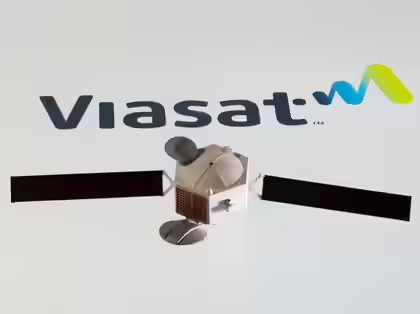
Global satellite communications company Viasat is exploring partnerships across India’s growing space ecosystem, ranging from satellite launches and manufacturing to ground infrastructure and software services. The move reflects rising international interest in India’s rapidly expanding private space industry.
Viasat Looks Toward India’s Emerging Space Economy
Viasat exploring partnerships in India’s space ecosystem highlights the country’s growing importance in the global space economy. The company is assessing opportunities to collaborate with Indian space startups, technology firms and infrastructure providers across multiple segments of the space value chain.
India has become an increasingly attractive destination for space related investments due to policy reforms and the opening of the sector to private players. Government initiatives have allowed domestic startups and international companies to participate in satellite development, launch services and space technology applications.
Viasat, which specializes in satellite communications and broadband connectivity solutions, is evaluating how it can integrate its services with India’s evolving space infrastructure. Potential collaborations could include satellite launch services, ground station networks, communication payload technologies and digital platforms supporting satellite operations.
This development comes at a time when global demand for satellite based connectivity and data services is growing rapidly.
India’s Space Ecosystem Attracts Global Interest
India space ecosystem growth has accelerated over the past few years as the government introduced regulatory reforms aimed at encouraging private sector participation. The establishment of organizations such as IN-SPACe has created a regulatory framework that allows startups and international companies to work with the country’s space infrastructure.
The Indian Space Research Organisation has historically led the nation’s space program with missions in satellite deployment, navigation systems and planetary exploration. However, the ecosystem has expanded significantly with the entry of private startups focused on launch vehicles, satellite manufacturing and data analytics.
Several Indian companies are now building small satellite launch vehicles and satellite platforms designed for global customers. This expansion has created new opportunities for international firms seeking partnerships in manufacturing, launch services and downstream applications.
Viasat’s interest reflects a broader trend of global space companies looking at India not only as a launch destination but also as a technology and innovation hub.
Satellite Connectivity and Software Opportunities
Satellite communications partnerships represent a key area of opportunity for companies like Viasat within India’s space ecosystem. Demand for satellite based broadband services is rising due to increasing connectivity requirements in remote regions and developing economies.
Satellite networks play an important role in delivering internet access to rural communities, maritime operations, aviation networks and disaster response systems. By partnering with Indian companies, Viasat could expand its satellite communications infrastructure in the region.
Another area of focus is software and digital platforms that support satellite operations. Modern satellite systems rely heavily on advanced software for data processing, network management and communication optimization.
India has a strong reputation in software engineering and digital services, which makes it a valuable partner for global satellite companies seeking technical collaboration. Software development related to satellite control systems, analytics platforms and cybersecurity solutions could become an important part of such partnerships.
Role of Launch Services and Manufacturing
Satellite launch services in India have gained international recognition due to their reliability and cost efficiency. The country’s launch vehicles have successfully deployed satellites for multiple international clients over the past decade.
With the rise of private launch startups, India’s launch capabilities are expected to expand further. These companies are developing smaller, more flexible rockets designed specifically for launching small satellites into low Earth orbit.
Manufacturing partnerships are also becoming a major component of the space ecosystem. India offers a competitive manufacturing environment supported by engineering talent and established aerospace supply chains.
International companies seeking to reduce production costs and expand manufacturing capacity are increasingly considering collaborations with Indian firms. Such partnerships can involve satellite components, communication equipment and advanced aerospace materials.
Viasat’s exploration of these opportunities suggests that global satellite companies are looking for integrated partnerships that combine launch services, hardware manufacturing and digital infrastructure.
Global Competition in the Satellite Industry
The satellite communications sector has become highly competitive as new technologies and business models reshape the industry. Companies around the world are launching satellite constellations designed to provide high speed broadband connectivity across the globe.
These constellations require advanced ground infrastructure, network software and satellite technology to operate effectively. Collaboration between international companies and local partners often becomes essential for building such large scale systems.
India’s expanding space ecosystem offers several advantages in this competitive environment. The country provides engineering talent, cost efficient manufacturing and a growing startup ecosystem focused on space technology.
As global demand for satellite services continues to increase, partnerships between international firms and Indian space companies are likely to become more common.
For Viasat, exploring collaborations within India’s space ecosystem could strengthen its presence in Asia while supporting the development of next generation satellite communication services.
Takeaways
• Viasat is exploring partnerships across India’s space ecosystem including launches and software
• India’s private space sector is expanding rapidly due to regulatory reforms and startup growth
• Satellite connectivity, software platforms and manufacturing are key collaboration areas
• Global space companies are increasingly viewing India as a strategic technology partner
FAQs
Why is Viasat interested in India’s space ecosystem?
India’s growing private space industry, strong engineering talent and cost efficient launch capabilities make it an attractive destination for satellite technology partnerships.
What kind of partnerships could Viasat form in India?
Possible collaborations include satellite launches, communication infrastructure, software platforms and aerospace manufacturing.
How is India expanding its space industry?
Policy reforms have opened the sector to private companies and startups, allowing them to develop launch vehicles, satellites and space technology applications.
Why are satellite communications becoming more important?
Satellite networks provide connectivity in remote areas, support aviation and maritime communication and enable global broadband services.