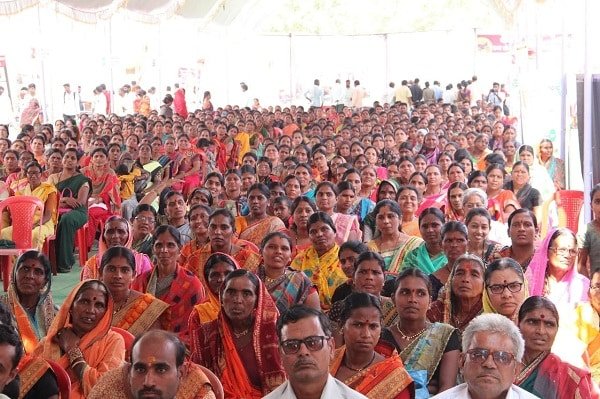
The upcoming summit Kashi Samvaad 2025, scheduled for 21-22 November 2025 in Varanasi, is geared toward inclusive growth as youth, women and farmers dominate the agenda and private-sector link-ups rise in focus. The event marks a strategic policy-industry forum at a time when India is recalibrating development models.
Summit context and theme
The main keyword is Kashi Samvaad 2025, a two-day summit organised by Confederation of Indian Industry (CII) in association with Banaras Hindu University (BHU) in Varanasi. It aligns with India’s broader goal of “Viksit Bharat 2047” and aims to bring together government, industry, academia and social sectors. The summit emphasises four pillars: youth, women, farmers and the poor, with a clear push toward private-sector collaboration in these domains.
Focus on youth: skills, innovation and employment link-ups
One major axis of the discussion will be youth empowerment, with particular emphasis on bridging the gap between education and employability in sectors like digital technologies, green jobs and agritech. The agenda looks to anchor private-sector role in skilling, internships and entrepreneurial ecosystems. Examples include industry-university collaborations and placement pipelines. The summit’s focus on youth signals that policy now expects industry to step up, not just government.
Women’s leadership and inclusive growth initiatives
The agenda also places women as central actors in economic transformation. Sessions will explore women’s entrepreneurship, self-help groups (SHGs), access to finance and private-sector partnerships for women-led ventures. For instance, corporate-CSR programmes may be reconfigured into scalable business-led models. By placing women alongside youth and farmers, the summit recognises structural gaps in inclusion and seeks to map commercial-development pathways.
Farming, agritech and rural link-ups with industry
Another key domain is farmers and agri-ecosystems. The summit aims to spotlight how technology, supply-chain link-ups and private-sector engagement can enhance rural livelihoods. The expectation is that industry will work with farming communities via agritech, contract farming, cold-chain investment and value-addition models. The focus on farmers signals a move from policy as subsidy-only toward ecosystem-integration with private capital.
Private-sector and policy interface: what to expect
What makes this summit news-worthy is the private-sector linkage agenda. Industry leaders from multiple sectors are slated to participate, supporting frameworks rather than only abstract panels. The emphasis will be on actionable alliances: skill-hubs, agritech ventures, women-led enterprises and digital inclusion projects. Policymakers will listen but the thrust is on mobilising business beyond slogans into measurable collaboration. This reflects a shift in how policy events are structured.
Risks, hurdles and success-factors
Execution is always the challenge. While summit talk is rich, translating intent into delivery will require monitoring frameworks. Major hurdles include digital divide (especially in rural and women segments), financing gap for smaller enterprises, and aligning industry incentives with social outcomes. Success-factors will be public-private commitment, clear anchoring of responsibilities, and measurable metrics for youth employment, women entrepreneurship and farmer value-chain outcomes.
Takeaways
- Youth, women and farmers are now development priorities: The summit’s agenda places these segments at the heart of India’s growth strategy.
- Industry-policy coaction is shifting gears: Private-sector link-ups are expected to move from talk to action via collaborations in skills, agritech and women-led business.
- Rural and urban inclusion combined: By bringing farmers into the same framework as youth and women, the summit reinforces a holistic growth model.
- Implementation will define impact: The real outcome depends on how partnerships evolve, how digital inclusion is achieved and how measurable outputs are tracked.
FAQs
Q: What is Kashi Samvaad 2025 aiming to achieve?
A: The summit aims to foster inclusive and sustainable growth aligned with “Viksit Bharat 2047” by prioritising youth, women and farmers, and catalysing private-sector participation in development agendas.
Q: Who will attend and what kind of collaborations are expected?
A: Key attendees include policymakers, industry leaders, academia and social-sector actors. Collaborations on skills, agritech, women entrepreneurship and rural value chains are expected to be announced.
Q: Why are youth, women and farmers grouped together at this summit?
A: Because these segments collectively represent India’s demographic dividend, rural backbone and inclusive growth potential. They have structural gaps in access, and the summit links them with industry partners for systemic impact.
Q: What should stakeholders look out for post-summit?
A: Watch for announced partnerships, skill-hub roll-outs, agritech investment flows, women-led enterprise launches and measurable metrics on employment, rural incomes and inclusion.