
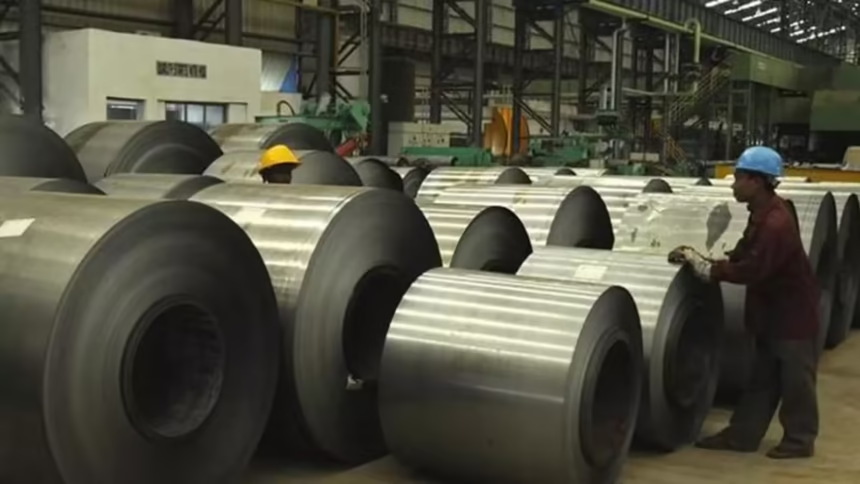
Aluminium prices in India have climbed to record highs as a global supply squeeze tightens availability and raises input costs across industries. The surge is already forcing downstream sectors to reassess pricing, margins, and procurement strategies amid persistent volatility.
Aluminium prices in India touched historic peaks this week, reflecting a sharp imbalance between global supply and demand. Domestic rates have risen in tandem with international benchmarks, driven by constrained production, high energy costs, and sustained demand from infrastructure, automobiles, and packaging. For Indian manufacturers, the impact is immediate and difficult to absorb.
Global supply squeeze pushes aluminium prices higher
The current rally in aluminium prices is rooted in global supply disruptions rather than speculative demand. Production cuts in key aluminium producing regions have reduced available metal in international markets. High electricity prices have forced smelters in parts of Europe and Asia to curtail output, as aluminium production is highly energy intensive.
At the same time, inventories on global exchanges remain near multi year lows. This has tightened spot availability and increased competition for supplies. China, the world’s largest aluminium producer, has maintained output discipline due to environmental controls and power constraints, limiting its ability to offset global shortages.
For India, which remains partially dependent on global pricing dynamics despite strong domestic production, these factors have translated into higher landed costs and elevated domestic prices.
Domestic demand adds pressure on Indian aluminium market
Strong domestic demand is amplifying the price rise. India’s infrastructure push, including roads, railways, and power transmission projects, has increased aluminium consumption steadily. The electric vehicle transition has also added structural demand, as aluminium is widely used in lightweight vehicle bodies and battery enclosures.
Construction and real estate activity, particularly in urban housing and commercial projects, continue to absorb large volumes of aluminium products such as extrusions and sheets. Packaging demand from food, beverage, and pharmaceutical sectors remains resilient, offering little relief on the demand side.
This combination of global constraints and domestic consumption strength has made aluminium prices in India particularly sensitive to international supply shocks.
Downstream industries brace for cost escalation
Downstream sectors are now grappling with the cost impact. Automotive component manufacturers face margin pressure as aluminium accounts for a growing share of vehicle material costs. While some original equipment manufacturers have pricing power, suppliers operating on fixed contracts are exposed to short term losses.
Consumer durables makers, including appliance and electronics manufacturers, are reassessing product pricing and promotional strategies. Aluminium is a critical input for air conditioners, refrigerators, and cookware, and sustained price increases threaten demand elasticity.
Packaging firms and cable manufacturers are also under strain, as passing on higher raw material costs to end customers remains challenging in competitive markets.
Limited hedging options increase vulnerability
Many mid sized and small manufacturers lack effective hedging mechanisms to manage aluminium price volatility. Unlike larger corporations with access to commodity derivatives and long term supply contracts, smaller players often rely on spot purchases.
This leaves them vulnerable to sudden spikes. Working capital requirements increase as raw material procurement costs rise, while selling prices adjust with a lag. In some cases, production schedules are being altered to conserve inventory and delay purchases.
Industry bodies have raised concerns that prolonged high aluminium prices could lead to reduced capacity utilisation in downstream sectors, particularly among export oriented units facing price sensitive global buyers.
Can prices cool in the near term
Market expectations for near term relief remain limited. Any significant correction in aluminium prices would require either a sharp slowdown in global demand or a material increase in supply. Neither appears imminent.
Energy prices remain elevated, discouraging smelter restarts. Environmental regulations continue to cap capacity additions in major producing regions. On the demand side, infrastructure spending and energy transition projects are long cycle drivers unlikely to reverse quickly.
For India, domestic producers may benefit from higher realisations, but downstream industries will continue to face cost pressure until supply conditions ease or demand softens.
Broader economic implications
Rising aluminium prices have inflationary implications beyond manufacturing. Higher input costs can filter into consumer prices through appliances, vehicles, and packaging. This complicates cost management for companies already dealing with tight margins and cautious consumer spending.
Policy makers are monitoring the situation closely, as sustained commodity inflation can influence industrial growth and pricing stability. However, direct intervention in commodity markets remains unlikely, leaving businesses to adapt through efficiency gains and selective price increases.
Takeaways
Aluminium prices in India have reached record highs due to global supply constraints
Energy costs and production curbs are limiting global aluminium output
Downstream sectors like auto, appliances, and packaging face margin pressure
Near term price relief appears unlikely without major supply changes
FAQs
Why are aluminium prices rising so sharply in India?
Prices are driven by global supply shortages, high energy costs, low inventories, and strong domestic demand.
Which sectors are most affected by high aluminium prices?
Automobiles, consumer durables, packaging, cables, and construction related industries face the biggest impact.
Can manufacturers pass on the higher costs to consumers?
Some can, but competitive pressures and fixed contracts limit pricing flexibility for many companies.
Is this a short term spike or a longer trend?
Current indicators suggest prices may remain elevated in the near term due to persistent supply constraints.


