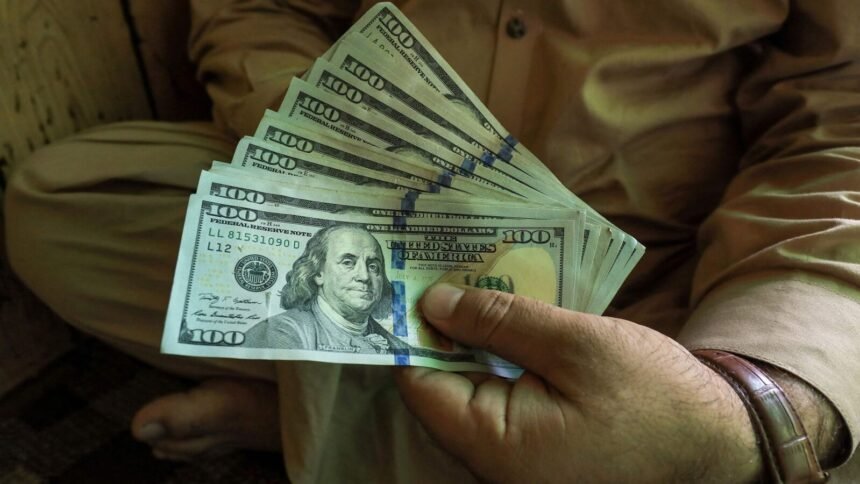
Emerging market currencies wobble as US dollar sentiment returns, raising currency risk for Indian exporters at a time when global demand remains uneven. The shift in currency dynamics is creating fresh challenges for sectors dependent on predictable foreign exchange conditions and steady export inflows.
The renewed dollar strength reflects changing expectations around global interest rates, safe haven demand and capital flows. For India, where exporters already face margin pressures, sharper currency fluctuations add another layer of uncertainty.
Why the US dollar is strengthening again in global markets
The US dollar has regained momentum due to shifting expectations around interest rate cuts in the United States. Recent economic data indicates that inflation is moderating more slowly than earlier anticipated, reducing the likelihood of rapid monetary easing.
When markets believe the Federal Reserve may delay rate cuts, US yields stabilize or rise, increasing the dollar’s attractiveness to global investors. Higher yields draw capital into US assets, strengthening the currency.
Geopolitical tensions and risk off sentiment have also contributed to renewed dollar demand. In periods of global uncertainty, investors move toward safe haven assets including the dollar, US Treasuries and gold.
These factors combined have pushed emerging market currencies into a weaker trajectory, with volatility returning across Asia, Latin America and Africa.
Impact on emerging market currencies and regional stability
Several emerging market currencies have come under pressure as the dollar strengthens. Asian currencies such as the Indonesian rupiah, Thai baht, South Korean won and Malaysian ringgit have shown increased volatility.
The weakening trend is more pronounced in markets with high foreign debt exposure, trade imbalances or sensitivity to commodity prices. Currency depreciation raises import costs and complicates monetary policy decisions for several central banks.
For economies like India, where the rupee typically sees limited volatility due to strong reserves and RBI interventions, fluctuations have been contained but noticeable. Even small shifts in the rupee’s value affect hedging strategies, export competitiveness and pricing agreements.
Global investors are also reassessing emerging market portfolios, leading to intermittent outflows that add further short term currency pressure.
Why Indian exporters face rising currency risk
Indian exporters manage their businesses around predictable exchange rate bands. A sudden rise in dollar strength can affect revenue projections, contract pricing and working capital planning.
Sectors such as textiles, engineering goods, chemicals, pharmaceuticals and IT services are particularly sensitive to currency changes. While a weaker rupee can theoretically enhance export competitiveness, the reality is more complex.
Exporters often operate with long term price agreements and tight margins. Sudden currency swings can hurt profitability if orders were priced during more stable periods.
Additionally, import dependent exporters face a double impact. Firms importing raw materials, intermediates or components see cost pressures rise when the rupee weakens. This reduces the net benefit of a favourable exchange rate.
How Indian firms are adjusting to increased FX volatility
Exporters are intensifying their hedging strategies to manage currency risk. Forward contracts, options and natural hedging practices are being adopted more actively.
Companies with diversified export markets are attempting to rebalance shipments toward regions where currency volatility is lower. Some exporters are renegotiating contract terms with clients to factor in fluctuating exchange rates.
Operational adjustments such as optimizing inventory cycles, diversifying supplier networks and improving working capital efficiency are helping businesses navigate uncertainty.
Larger firms with stronger balance sheets are better positioned to absorb short term fluctuations, while smaller exporters face tighter liquidity conditions.
Policy considerations as currency pressures increase
The Reserve Bank of India continues to manage currency volatility through calibrated interventions, ensuring the rupee moves in an orderly manner rather than showing abrupt swings.
Stable foreign exchange reserves and strong domestic macro conditions offer buffers that many emerging markets lack. Policymakers will monitor whether dollar strength persists, and how it influences inflation, trade balance and capital flows.
Export promotion measures, logistics improvements and diversification of markets remain important as global demand remains inconsistent. Sustained currency pressure could influence export competitiveness and pricing strategies in the coming quarters.
For now, the central bank’s cautious approach provides stability, but external conditions will continue to shape the currency outlook.
Takeaways
Renewed US dollar strength is pressuring emerging market currencies, including the rupee.
Indian exporters face higher currency risk due to volatile exchange rate movements.
Hedging strategies and operational adjustments are becoming more important for exporters.
Policy stability and strong reserves help India manage volatility but risks remain.
FAQs
Why is the US dollar getting stronger again?
Changing expectations around US interest rate cuts, stable US yields and safe haven demand have strengthened dollar sentiment.
How does a strong dollar impact emerging markets?
It causes currency depreciation, raises import costs, affects external debt servicing and increases capital outflow risks.
Does a weaker rupee benefit Indian exporters?
Not always. While it can enhance competitiveness, volatility disrupts pricing, increases input costs and affects profitability.
How can exporters manage currency volatility?
Through hedging tools, diversified markets, contract adjustments and improved working capital management.