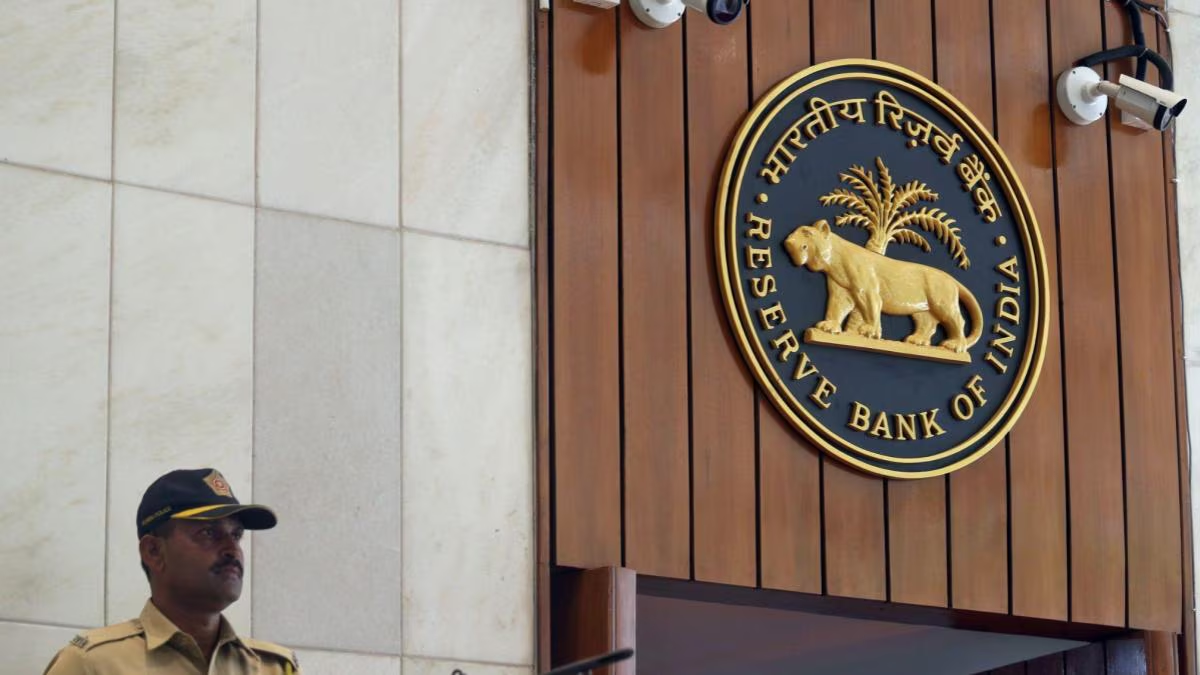
India’s inflation trajectory is easing faster than expected, prompting the Reserve Bank of India to signal a possible shift in its monetary policy stance. The development is closely watched by markets, businesses, and borrowers anticipating rate adjustments.
India’s central bank is entering a critical phase as inflation trends move closer to its medium-term targets. The Reserve Bank of India (RBI) has recently indicated that softer price pressures could allow more flexibility in policy decisions, potentially impacting interest rates, credit growth, and economic momentum in the coming quarters.
Inflation Trends Show Sustained Cooling Momentum
India’s retail inflation, measured by the Consumer Price Index (CPI), has been moderating steadily in recent months. Food inflation, which has historically been volatile, is showing signs of stability due to improved supply conditions and government interventions.
Core inflation, which excludes food and fuel, has also softened. This is significant because core inflation reflects underlying demand pressures in the economy. A consistent decline suggests that pricing power across sectors is easing.
The RBI’s medium-term inflation target remains at 4 percent with a tolerance band of 2 to 6 percent. Recent data indicates inflation is moving closer to the target range, strengthening the case for a policy recalibration.
This cooling trend is happening despite global uncertainties such as fluctuating crude oil prices and geopolitical risks, indicating domestic factors are currently supporting price stability.
RBI Policy Outlook Signals Possible Rate Shift
The RBI has maintained a cautious stance over the past year, prioritizing inflation control over growth stimulation. However, with inflation easing, policymakers are now signaling a potential shift toward a more neutral or growth-supportive approach.
The central bank has not immediately announced rate cuts but has hinted at greater flexibility in future decisions. This suggests that if inflation continues to remain under control, the RBI could consider reducing interest rates or easing liquidity conditions.
A policy shift does not necessarily mean aggressive rate cuts. Instead, it reflects a transition from a restrictive stance to a more balanced approach that considers both inflation and economic growth.
Markets are interpreting this as an early signal that the rate tightening cycle may be nearing its end.
Impact on Borrowers, Businesses, and Markets
A shift in RBI policy has direct implications for multiple segments of the economy. Borrowers, especially those with home loans and business loans, could benefit from lower interest rates if policy easing follows.
For businesses, especially in sectors like real estate, infrastructure, and manufacturing, easier credit conditions can improve investment activity and expansion plans. Lower borrowing costs typically encourage capital expenditure and hiring.
Equity markets often react positively to signals of policy easing. Banking, auto, and real estate stocks are particularly sensitive to interest rate expectations.
At the same time, fixed income investors may see adjustments in bond yields, as expectations of rate cuts influence debt market dynamics.
Global Context Adds Strategic Complexity
While domestic inflation is easing, global conditions remain uncertain. Central banks like the US Federal Reserve and the European Central Bank are still navigating inflation challenges, which impacts capital flows and currency stability in emerging markets like India.
The RBI must balance domestic growth needs with external risks such as currency volatility and imported inflation. A premature rate cut could weaken the rupee or trigger capital outflows.
Therefore, the RBI’s policy shift is likely to remain gradual and data-driven rather than abrupt.
This approach ensures that inflation remains anchored while allowing room to support economic growth.
What Comes Next for India’s Monetary Policy
Going forward, the RBI’s decisions will depend heavily on incoming data, particularly food inflation trends, global commodity prices, and domestic demand indicators.
If inflation continues to remain within the target range, the probability of rate cuts in upcoming policy meetings increases. However, any unexpected spike in prices could delay this shift.
The central bank is also likely to monitor liquidity conditions closely, ensuring that the financial system remains stable while supporting credit flow.
Overall, the current signal from the RBI marks a transition phase rather than a definitive pivot, but it is a crucial indicator for businesses and investors planning ahead.
Takeaways
• Inflation cooling is giving RBI room to reconsider its policy stance
• Rate cuts are not immediate but are increasingly being anticipated
• Borrowers and businesses could benefit from easier credit conditions
• Global economic risks will continue to influence RBI decisions
FAQs
What does RBI’s policy shift mean for interest rates?
It signals a potential move toward lower interest rates, but actual rate cuts will depend on future inflation data.
Is inflation fully under control in India?
Inflation is easing and moving closer to target levels, but it is still monitored closely due to food and global price risks.
How will this impact home loan borrowers?
If rates are reduced, home loan EMIs could decrease, improving affordability.
Why is RBI cautious despite lower inflation?
Global uncertainties and currency stability concerns require a careful, data-driven approach.