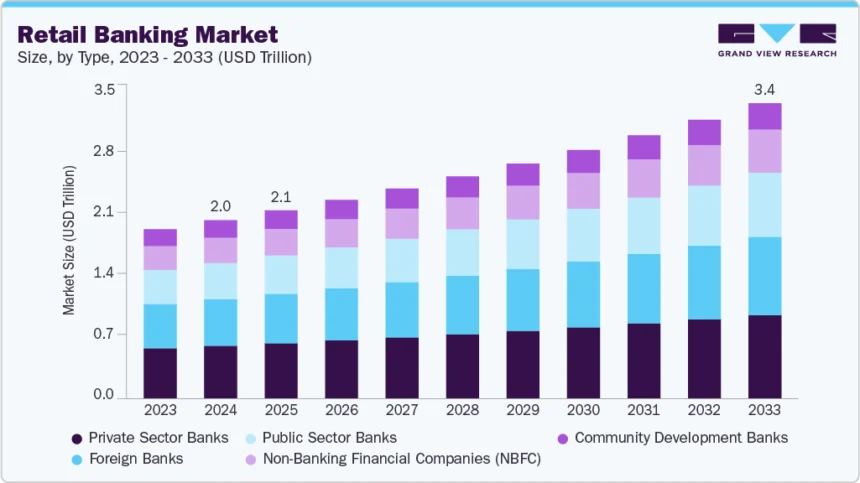
The global banking sector is witnessing consolidation in retail portfolios as lenders streamline operations and focus on profitability. Banks are divesting non core retail assets and acquiring targeted portfolios to strengthen their position in competitive consumer markets.
Retail portfolio consolidation reshapes global banking strategies
Global banking sector sees consolidation in retail portfolios, making this a time sensitive trend across financial markets. Banks are reassessing their retail businesses in response to changing economic conditions, rising costs, and evolving customer behavior.
Large international banks are divesting smaller or underperforming retail segments, while regional and domestic banks are acquiring these portfolios to expand their footprint. This shift allows banks to focus on core markets and improve operational efficiency.
Retail banking, which includes products such as credit cards, personal loans, and savings accounts, requires significant investment in technology and customer acquisition. Consolidation helps banks achieve scale and manage these costs more effectively.
The trend reflects a strategic realignment within the banking sector.
Profitability pressures drive portfolio restructuring decisions
One of the main drivers of retail portfolio consolidation is the need to improve profitability. Banks are facing margin pressures due to rising interest rates, increased competition, and higher regulatory costs.
Maintaining smaller or fragmented retail operations can be inefficient, especially for global banks operating in multiple markets. By exiting or consolidating these portfolios, banks can reduce operational complexity and focus on higher return segments.
For acquiring banks, these deals provide an opportunity to scale quickly and increase market share. Established customer bases and existing loan portfolios offer immediate revenue potential.
This dynamic is creating a wave of strategic transactions across regions.
Digital transformation influences consolidation trends
The rise of digital banking is another key factor shaping consolidation in retail portfolios. Banks are investing heavily in technology to enhance customer experience and compete with fintech companies.
Digital platforms require significant upfront investment, which can be challenging for smaller or less efficient operations. Consolidation allows banks to pool resources and invest in advanced technology.
Customers are increasingly expecting seamless digital services, including mobile banking, instant payments, and personalized financial products. Banks that can deliver these services at scale gain a competitive advantage.
This shift is accelerating the need for consolidation as institutions adapt to changing consumer expectations.
Regional banks gain strength through targeted acquisitions
The consolidation trend is benefiting regional and domestic banks, which are actively acquiring retail portfolios from global players. These banks often have a deeper understanding of local markets and customer behavior.
By acquiring retail assets, regional banks can expand their presence and compete more effectively with larger institutions. This strategy also allows them to diversify their product offerings and increase revenue streams.
In many cases, domestic banks are better positioned to manage retail portfolios due to their established networks and regulatory familiarity.
The growing role of regional banks is reshaping the competitive landscape in retail banking.
Global banks shift focus to core and high value segments
As part of consolidation, global banks are increasingly focusing on core business areas such as corporate banking, wealth management, and cross border financial services.
Retail banking in certain markets may not align with their strategic priorities, especially if scale and profitability are difficult to achieve. By exiting these segments, banks can redeploy capital to areas with higher returns.
This strategic shift is not limited to one region but is being observed globally. It reflects a broader effort to optimize business models and improve financial performance.
The focus on core segments is expected to continue as banks adapt to evolving market conditions.
Impact on customers and competition in retail banking
Retail portfolio consolidation has implications for customers and competition. For customers, it can lead to changes in service providers, product offerings, and customer experience.
In many cases, consolidation results in improved services as acquiring banks invest in technology and expand their capabilities. However, reduced competition in certain markets could impact pricing and choice.
For the banking sector, consolidation increases competition among larger players while reducing fragmentation. Banks with scale and technological capability are likely to dominate the market.
The overall impact depends on how effectively banks manage integration and customer relationships.
Long term outlook for global retail banking sector
The consolidation of retail portfolios is expected to continue as banks respond to economic pressures and technological changes. The trend is likely to result in fewer but stronger players in the market.
Banks will continue to focus on efficiency, customer experience, and profitability. Investments in digital infrastructure and data analytics will play a key role in shaping future strategies.
Regulatory frameworks will also influence consolidation, as authorities seek to maintain competition and financial stability.
The evolving landscape suggests a more streamlined and competitive global retail banking sector.
What this means for investors and financial markets
For investors, the consolidation trend presents opportunities to invest in banks that are strengthening their market position through strategic acquisitions. It also highlights the importance of efficiency and scalability in banking operations.
Financial markets may see increased activity in mergers and acquisitions as banks continue to restructure portfolios. This can influence valuations and investment decisions.
Overall, the trend reflects a shift toward more focused and sustainable banking models.
Takeaways
- Global banking sector is consolidating retail portfolios to improve efficiency
- Profitability pressures and digital transformation are key drivers
- Regional banks are gaining strength through acquisitions
- Global banks are focusing on core and high value business segments
FAQs
Q1. Why is retail portfolio consolidation happening in banking?
Banks are restructuring to improve profitability, reduce costs, and adapt to digital transformation.
Q2. How does consolidation benefit banks?
It allows banks to achieve scale, enhance efficiency, and focus on core business areas.
Q3. What impact does this have on customers?
Customers may experience changes in service providers and improved digital offerings.
Q4. Will consolidation continue in the future?
Yes, as banks adapt to economic and technological changes, consolidation is expected to persist.