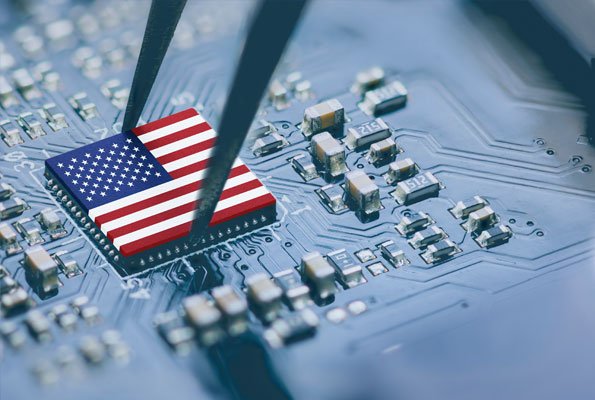
The global semiconductor race is intensifying between the United States, China, and the European Union as governments ramp up investments and policy support. The competition reflects strategic priorities around technology leadership, supply chain security, and economic influence.
Semiconductor race between US China EU accelerates
Semiconductor race intensifies between US China and EU, making this a time sensitive development driven by geopolitical and economic priorities. Governments are actively investing in chip manufacturing, research, and supply chain resilience to reduce dependence on external sources.
The United States has introduced large scale funding initiatives to boost domestic semiconductor production and reduce reliance on imports. At the same time, China is investing heavily to build self sufficiency in chip manufacturing, aiming to overcome external restrictions.
The European Union is also entering the race with policy measures designed to expand its semiconductor capabilities and attract global manufacturers. These parallel efforts are creating a competitive global environment.
Strategic importance of semiconductors drives policy actions
Semiconductors are critical components in modern technology, powering everything from smartphones and computers to automobiles and defense systems. This strategic importance has elevated chips to a national priority for major economies.
Governments view semiconductor independence as essential for economic stability and national security. Disruptions in chip supply can impact multiple industries, highlighting the need for reliable production capabilities.
Policy measures include subsidies, tax incentives, and support for research and development. These initiatives aim to attract investments from major chip manufacturers and encourage domestic innovation.
The focus on semiconductors reflects their role as a foundation for digital economies.
Supply chain disruptions highlight need for diversification
Recent supply chain disruptions have exposed vulnerabilities in the global semiconductor ecosystem. Concentration of manufacturing in specific regions has created risks for industries dependent on chips.
The United States, China, and the EU are responding by diversifying supply chains and increasing local production capacity. This involves building new fabrication plants and strengthening partnerships with allied countries.
Companies such as Intel and TSMC are playing key roles in expanding global manufacturing networks.
The goal is to create a more resilient supply chain that can withstand geopolitical and economic disruptions.
Investment surge reshapes global semiconductor landscape
The intensifying race has led to a surge in investments across the semiconductor industry. Governments and private companies are committing billions of dollars to build new facilities and upgrade existing infrastructure.
These investments are not limited to manufacturing but also include research in advanced technologies such as next generation chips and artificial intelligence processors.
The competition is driving innovation as countries seek to develop cutting edge technologies. However, it also increases costs and complexity, as building semiconductor facilities requires significant capital and expertise.
The evolving landscape is reshaping global industry dynamics.
Geopolitical tensions influence technology competition
Geopolitical tensions are a key factor in the semiconductor race. Trade restrictions, export controls, and strategic alliances are influencing how countries approach chip development and distribution.
The United States has implemented measures to limit access to advanced semiconductor technologies for certain countries. In response, China is accelerating efforts to develop its own capabilities.
The European Union is positioning itself as a neutral but competitive player, focusing on collaboration and strategic investment.
These dynamics are creating a complex environment where technology, politics, and economics intersect.
Impact on industries and global innovation
The semiconductor race has far reaching implications for industries worldwide. Sectors such as automotive, electronics, telecommunications, and defense rely heavily on chip availability.
Increased investment and competition are expected to drive innovation and improve supply reliability over time. However, short term disruptions and cost pressures may continue as the industry adjusts.
Companies are also adapting by securing long term supply agreements and exploring alternative sourcing strategies.
The outcome of this race will influence the pace of technological advancement and economic growth.
Long term outlook for global semiconductor competition
The competition between the US, China, and the EU is likely to continue for the foreseeable future. Each region is committed to strengthening its position in the semiconductor industry.
Collaboration and competition will coexist, with countries balancing strategic interests and economic opportunities. The industry’s complexity means that complete self sufficiency may be difficult to achieve.
However, the current efforts are expected to reduce dependency and enhance resilience. The semiconductor race will remain a defining feature of the global technology landscape.
What this means for global markets and policy
For global markets, the intensifying semiconductor race signals increased investment, innovation, and competition. It also highlights the importance of technology in shaping economic and geopolitical strategies.
For policymakers, the challenge is to balance domestic priorities with international collaboration. Ensuring stable supply chains while fostering innovation will be key.
Businesses must navigate this evolving environment by adapting strategies and building resilience.
Takeaways
- The semiconductor race between the US, China, and the EU is intensifying
- Governments are investing heavily to build domestic chip capabilities
- Supply chain diversification is a key priority for all regions
- Geopolitical tensions are shaping the future of the semiconductor industry
FAQs
Q1. Why is the semiconductor race important?
Semiconductors are essential for modern technology and economic stability, making them a strategic priority.
Q2. Which regions are leading the race?
The United States, China, and the European Union are the main players driving investment and policy initiatives.
Q3. How are governments supporting the semiconductor industry?
Through subsidies, incentives, and funding for research and manufacturing infrastructure.
Q4. What challenges does the industry face?
High costs, supply chain disruptions, and geopolitical tensions are key challenges.