Summary: The government is reassessing the EV subsidy structure as adoption targets face pressure from rising costs and slowing demand signals. The review aims to balance fiscal spending with long term electric vehicle growth and industry sustainability.
Government EV subsidy review has come into focus as policymakers evaluate whether current incentives are sufficient to sustain electric vehicle adoption without straining public finances. With rising input costs and shifting market dynamics, the subsidy framework is being reassessed to ensure it remains effective and targeted.
India’s electric vehicle transition has been supported by schemes such as demand incentives, production-linked incentives, and state-level benefits. However, recent trends suggest that cost pressures and uneven adoption rates may require recalibration of these policies.
EV Adoption Trends Show Mixed Momentum
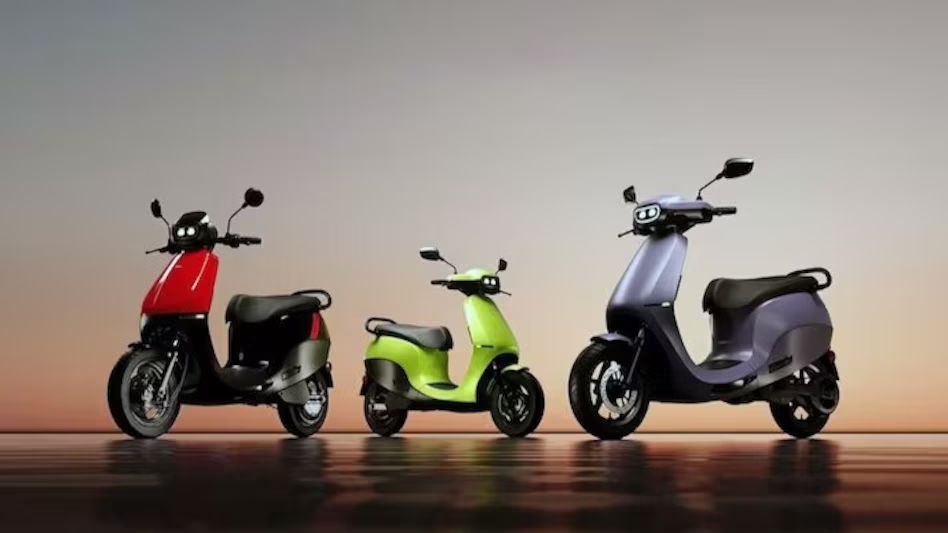
Electric vehicle adoption in India has grown steadily over the past few years, particularly in two-wheelers and three-wheelers. These segments have benefited the most from subsidies due to their price sensitivity and high urban usage.
However, adoption in passenger cars and commercial vehicles has been slower than expected. Higher upfront costs, limited charging infrastructure, and concerns around battery life continue to influence consumer decisions.
The current government EV subsidy review is partly driven by this uneven adoption pattern. Policymakers are examining whether incentives need to be more segment-specific rather than broadly applied across categories.
Cost Pressures Impact EV Subsidy Effectiveness
Rising costs across the EV value chain are adding complexity to the subsidy structure. Battery prices, which account for a significant portion of EV costs, have been influenced by global commodity trends such as lithium and cobalt pricing.
Manufacturers are also facing higher input costs for components and logistics. While subsidies help offset these expenses to some extent, there is growing concern that the existing structure may not fully bridge the affordability gap for consumers.
From a fiscal perspective, sustaining large scale subsidies over a long period can place pressure on government budgets. This has prompted a closer look at how incentives are distributed and whether they are delivering the intended outcomes.
Policy Shift Toward Targeted EV Incentives
The ongoing review suggests a potential shift toward more targeted EV incentives. Instead of uniform subsidies, the government may prioritize segments that offer the highest impact in terms of emissions reduction and urban mobility.
For example, public transport fleets, last-mile delivery vehicles, and shared mobility solutions could receive greater support. These segments contribute significantly to daily emissions and can benefit more from electrification.
There is also discussion around linking subsidies to performance metrics such as battery efficiency, local manufacturing content, and vehicle usage patterns. This approach could encourage innovation while ensuring that incentives are aligned with policy goals.
Industry Response and Market Implications
The EV industry is closely watching the government EV subsidy review, as any changes could influence pricing strategies, investment plans, and demand forecasts. Manufacturers have been advocating for stable and predictable policies to support long term planning.
A reduction in subsidies could impact short term demand, especially in price-sensitive segments. However, a more targeted approach may improve overall efficiency and ensure that funds are directed where they create the most value.
Investors are also assessing how policy changes might affect the broader EV ecosystem. This includes battery manufacturers, charging infrastructure providers, and component suppliers, all of whom depend on consistent growth in EV adoption.
Long Term Outlook for EV Policy in India
The review of the EV subsidy structure reflects a maturing phase in India’s electric mobility journey. As the market evolves, policy frameworks need to adapt to changing conditions rather than relying on initial incentive models.
In the long term, the goal is to reduce dependence on subsidies as economies of scale bring down costs. Increased domestic manufacturing, technological advancements, and improved infrastructure are expected to play a key role in this transition.
The government’s challenge is to maintain momentum in EV adoption while ensuring fiscal sustainability. The outcome of this review could shape the next phase of India’s clean mobility strategy.
Takeaways
- Government is reviewing EV subsidies due to rising costs and uneven adoption
- Two-wheelers and three-wheelers lead EV growth while other segments lag
- Policy may shift toward targeted incentives for high-impact segments
- Long term focus remains on reducing subsidy dependence through scale
FAQ
Why is the government reviewing EV subsidies
Rising costs and uneven adoption have prompted a reassessment to ensure incentives remain effective and sustainable.
Will EV prices increase if subsidies are reduced
There could be short term price impacts, especially in price-sensitive segments, but long term costs may decline with scale.
Which EV segments are growing fastest in India
Two-wheelers and three-wheelers are currently leading adoption due to lower costs and practical usage.
What is the future of EV policy in India
The focus is likely to shift toward targeted incentives and long term sustainability rather than broad subsidies.