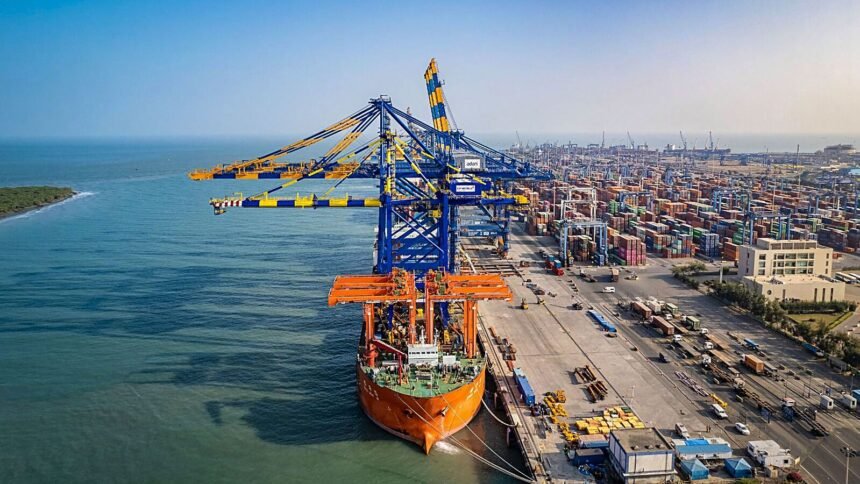
Adani Ports Southeast Asia acquisitions are gaining attention as the company explores opportunities to expand its international cargo footprint. The strategy reflects a broader push to diversify revenue streams and strengthen its position in global maritime trade corridors.
Adani Ports Southeast Asia Acquisitions Signal Global Ambition
Adani Ports Southeast Asia acquisitions are part of a calculated expansion strategy by Adani Ports and Special Economic Zone to scale beyond domestic operations. As India’s largest private port operator, the company is now focusing on international assets to enhance cargo handling capacity and logistics integration.
The move aligns with the group’s long-term vision to become a global ports and logistics leader. Southeast Asia presents a strategic opportunity due to its proximity to major shipping routes and growing trade volumes.
Industry signals suggest that Adani Ports is evaluating multiple port assets in countries such as Indonesia, Vietnam, and the Philippines. These markets are seeing rising container traffic driven by manufacturing shifts and export growth.
Southeast Asia Logistics Market Offers Strategic Advantages
The Southeast Asia logistics market has become a focal point for global investors due to its role in supply chain diversification. As companies look to reduce dependence on single-country sourcing, the region is benefiting from increased manufacturing activity.
Ports in Southeast Asia act as critical gateways connecting Asia to Europe, the Middle East, and the Americas. By acquiring assets in this region, Adani Ports can tap into established trade lanes while building new cargo flows linked to India.
This strategy also complements India’s own trade ambitions, as stronger port connectivity can facilitate exports and imports more efficiently. It creates a network effect that enhances both regional and global logistics capabilities.
Diversification Beyond Domestic Ports Strengthens Business Model
Adani Ports has already built a dominant presence across India’s coastline, handling a significant share of the country’s cargo. However, relying solely on domestic volumes exposes the company to local economic cycles and regulatory changes.
Expanding internationally helps mitigate these risks. Overseas assets provide revenue diversification and access to different trade ecosystems. They also allow the company to serve multinational clients across multiple geographies.
The company has previously demonstrated its ability to integrate acquired assets into its operational framework. This experience is likely to play a key role as it evaluates new opportunities in Southeast Asia.
Competitive Landscape and Global Port Investments
Adani Ports is not alone in targeting international port assets. Global infrastructure players and sovereign funds are actively investing in logistics hubs across Asia.
Competition for high-quality port assets is intense, especially in regions with strong growth potential. Valuations have risen, and deals often involve complex regulatory approvals and local partnerships.
Despite these challenges, Adani Ports’ scale and financial backing provide a competitive edge. Its ability to execute large transactions and invest in infrastructure upgrades makes it a serious contender in the global market.
Risks and Execution Challenges in Overseas Expansion
While the opportunity is significant, international expansion comes with risks. Regulatory frameworks vary across countries, and navigating local laws can be complex. Political and economic stability also play a role in determining the success of such investments.
Currency fluctuations and integration challenges can impact returns. Managing operations across multiple geographies requires strong governance and efficient coordination.
Adani Ports will need to balance aggressive expansion with disciplined capital allocation to ensure long-term value creation.
Impact on India’s Global Trade Position
If executed effectively, Adani Ports’ expansion into Southeast Asia could enhance India’s position in global trade networks. Stronger port linkages can improve supply chain efficiency and reduce logistics costs for exporters and importers.
The move also reflects a broader trend of Indian companies expanding globally in infrastructure and logistics sectors. It signals growing confidence in competing with international players.
For businesses, this could mean better connectivity, faster transit times, and improved access to global markets.
Takeaways
- Adani Ports is exploring Southeast Asia acquisitions to expand globally
- The strategy focuses on tapping into key international trade routes
- Overseas assets can diversify revenue and reduce domestic dependence
- Execution risks remain due to regulatory and market complexities
FAQ
Why is Adani Ports targeting Southeast Asia?
The region offers strong trade growth, strategic shipping routes, and increasing manufacturing activity.
Which countries are likely targets for acquisition?
Markets like Indonesia, Vietnam, and the Philippines are being evaluated due to rising cargo volumes.
How will this benefit Adani Ports?
It will diversify revenue, expand global presence, and strengthen logistics capabilities.
What are the main risks involved?
Regulatory challenges, integration issues, and economic uncertainties in foreign markets.