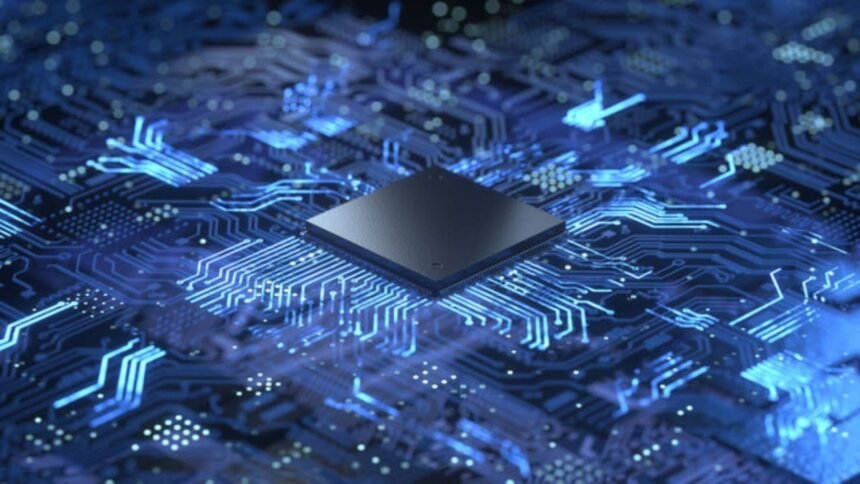
India’s semiconductor ambitions are accelerating as global companies rethink supply chains heavily dependent on China. With rising geopolitical tensions, government incentives, and growing electronics demand, India is positioning itself as a long-term semiconductor manufacturing and assembly destination in the global technology ecosystem.
India’s semiconductor ambitions are gaining serious momentum as global chip supply chains continue shifting away from China amid geopolitical tensions, trade restrictions, and supply chain diversification efforts. The country is increasingly being viewed as a potential alternative manufacturing and semiconductor packaging hub as governments and technology companies worldwide seek to reduce overdependence on concentrated production networks.
Over the last few years, semiconductors have become central to economic strategy, national security, and industrial competitiveness. Chips now power everything from smartphones and electric vehicles to defense systems, artificial intelligence infrastructure, and cloud computing. This has pushed countries to aggressively strengthen domestic semiconductor ecosystems after the severe global chip shortages experienced during and after the pandemic.
India is now attempting to enter this highly strategic sector through policy incentives, global partnerships, and infrastructure expansion.
Global Supply Chains Shift Beyond China
The global semiconductor industry is undergoing a structural transformation. Rising tensions between the United States and China, combined with export controls and trade restrictions, have forced multinational companies to rethink manufacturing concentration risks.
For years, China dominated large parts of electronics manufacturing and supply chain assembly. However, companies are increasingly pursuing a “China Plus One” strategy by expanding operations into countries such as India, Vietnam, and Mexico.
India’s large domestic market, growing electronics manufacturing base, and government-backed production incentives are helping it attract interest from semiconductor companies and supply chain partners. Technology firms are seeking stable, diversified production networks that reduce exposure to geopolitical uncertainty.
Analysts believe the shift is not about replacing China entirely, but rather creating distributed supply chains across multiple countries to improve resilience.
India’s strategic importance has increased further because global semiconductor demand continues expanding rapidly due to artificial intelligence, electric vehicles, cloud infrastructure, and connected devices.
Government Incentives Drive Semiconductor Investments
India has introduced multiple policy initiatives aimed at building a domestic semiconductor ecosystem. The government has announced financial incentives for semiconductor fabrication plants, chip packaging facilities, display manufacturing, and electronics production.
The semiconductor mission launched by India focuses on attracting both domestic and international investment while developing long-term manufacturing capability. Authorities are also encouraging partnerships between global chip firms and Indian companies to accelerate ecosystem development.
Several large investment announcements in semiconductor assembly, testing, and packaging have already emerged in recent years. While India still lacks large-scale advanced chip fabrication capacity comparable to Taiwan or South Korea, the country is positioning itself initially in areas such as semiconductor packaging, design services, and electronics manufacturing.
Industry experts say this gradual approach is more realistic because semiconductor manufacturing requires massive capital investment, highly specialized infrastructure, stable power supply, and deep technical expertise.
Building a globally competitive semiconductor ecosystem may take years, but early momentum is clearly increasing.
India’s Electronics Manufacturing Ecosystem Continues Expanding
India’s semiconductor ambitions are closely tied to its rapidly growing electronics manufacturing sector. Smartphone production has expanded significantly in the country, with global companies increasing local assembly operations under production-linked incentive schemes.
Electronics exports from India have also grown sharply over the past few years. This expansion is helping create the broader industrial ecosystem necessary for semiconductor development, including logistics networks, supplier bases, skilled labor, and industrial infrastructure.
Technology companies view India not only as a manufacturing location but also as a major consumer market with rising demand for electronics, electric vehicles, and connected technologies.
The semiconductor push is expected to support multiple sectors simultaneously, including automotive manufacturing, telecom equipment, consumer electronics, defense systems, and renewable energy technologies.
However, experts caution that semiconductor manufacturing is far more complex than general electronics assembly. Advanced chip fabrication facilities require precision engineering, sophisticated water management systems, uninterrupted energy supply, and highly trained technical talent.
Talent, Infrastructure, and Supply Chain Gaps Remain Challenges
Despite growing momentum, India still faces several structural challenges in becoming a major semiconductor manufacturing hub. Infrastructure readiness, logistics efficiency, skilled workforce availability, and long-term policy consistency remain critical concerns for investors.
Semiconductor fabrication plants are among the most capital-intensive industrial projects globally. Building and operating these facilities requires billions of dollars in investment and years of execution.
India also faces competition from countries already deeply integrated into semiconductor supply chains, including Taiwan, South Korea, Japan, Singapore, and the United States. These countries possess decades of manufacturing experience and established supplier ecosystems.
Industry observers believe India’s biggest strength currently lies in semiconductor design talent. Indian engineers already play significant roles in global chip design and software development for major technology companies.
The challenge now is translating this talent advantage into large-scale domestic manufacturing capability.
Analysts say success will depend on whether India can sustain long-term policy support and build trust among global investors seeking supply chain stability.
Semiconductor Strategy Could Reshape India’s Industrial Future
Semiconductors are increasingly viewed as foundational to future economic growth and technological sovereignty. Countries worldwide are investing aggressively in chip manufacturing because semiconductors influence industries ranging from artificial intelligence to defense and clean energy.
For India, building a semiconductor ecosystem is not only about manufacturing chips. It is also about strengthening industrial competitiveness, attracting global capital, reducing import dependence, and creating high-value jobs.
The shift in global supply chains away from concentrated manufacturing centers has created a rare strategic opportunity. While India still has a long way to go before becoming a major semiconductor producer, the momentum around investments, policy support, and global partnerships suggests the country is entering a more serious phase of semiconductor development.
Takeaways
- India is gaining momentum as global semiconductor supply chains diversify beyond China
- Government incentives are attracting investment into chip manufacturing and packaging
- India’s expanding electronics manufacturing ecosystem supports semiconductor ambitions
- Infrastructure, talent, and long-term execution remain major challenges
FAQ
Why are global chip supply chains shifting from China?
Geopolitical tensions, trade restrictions, and supply chain diversification strategies are encouraging companies to reduce dependence on China.
What role does India want to play in the semiconductor industry?
India aims to become a semiconductor manufacturing, packaging, and design hub while expanding its electronics ecosystem.
Does India currently manufacture advanced semiconductor chips?
India is still in the early stages of large-scale semiconductor manufacturing and currently focuses more on packaging, assembly, and chip design capabilities.
Why are semiconductors strategically important?
Semiconductors power critical technologies including smartphones, electric vehicles, AI systems, telecom infrastructure, and defense equipment.