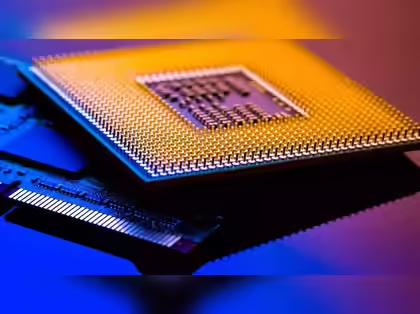
India’s Semiconductor Mission 2.0 is triggering fresh momentum across the country’s manufacturing startup ecosystem. New policy incentives, supply chain localization efforts, and rising geopolitical demand for chip diversification are pushing Indian startups to enter semiconductor design, packaging, testing, and electronics manufacturing.
India’s Semiconductor Push Enters a New Expansion Phase
India’s semiconductor ambitions are entering a more aggressive phase as Semiconductor Mission 2.0 gains momentum across the manufacturing and technology sectors. The government’s broader push to strengthen domestic chip capabilities is now encouraging startups, industrial firms, and investors to explore opportunities beyond traditional software-driven business models.
The semiconductor sector became strategically important after global chip shortages disrupted industries ranging from automobiles and smartphones to consumer electronics and defense systems. Countries worldwide began treating semiconductor supply chains as national economic and strategic priorities.
India’s response initially focused on attracting large global semiconductor investments through production-linked incentives and infrastructure support. Now, the ecosystem is gradually expanding toward startups working in chip design, embedded systems, semiconductor equipment, testing services, advanced materials, and electronics manufacturing.
Industry experts believe Semiconductor Mission 2.0 reflects a shift from policy experimentation toward ecosystem building. Instead of focusing only on large fabrication plants, the new phase appears aimed at creating a wider semiconductor value chain inside India.
Manufacturing Startups See New Growth Opportunity
Indian manufacturing startups are increasingly viewing semiconductors as a long-term growth opportunity rather than a highly restricted industrial niche. Earlier, semiconductor business development in India remained largely concentrated around chip design services for global companies.
Now, startups are exploring areas such as compound semiconductors, semiconductor packaging, industrial electronics, IoT hardware, power management chips, EV electronics, and testing infrastructure. Demand is rising due to India’s expansion in electric vehicles, telecom infrastructure, renewable energy systems, and consumer electronics manufacturing.
The startup ecosystem is also benefiting from stronger government support. Several state governments are offering industrial land incentives, power subsidies, research support, and infrastructure assistance for electronics and semiconductor-related projects.
Gujarat, Karnataka, Tamil Nadu, Telangana, and Uttar Pradesh are among the states aggressively competing to attract semiconductor investments. This competition is creating fresh opportunities for smaller manufacturing startups that can become suppliers, engineering partners, or specialized service providers within larger semiconductor ecosystems.
Global Geopolitics Strengthens India’s Semiconductor Position
One of the biggest reasons behind India’s semiconductor acceleration is changing global geopolitics. Many multinational companies are trying to reduce dependence on concentrated chip manufacturing hubs due to supply chain risks and geopolitical tensions.
Countries including the United States, Japan, South Korea, and members of the European Union have launched major semiconductor incentive programs in recent years. India is attempting to position itself as part of this broader global diversification effort.
While India may take years to develop full-scale advanced semiconductor fabrication capabilities, it is increasingly being viewed as an alternative destination for electronics manufacturing, assembly, packaging, and design operations.
Indian startups could benefit significantly from this transition. Global corporations looking to build resilient supply chains may increasingly partner with local engineering and manufacturing firms. This could help startups access both technology partnerships and long-term industrial contracts.
Analysts say India’s large engineering workforce and expanding domestic electronics market provide structural advantages, though execution challenges remain significant.
Semiconductor Talent and Infrastructure Become Major Challenges
Despite strong policy momentum, India’s semiconductor ecosystem still faces major operational challenges. Semiconductor manufacturing requires enormous capital investment, advanced technical expertise, precision infrastructure, and highly specialized talent.
Unlike software startups, semiconductor businesses often require longer development cycles, heavy research spending, and complex supply chain coordination. Building fabrication facilities also involves massive electricity, water, and logistics requirements.
Talent availability is another concern. India has a strong pool of semiconductor design engineers working for global firms, but the country still lacks large-scale experience in advanced fabrication and manufacturing operations.
To address this gap, universities, technical institutes, and government agencies are expanding semiconductor-focused training programs. Engineering colleges are also increasing specialization in chip design, embedded systems, and electronics manufacturing technologies.
Industry experts believe India’s semiconductor ambitions will succeed only if policy support is matched with long-term infrastructure development and consistent regulatory execution.
AI, EVs, and Defense Drive Semiconductor Demand Growth
The rise of artificial intelligence, electric vehicles, defense electronics, and industrial automation is further increasing semiconductor demand across India. AI systems require powerful processors and specialized chips, while electric vehicles depend heavily on semiconductors for battery management, sensors, and power systems.
India’s telecom sector expansion, 5G infrastructure rollout, and smart manufacturing initiatives are also contributing to higher electronics demand. This creates opportunities not only for large manufacturers but also for startups building supporting technologies and components.
Defense and strategic electronics are becoming another major focus area. Governments globally are seeking greater domestic control over sensitive semiconductor supply chains due to national security concerns.
Indian startups working in embedded electronics, industrial hardware, and semiconductor-linked systems may increasingly attract defense and industrial partnerships in the coming years.
The broader impact of Semiconductor Mission 2.0 could extend beyond chips themselves. It may reshape India’s manufacturing ecosystem by encouraging deeper integration between software innovation and industrial production capabilities.
Key Takeaways
- Semiconductor Mission 2.0 is accelerating India’s manufacturing and chip ecosystem ambitions
- Indian startups are entering semiconductor design, testing, packaging, and electronics manufacturing
- Global supply chain diversification is creating new opportunities for India
- Talent, infrastructure, and capital intensity remain major industry challenges
FAQ
What is Semiconductor Mission 2.0?
It refers to India’s expanded policy push to strengthen semiconductor manufacturing, chip design, electronics production, and related infrastructure.
Why are startups entering the semiconductor sector?
Government incentives, rising electronics demand, and global supply chain diversification are creating new business opportunities.
Which sectors are driving semiconductor demand in India?
Artificial intelligence, electric vehicles, telecom, renewable energy, defense, and industrial automation are major growth drivers.
What are the biggest challenges for India’s semiconductor ecosystem?
High capital requirements, infrastructure needs, supply chain complexity, and shortage of specialized manufacturing talent remain key obstacles.