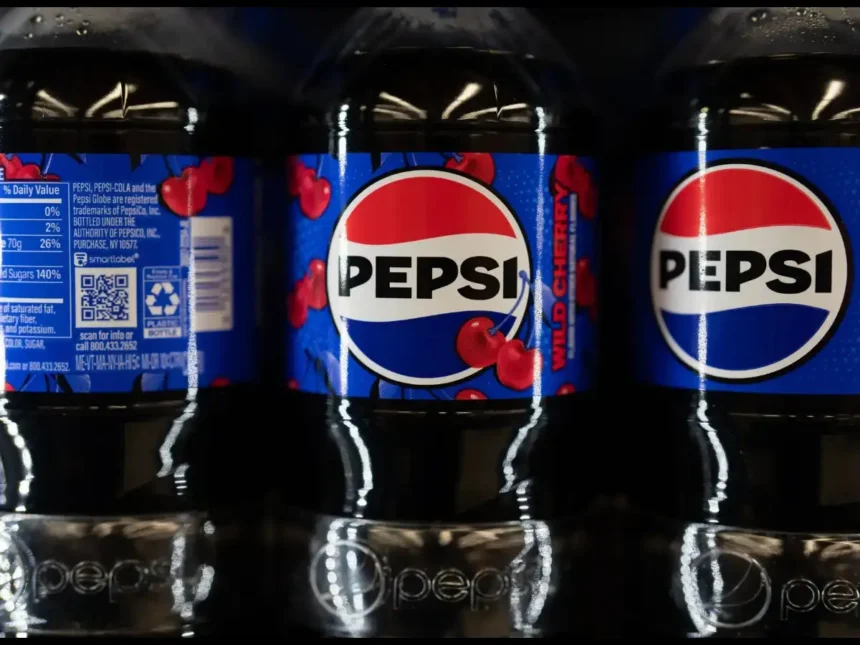
PepsiCo’s ₹5,700 crore investment in India highlights how multinational consumer goods companies are expanding local manufacturing to tap rising demand, improve supply chains, and align with the government’s push to make India a global production hub.
PepsiCo Expands India Manufacturing Footprint
PepsiCo is deepening its commitment to India with an announced investment of approximately ₹5,700 crore to expand manufacturing capacity, strengthen agricultural partnerships, and support product innovation tailored to local tastes.
The move reflects the company’s long-term confidence in India, which has become one of PepsiCo’s fastest-growing markets. The company already has a significant presence in the country through brands such as Lay’s, Kurkure, Tropicana, Gatorade, Pepsi, and Quaker.
The investment is expected to fund new production facilities, capacity expansion at existing plants, and broader sourcing initiatives that connect PepsiCo more closely with Indian farmers and suppliers.
Why India Is Becoming a Manufacturing Magnet
India is increasingly attracting global FMCG companies because of three powerful advantages: a large consumer base, policy support, and improving infrastructure.
With a population exceeding 1.4 billion and rising disposable incomes, India offers a vast market for packaged foods and beverages. At the same time, initiatives such as Make in India and production-linked incentives have encouraged companies to localize manufacturing.
Improved highways, logistics networks, and digital supply chains are also making it easier to produce and distribute goods efficiently.
For companies like PepsiCo, manufacturing locally helps lower transportation costs, reduce import dependence, and respond more quickly to changing consumer preferences.
Global FMCG Giants Are Following the Same Strategy
PepsiCo is not alone in increasing its India footprint. Companies such as Unilever, Nestlé, Coca-Cola, and Mondelez International have all invested in expanding Indian manufacturing and distribution over the past several years.
The strategy goes beyond serving Indian consumers. Many multinationals are using India as a strategic export base for nearby markets in Asia, the Middle East, and Africa.
As global supply chains diversify, India is emerging as a credible alternative manufacturing destination for consumer goods companies seeking scale and resilience.
PepsiCo’s India Strategy Goes Beyond Factories
PepsiCo’s investment is also linked to agricultural sourcing and sustainability.
The company has long worked with Indian farmers, particularly for potatoes used in snack products. By expanding these partnerships, PepsiCo can secure more reliable supplies while helping growers adopt better farming practices and improve yields.
The company has also been investing in water conservation, renewable energy, and packaging improvements as part of its broader sustainability agenda.
This integrated approach strengthens both the supply chain and the company’s relationships with local communities.
Economic Impact: Jobs, Farming and Ancillary Industries
Large manufacturing investments typically create a multiplier effect across the economy.
New plants generate direct employment in production, quality control, logistics, and engineering. They also support indirect jobs in packaging, transportation, warehousing, and maintenance services.
For farmers, stronger procurement partnerships can offer more stable demand and technical support.
State governments often compete for such investments because they bring infrastructure development and boost local industrial ecosystems.
What This Means for India’s Consumer Market
PepsiCo’s ₹5,700 crore commitment underscores growing confidence in India’s long-term consumption story.
Urbanization, younger demographics, and evolving lifestyles are increasing demand for packaged foods, beverages, and health-focused products. Companies that manufacture locally can innovate faster and launch products tailored to regional preferences.
For investors, these investments signal that India remains a priority market for multinational corporations despite global economic uncertainty.
Challenges Still Remain
While the outlook is strong, companies continue to navigate regulatory compliance, commodity price volatility, and shifting consumer preferences toward healthier options.
Competition is also intense, with domestic and international brands fighting for market share.
Even so, large-scale investments suggest that the long-term opportunity outweighs the operational challenges.
Key Takeaways
- PepsiCo plans to invest around ₹5,700 crore to expand manufacturing and sourcing in India.
- India’s large consumer market and policy support are attracting global FMCG investments.
- Local manufacturing helps reduce costs and improves supply chain resilience.
- The investment is expected to support jobs, agriculture, and regional industrial growth.
Frequently Asked Questions
Why is PepsiCo investing heavily in India?
India is one of PepsiCo’s fastest-growing markets and offers strong long-term demand, policy support, and a large manufacturing ecosystem.
What will the ₹5,700 crore investment be used for?
The funds are expected to support new plants, capacity expansion, agricultural sourcing, and supply chain improvements.
Which other FMCG companies are expanding in India?
Unilever, Nestlé, Coca-Cola, and Mondelez have also increased manufacturing investments in India.
How does local manufacturing benefit PepsiCo?
It lowers logistics costs, reduces import dependence, and allows faster adaptation to local consumer preferences.