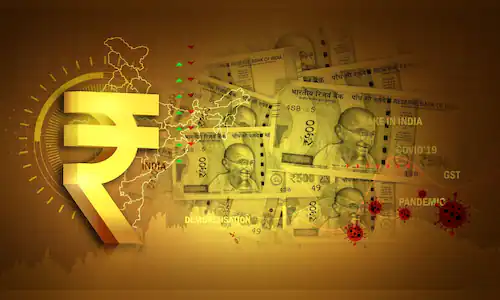
India’s digital rupee initiative is entering a new phase as the Reserve Bank of India (RBI) explores welfare payment distribution and cross-border transaction pilots through its Central Bank Digital Currency (CBDC) program. The move signals a broader effort to integrate the digital rupee into everyday economic activity while improving payment efficiency and financial inclusion.
RBI Digital Rupee Project Moves Beyond Pilot Stage
The RBI’s digital rupee project has progressed significantly since its initial pilot launches in late 2022. After testing retail and wholesale applications across selected banks and users, the central bank is now examining larger use cases that could have a direct impact on government payments and international transactions.
Recent discussions around the next phase of the CBDC program indicate that welfare payments could become one of the most important applications. Government subsidies, social benefits, and targeted financial assistance programs are being evaluated as potential areas where digital rupee distribution can improve transparency and efficiency.
The RBI has consistently maintained that the digital rupee is intended to complement physical currency rather than replace it. The latest expansion reflects confidence in the technology’s ability to support larger transaction volumes and more practical economic functions.
Welfare Payouts Could Strengthen Financial Inclusion
One of the key objectives behind integrating the digital rupee into welfare programs is improving the delivery of government benefits.
India already operates one of the world’s largest direct benefit transfer systems, which sends subsidies and welfare payments directly into beneficiaries’ bank accounts. The introduction of a CBDC-based distribution mechanism could further streamline this process.
Digital rupee welfare payments may allow funds to reach beneficiaries more quickly while reducing transaction friction. Policymakers are also studying programmable payment features that could enable funds to be used for specific purposes, depending on policy requirements.
For example, certain benefits intended for agriculture, healthcare, or education could potentially be directed more efficiently through digital payment systems. However, any such implementation would require extensive safeguards, testing, and regulatory oversight.
Financial inclusion remains a major policy objective, particularly in rural and underserved regions. The RBI views digital currency infrastructure as one possible tool for expanding access to secure digital payments.
Cross-Border Payment Pilots Gain Strategic Importance
Another major focus area for the RBI is cross-border digital rupee transactions.
International payments often involve multiple intermediaries, higher costs, and longer settlement times. Central bank digital currencies have attracted global attention because they could help simplify cross-border transactions while reducing operational inefficiencies.
India has already participated in discussions and pilot projects involving international CBDC interoperability. The next phase of digital rupee development is expected to examine how cross-border settlements can be conducted more efficiently using digital currency frameworks.
Countries across Asia, the Middle East, and other regions are exploring similar technologies. As a major recipient of remittances and an increasingly important player in global trade, India has strong incentives to develop faster and more cost-effective international payment systems.
Successful cross-border pilots could eventually benefit businesses engaged in trade, overseas workers sending remittances, and financial institutions handling international transactions.
Global CBDC Competition Continues to Accelerate
India’s digital rupee expansion comes at a time when central banks worldwide are experimenting with digital currencies.
Several countries have launched pilot programs, while others remain in research and development stages. The objective is not only to modernize payment infrastructure but also to ensure that public money remains relevant in an increasingly digital financial ecosystem.
The RBI has adopted a cautious and phased approach compared to some jurisdictions. Rather than pursuing rapid nationwide adoption, the central bank has focused on controlled pilots, user feedback, and gradual expansion.
This strategy allows policymakers to assess operational challenges, cybersecurity risks, privacy concerns, and technological limitations before introducing broader use cases.
Experts note that the success of any CBDC ultimately depends on public trust, convenience, scalability, and practical utility rather than technological novelty alone.
Challenges Remain Before Large-Scale Adoption
Despite the progress made so far, several challenges must be addressed before the digital rupee can achieve widespread adoption.
User awareness remains relatively limited compared to established payment platforms such as UPI. Consumers and businesses need clear incentives to adopt CBDC-based payment methods.
Infrastructure readiness, cybersecurity protections, privacy safeguards, and interoperability with existing banking systems will also remain critical considerations.
The RBI has repeatedly emphasized that digital rupee development will proceed in stages. Future expansion decisions will likely depend on pilot results, user participation levels, and policy outcomes.
As welfare payments and cross-border transaction pilots gain momentum, the digital rupee is gradually moving from an experimental concept toward a more functional component of India’s financial infrastructure.
Why the Next Phase Matters
The latest developments suggest that the RBI is shifting focus from testing technology to exploring real-world applications.
If welfare distribution and international payment pilots demonstrate measurable benefits, the digital rupee could play a larger role in India’s digital economy strategy. The initiative also aligns with broader efforts to modernize financial infrastructure, improve transaction efficiency, and strengthen India’s position in the evolving global payments landscape.
While large-scale deployment may still take time, the next phase of the digital rupee project will be closely watched by policymakers, banks, technology firms, and international financial institutions.
Key Takeaways
- RBI is expanding digital rupee trials into welfare payment distribution.
- Cross-border payment pilots are becoming a major focus area for CBDC development.
- The digital rupee aims to improve efficiency, transparency, and financial inclusion.
- Large-scale adoption will depend on pilot outcomes, infrastructure readiness, and user acceptance.
FAQ
What is the digital rupee?
The digital rupee is India’s Central Bank Digital Currency issued by the Reserve Bank of India. It represents a digital form of sovereign currency.
Why is RBI testing welfare payouts through the digital rupee?
The objective is to improve efficiency, transparency, and delivery of government benefits while exploring new payment mechanisms.
How can the digital rupee help cross-border payments?
CBDC technology could reduce transaction costs, shorten settlement times, and simplify international payment processes.
Will the digital rupee replace cash?
No. The RBI has consistently stated that the digital rupee is intended to complement physical currency rather than replace it.
(RBI digital rupee, digital rupee pilot, CBDC India, RBI CBDC project, welfare payments digital rupee, cross-border payments India, central bank digital currency, digital currency RBI, India’s digital payment ecosystem, CBDC adoption)