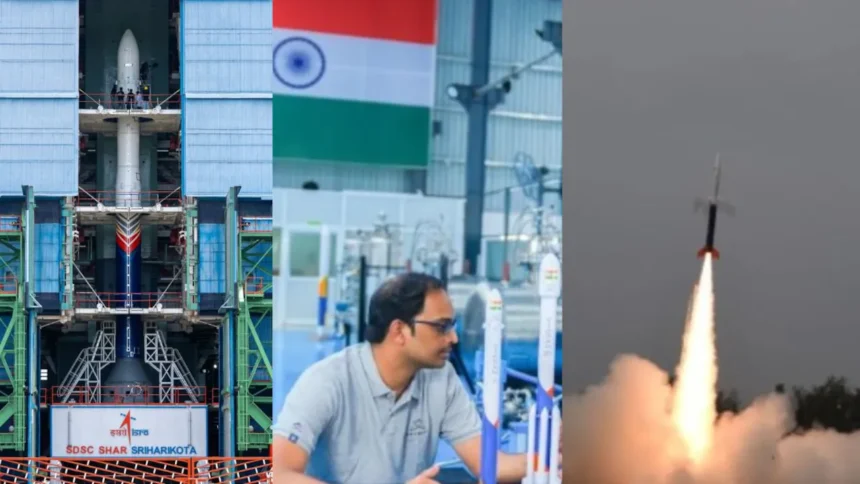
Skyroot Aerospace has announced the launch window for Vikram-1, India’s first privately developed orbital rocket. The mission represents a defining moment for India’s commercial space ambitions and reflects the rapid growth of private participation in a sector once dominated entirely by ISRO.
Skyroot’s Vikram-1 is preparing for a historic liftoff as the Hyderabad-based startup officially announced a launch window between July 12 and August 4, 2026, for its maiden orbital mission, Mission Aagaman. If successful, Vikram-1 will become the first privately designed, developed and manufactured Indian rocket to place payloads into orbit, marking a significant milestone in the country’s expanding commercial space ecosystem.
The launch will take place from the Satish Dhawan Space Centre in Sriharikota after final assembly, safety checks and weather clearances are completed. The announcement has generated excitement across India’s technology, startup and aerospace sectors, where private companies are increasingly playing a larger role in space exploration.
Mission Aagaman Represents a Historic First for Private Space
Mission Aagaman is much more than a routine rocket launch. It represents India’s first private attempt to place satellites into orbit using an orbital-class launch vehicle built entirely by a private company.
Standing around seven storeys tall, Vikram-1 has been designed to carry payloads of up to 350 kilograms into low Earth orbit. The rocket incorporates lightweight carbon composite structures, advanced propulsion systems and several in-house technologies developed by Skyroot Aerospace.
Unlike Skyroot’s earlier Vikram-S mission, which successfully completed a suborbital flight in 2022, Vikram-1 is designed for orbital missions capable of deploying satellites for commercial customers. The maiden flight will carry both domestic and international payloads while primarily serving as a technology demonstration mission to validate propulsion, guidance, navigation and stage separation systems.
India’s Private Space Race Gains Strong Momentum
India’s space industry has changed dramatically since the government opened the sector to private participation. New policy reforms and support from the Indian National Space Promotion and Authorization Center, better known as IN-SPACe, have encouraged startups to develop launch vehicles, satellites and space technologies.
Skyroot Aerospace has emerged as one of the leading players in this new ecosystem. Founded by former ISRO engineers, the company recently became India’s first space technology unicorn after raising fresh funding from global investors.
Other private companies, including Agnikul Cosmos, are also developing launch capabilities, while established industrial firms such as Larsen & Toubro and Hindustan Aeronautics Limited have expanded their presence in the space manufacturing ecosystem. Together, these developments reflect India’s ambition to capture a larger share of the rapidly growing global satellite launch market.
Why Vikram-1 Matters for India’s Commercial Space Economy
Global demand for launching small satellites continues to rise as communication networks, Earth observation, climate monitoring and defence applications expand worldwide. Dedicated launch vehicles capable of placing small satellites into precise orbits have become an increasingly valuable business opportunity.
Skyroot aims to serve this market by offering flexible launch services for commercial customers. If Vikram-1 performs successfully, it will validate the company’s launch technology and move it closer to regular commercial missions.
The mission also supports India’s broader objective of building a space economy valued at around 44 billion dollars by 2033. A stronger private launch industry could reduce dependence on foreign launch providers while creating new opportunities for manufacturing, engineering, software development and high-skilled employment across the country.
For investors and entrepreneurs, Vikram-1 also demonstrates that India’s startup ecosystem is expanding beyond software into deep technology sectors that require advanced research, engineering and long-term capital investment.
What Happens Before Liftoff
Although the launch window opens on July 12, the exact launch date will depend on several operational factors. Engineers are completing final vehicle integration, system testing and launch pad preparations at Sriharikota.
The rocket must also receive range clearance, safety approvals and favourable weather conditions before liftoff. Such procedures are standard for every orbital mission and help minimise technical and operational risks.
Once launched, Mission Aagaman will collect extensive flight data that engineers will use to improve future versions of the Vikram launch vehicle. A successful mission would establish Skyroot as India’s first private company to achieve orbital capability and strengthen confidence in the country’s growing commercial space industry.
The outcome will also be closely watched by international satellite operators seeking additional launch options beyond traditional providers. Success could position India as a more competitive destination for commercial satellite launches in the years ahead.
Key Takeaways
- Skyroot Aerospace has announced a launch window from July 12 to August 4 for Vikram-1.
- Vikram-1 is India’s first privately developed orbital-class launch vehicle.
- Mission Aagaman will carry domestic and international payloads while validating critical flight systems.
- A successful launch could accelerate India’s commercial space ambitions and strengthen its position in the global satellite launch market.
Frequently Asked Questions
Q1. What is Vikram-1?
Vikram-1 is an orbital launch vehicle developed by Skyroot Aerospace to carry small satellites into low Earth orbit.
Q2. Why is this mission considered historic?
It is India’s first privately designed, developed and manufactured rocket attempting to place payloads into orbit.
Q3. When is the launch scheduled?
The official launch window runs from July 12 to August 4, 2026. The exact date depends on weather, testing and regulatory approvals.
Q4. How will this benefit India’s space sector?
A successful mission would strengthen private participation, attract investment, expand commercial launch services and support India’s long-term goal of becoming a major global space economy.
(Internal keyword suggestions: Skyroot Vikram-1, Mission Aagaman, Skyroot Aerospace launch, India’s private space industry, Vikram-1 launch date, Indian space startups, commercial satellite launch India, orbital rocket India, IN-SPACe, ISRO private sector)