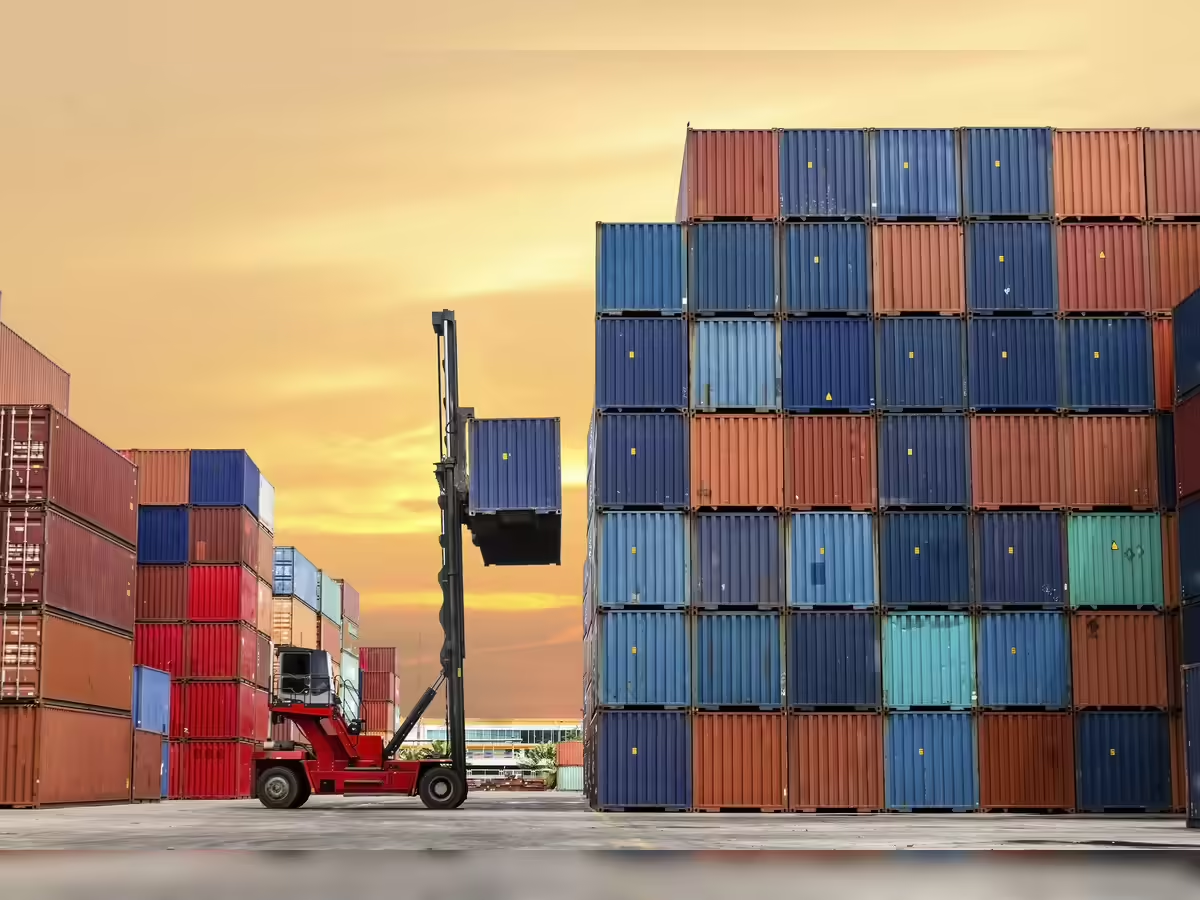
India is positioning itself as a major manufacturing and export destination as global companies continue to diversify supply chains beyond China. Government incentives, infrastructure investments, and growing domestic capabilities are helping India attract international businesses seeking alternative production hubs.
The China+1 strategy has become one of the most significant trends shaping global trade and manufacturing in recent years. As multinational companies look to reduce dependence on a single country for production, India is increasingly emerging as a preferred destination for investment, manufacturing, and supply chain diversification.
The shift is creating new opportunities for India’s economy, particularly in sectors such as electronics, automobiles, pharmaceuticals, textiles, and renewable energy equipment. With global supply chains undergoing structural changes, policymakers and businesses are working to ensure India captures a larger share of international manufacturing activity.
China+1 Strategy Reshapes Global Manufacturing Networks
The China+1 strategy refers to the approach adopted by many multinational corporations that continue operating in China while expanding manufacturing and sourcing activities to other countries.
Several factors have contributed to this shift. Rising labor costs in China, geopolitical tensions, trade restrictions, supply chain disruptions during the pandemic, and concerns about concentration risk have encouraged businesses to diversify production locations.
Countries across Asia have benefited from this trend, including Vietnam, Indonesia, Thailand, and India. However, India’s large domestic market, skilled workforce, and growing industrial infrastructure give it unique advantages in attracting long-term investments.
For many global firms, India is no longer viewed solely as a consumer market but increasingly as a manufacturing and export base serving international demand.
Government Incentives Strengthen India’s Manufacturing Ambitions
One of the key reasons behind India’s growing attractiveness is the government’s focus on boosting domestic manufacturing.
Production-Linked Incentive (PLI) schemes have been introduced across multiple sectors to encourage local production and attract foreign investment. These programs offer financial incentives to companies that increase manufacturing output within India.
The government has also invested heavily in industrial corridors, logistics networks, ports, highways, and digital infrastructure. Improved connectivity reduces transportation costs and helps businesses integrate more efficiently into global supply chains.
Recent policy reforms aimed at simplifying business operations, improving ease of doing business, and supporting export-oriented industries have further strengthened India’s competitiveness.
These initiatives are designed to position India as a reliable partner in international production networks.
Electronics Manufacturing Emerges as a Key Growth Driver
Among the sectors benefiting most from supply chain diversification is electronics manufacturing.
India has witnessed substantial growth in smartphone production over the past few years. Several global electronics companies and their suppliers have expanded operations in the country to serve both domestic and export markets.
The country’s electronics exports have risen significantly, supported by government incentives and increasing investments in manufacturing facilities. This trend aligns with India’s broader objective of becoming a global hub for electronics production.
Industry experts believe electronics could become one of the largest contributors to India’s export growth over the next decade if current investment momentum continues.
The sector also creates employment opportunities and supports the development of local supplier ecosystems.
Supply Chain Opportunities Extend Beyond Electronics
While electronics often receives the most attention, the China+1 shift is creating opportunities across multiple industries.
India’s pharmaceutical industry already plays a crucial role in global healthcare supply chains and remains a major exporter of medicines. The automotive sector is also attracting fresh investments as companies seek diversified manufacturing bases.
Textiles, specialty chemicals, renewable energy equipment, semiconductors, and engineering goods are additional sectors expected to benefit from changing global trade patterns.
The growth of Global Capability Centres (GCCs) in India is another important trend. Many multinational corporations are establishing research, engineering, and operational centers in Indian cities to support worldwide operations.
These developments contribute to a broader integration of India into global value chains beyond traditional manufacturing.
Challenges Remain Despite Growing Momentum
Despite the positive outlook, India faces several challenges in its quest to secure a larger share of global supply chains.
Infrastructure gaps still exist in certain regions. Logistics costs remain higher than those of some competing manufacturing destinations. Businesses also continue to seek faster regulatory approvals and greater operational efficiency.
Competition from countries such as Vietnam and Indonesia remains intense, particularly in export-oriented manufacturing sectors.
To sustain momentum, India will need continued investment in skills development, industrial infrastructure, technology adoption, and export competitiveness.
Industry leaders argue that consistency in policy implementation will be crucial for maintaining investor confidence over the long term.
Why Global Businesses Are Watching India Closely
The ongoing transformation of global supply chains represents a long-term economic trend rather than a temporary shift.
As companies reassess sourcing strategies and build more resilient production networks, India is increasingly being viewed as a strategic destination for manufacturing and investment.
Its combination of market size, workforce availability, policy support, and improving infrastructure gives it significant potential to expand its role in global trade.
The coming years will determine how effectively India converts these opportunities into sustained industrial growth, higher exports, and stronger participation in global value chains.
Key Takeaways
- India is benefiting from the global China+1 supply chain diversification strategy.
- Government incentives and infrastructure investments are attracting manufacturing projects.
- Electronics, pharmaceuticals, automobiles, and renewable energy sectors are seeing strong opportunities.
- Continued reforms and infrastructure improvements will be essential for long-term success.
FAQ
Q1. What is the China+1 strategy?
It is a business strategy where companies maintain operations in China while expanding manufacturing and sourcing activities to other countries.
Q2. Why is India attracting global manufacturers?
India offers a large workforce, growing infrastructure, government incentives, and access to a major domestic market.
Q3. Which sectors are benefiting most from supply chain diversification?
Electronics, pharmaceuticals, automotive manufacturing, textiles, specialty chemicals, and renewable energy equipment are among the key beneficiaries.
Q4. What challenges does India still face?
Higher logistics costs, infrastructure gaps, regulatory efficiency concerns, and competition from other Asian manufacturing hubs remain important challenges.
(Keywords: India global supply chains, China+1 strategy, India manufacturing growth, supply chain diversification, electronics manufacturing India, PLI scheme, India exports, global trade trends, manufacturing investment India, India economic growth)