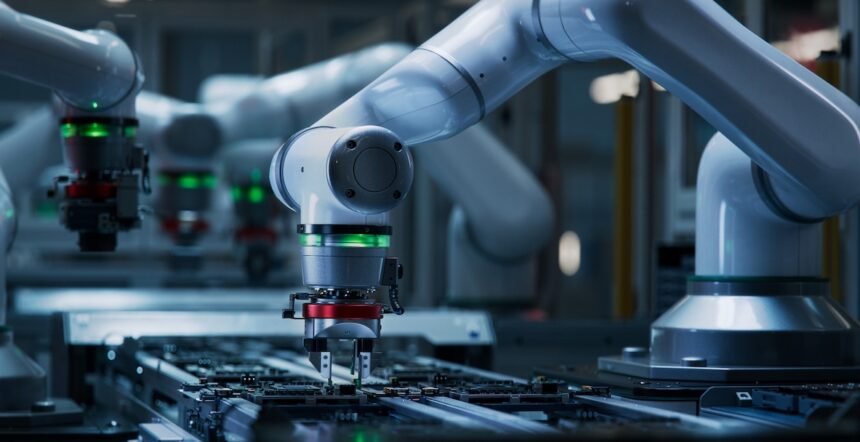
Manufacturing stocks are drawing renewed investor interest as changing global semiconductor supply trends influence production costs, export opportunities, and investment strategies. Indian manufacturers, particularly those linked to electronics, automobiles, and industrial equipment, are closely monitoring the evolving chip market.
The spotlight has returned to manufacturing stocks as global semiconductor supply trends continue to shape business sentiment across industries. Developments in the chip industry, including rising demand for artificial intelligence hardware, increased investment in semiconductor manufacturing, and changing supply chain dynamics, are having a direct impact on Indian companies. Investors are assessing how these global trends could influence production schedules, operating costs, and future earnings for manufacturing businesses that rely heavily on electronic components.
Global Semiconductor Market Drives Manufacturing Sentiment
The semiconductor industry has entered a new growth phase, largely driven by artificial intelligence infrastructure, data centers, electric vehicles, and advanced consumer electronics. Major chip manufacturers have expanded production capacity over the past year, while governments across the United States, Europe, Japan, South Korea, and Taiwan continue supporting domestic semiconductor manufacturing through incentives and strategic investments.
Despite increased production, demand for advanced chips remains exceptionally strong. AI-focused processors, high-performance memory chips, and specialized semiconductors continue to command premium pricing. Industry analysts note that while shortages seen during the pandemic have largely eased for many standard components, supply remains tight for several high-end semiconductor categories.
This changing balance between supply and demand has become an important factor influencing manufacturing companies worldwide, including businesses operating in India.
Indian Manufacturing Firms Monitor Component Availability
For Indian manufacturers, semiconductor availability directly affects multiple industries, including automobiles, consumer electronics, industrial machinery, telecommunications equipment, and renewable energy systems.
Automobile manufacturers have experienced production disruptions in previous years because of chip shortages. Although supply conditions have improved considerably, companies continue to maintain diversified sourcing strategies to reduce dependence on any single supplier or geography.
Electronics manufacturers are also watching global pricing trends closely. Lower availability of advanced chips or higher procurement costs can influence production planning, inventory management, and pricing decisions for finished products.
India’s Production Linked Incentive (PLI) schemes and the government’s semiconductor mission have further increased investor attention on domestic manufacturing companies expected to benefit from long-term supply chain diversification.
AI Demand Creates New Opportunities for Manufacturing Stocks
Artificial intelligence has become one of the strongest drivers of semiconductor demand in 2026. Technology companies continue investing heavily in AI servers, cloud infrastructure, and advanced computing platforms, increasing demand for high-performance chips and memory components.
This trend has positive implications for manufacturing companies involved in electronics assembly, industrial automation, precision engineering, and semiconductor equipment supply chains.
Indian firms that manufacture electronic components, industrial equipment, cables, connectors, testing systems, and automation solutions could benefit indirectly as global production expands.
Investors are increasingly evaluating which listed manufacturing companies have exposure to these growing technology-driven industries rather than focusing solely on traditional manufacturing segments.
Market Experts Watch Global Supply Chains Closely
Another important factor influencing manufacturing stocks is the ongoing diversification of global supply chains. Companies worldwide are reducing concentration risks by expanding manufacturing operations into multiple countries.
India continues positioning itself as an alternative manufacturing destination through policy reforms, infrastructure investments, and incentives aimed at electronics and semiconductor manufacturing. Several international companies have announced investments or partnerships related to electronics production, strengthening India’s role within global supply networks.
However, analysts caution that manufacturing businesses still face challenges from fluctuating raw material costs, logistics expenses, currency movements, and geopolitical developments affecting international trade. Semiconductor availability remains one of several variables influencing corporate performance rather than the sole determining factor.
Market participants therefore continue monitoring quarterly earnings, capital expenditure plans, export demand, and management commentary alongside global semiconductor developments.
Investor Focus Remains on Long-Term Manufacturing Growth
The renewed interest in manufacturing stocks reflects broader optimism surrounding India’s industrial growth story. Government initiatives promoting domestic manufacturing, coupled with expanding global demand for electronics and technology products, have strengthened confidence in several sectors.
Companies with diversified customer bases, efficient supply chain management, healthy balance sheets, and exposure to high-growth industries may be better positioned to benefit from evolving semiconductor trends.
While short-term market movements are often influenced by global news and quarterly financial results, the structural shift toward digital technologies, automation, electric mobility, and artificial intelligence continues supporting long-term demand for advanced manufacturing capabilities.
For investors, the key question is not simply whether chip supply improves, but which manufacturers are best prepared to capitalize on the next phase of industrial and technology-driven growth.
Key Takeaways
- Global semiconductor trends are influencing investor sentiment toward Indian manufacturing stocks.
- AI infrastructure spending continues driving strong demand for advanced semiconductor products.
- Indian manufacturers are benefiting from improving chip availability and government manufacturing initiatives.
- Investors remain focused on companies with strong supply chains, technology exposure, and long-term growth potential.
Frequently Asked Questions
Q1. Why are manufacturing stocks in focus now?
Manufacturing stocks are attracting attention because global semiconductor supply trends are influencing production costs, technology investments, and future business growth across multiple industries.
Q2. Which Indian sectors are most affected by semiconductor supply?
Automobiles, consumer electronics, industrial machinery, telecommunications, renewable energy equipment, and electronic manufacturing services are among the sectors most dependent on semiconductor availability.
Q3. How does AI demand affect manufacturing companies?
Growing AI infrastructure requires advanced chips, creating higher demand across semiconductor supply chains and benefiting companies involved in electronics manufacturing, automation, and industrial production.
Q4. Does improving chip supply eliminate business risks?
No. Companies must still manage raw material costs, global trade developments, logistics expenses, and changing customer demand alongside semiconductor availability.
(Internal Keyword Suggestions: manufacturing stocks India, semiconductor supply trends, global chip market, Indian manufacturing sector, AI chip demand, semiconductor industry news, electronics manufacturing India, PLI scheme, semiconductor supply chain, manufacturing shares, industrial stocks India, global semiconductor outlook)