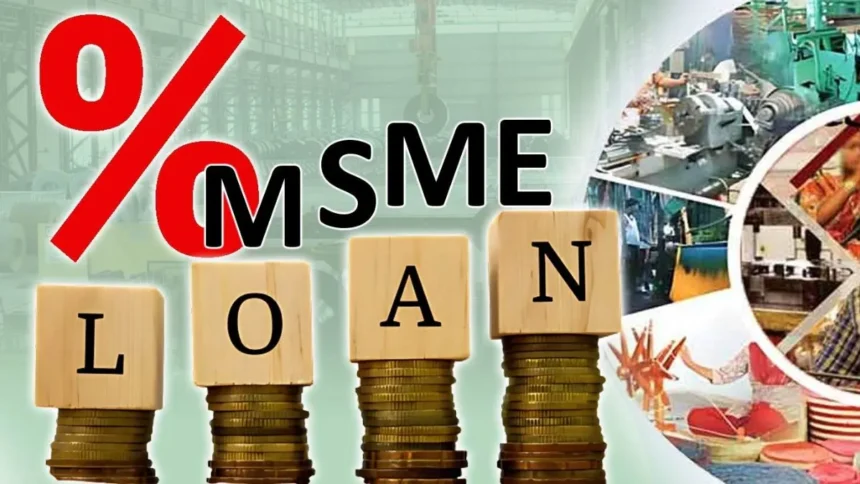
India’s MSME credit push is gathering pace as the Reserve Bank of India introduces fresh lending measures aimed at improving access to finance for small businesses. Recent policy changes focus on faster digital lending, better credit availability, and stronger support for MSMEs, reinforcing the sector’s role in driving economic growth.
India’s MSME credit push has moved into the spotlight following a series of recent policy measures by the Reserve Bank of India (RBI) designed to improve financing for micro, small, and medium enterprises. The latest initiatives signal a stronger commitment to making business loans more accessible, reducing friction in the lending process, and encouraging banks to expand credit to a sector that contributes significantly to employment, exports, and manufacturing. Recent announcements make this a time sensitive news development rather than an evergreen policy discussion. Recent RBI directions and government-backed credit initiatives have brought MSME lending back into focus.
RBI Strengthens Digital Lending for MSMEs
The RBI has urged banks to accelerate the adoption of digital public infrastructure, particularly the Unified Lending Interface (ULI), to simplify credit delivery for MSMEs. The objective is to create a lending ecosystem that relies more on verified digital data than traditional paperwork, allowing faster loan processing and improved access for businesses with limited collateral or formal credit history.
The regulator has repeatedly emphasized that technology should reduce delays while maintaining prudent lending standards. Digital verification of financial records, GST data, banking transactions, and other authenticated information is expected to make loan approvals quicker and more transparent.
For India’s millions of small businesses, particularly those outside major metropolitan areas, this shift could significantly reduce the time and effort required to secure working capital.
New Credit Measures Aim to Improve Liquidity
Alongside digital reforms, the RBI has introduced additional measures to strengthen liquidity within the MSME ecosystem.
One important change allows financiers operating on the Trade Receivables Discounting System (TReDS) to obtain guarantee cover for receivables financed through the platform. The move is intended to encourage more lenders to participate while making invoice financing more accessible for smaller businesses. Faster payments and improved cash flow remain critical challenges for many MSMEs, making this reform particularly significant.
Earlier this year, the RBI also increased the collateral-free loan limit for micro and small enterprises from ₹10 lakh to ₹20 lakh for eligible borrowers under revised lending norms. This expansion is expected to benefit entrepreneurs who often struggle to provide traditional security for business loans.
Banks Face Opportunity Alongside Risk Management
While regulators continue encouraging greater lending, banks are also being reminded to maintain sound credit assessment practices.
Recent industry reports indicate that some lenders have become more selective due to early signs of stress within portions of the MSME portfolio. Rather than slowing lending altogether, banks are increasingly relying on better data analytics and digital underwriting to distinguish financially healthy businesses from higher-risk borrowers.
RBI Governor Sanjay Malhotra recently urged banks to view MSMEs as long term growth partners instead of merely fulfilling regulatory lending targets. The message reflects a broader policy approach that combines increased credit availability with responsible lending practices.
The government’s Emergency Credit Line Guarantee Scheme 5.0 also continues to support lending to eligible businesses, providing additional confidence for financial institutions extending credit during a period of global economic uncertainty.
Why MSME Lending Matters for India’s Economy
India’s MSME sector contributes substantially to manufacturing output, exports, innovation, and employment. Small businesses also form an essential part of supply chains across industries ranging from engineering and textiles to information technology and services.
Improved access to institutional finance enables businesses to invest in machinery, expand operations, hire additional workers, and improve productivity. Easier credit also reduces dependence on informal borrowing, which often carries significantly higher costs.
The latest lending reforms reflect the government’s broader objective of increasing financial inclusion while supporting entrepreneurship and formal economic growth. If banks successfully combine digital infrastructure with faster loan approvals and stronger risk assessment, the reforms could strengthen India’s MSME ecosystem over the coming years.
Although challenges such as rising input costs, global demand uncertainty, and repayment risks remain, policymakers appear committed to ensuring that viable small businesses receive timely access to formal credit.
Key Takeaways
- RBI is accelerating digital lending infrastructure to improve MSME loan accessibility.
- New guarantee provisions for TReDS financing aim to strengthen working capital availability.
- Collateral-free loan limits for eligible micro and small enterprises have been increased to ₹20 lakh.
- Banks are expected to balance faster lending with stronger risk management and digital credit assessment.
Frequently Asked Questions
Q1. Why is MSME lending back in the news?
Recent RBI announcements on digital lending infrastructure, TReDS financing, and continued policy support have renewed attention on improving credit access for small businesses.
Q2. What is the Unified Lending Interface (ULI)?
ULI is a digital public infrastructure initiative that enables faster and more data-driven loan processing by securely using verified financial information.
Q3. How do the latest reforms benefit MSMEs?
The reforms aim to reduce loan processing time, improve working capital availability, increase collateral-free lending limits, and encourage more lenders to serve the MSME sector.
Q4. Are banks expected to increase MSME lending?
Yes. Regulators are encouraging banks to expand MSME lending while maintaining prudent underwriting standards and using digital tools for better risk assessment.
(Internal Keyword Suggestions: India MSME credit push, MSME lending reforms, RBI MSME policy, Unified Lending Interface, ULI, TReDS financing, collateral-free MSME loans, MSME credit news, small business loans India, RBI digital lending, MSME finance 2026, Indian banking sector)