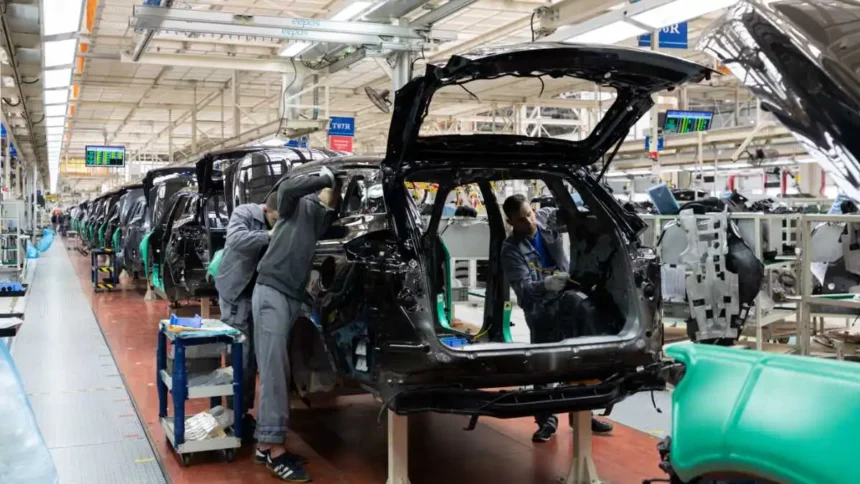
Auto component exporters are closely monitoring semiconductor prices as rising chip demand and changing global supply chains influence production costs. Indian manufacturers are balancing export opportunities with concerns over procurement expenses, inventory planning, and international competitiveness.
India’s auto component exporters are keeping a close watch on semiconductor prices as global demand for advanced chips continues to reshape manufacturing economics. While the severe semiconductor shortages witnessed during the pandemic have eased, prices for several high-performance chips remain elevated due to strong demand from artificial intelligence infrastructure, electric vehicles, and advanced electronics. These developments are influencing procurement strategies, production planning, and export competitiveness for Indian automotive suppliers serving global markets.
Semiconductor Price Trends Affect Automotive Supply Chains
The semiconductor industry has entered another phase of strong demand, largely driven by artificial intelligence, cloud computing, data centers, and next-generation automotive technologies. Manufacturers of memory chips and advanced processors have increased production capacity, yet demand continues to outpace supply in several premium categories.
Although standard automotive chips have become more readily available than during the global shortage of 2021 and 2022, pricing for certain specialized semiconductors remains firm. Automotive electronics have grown significantly more complex as vehicles adopt advanced driver assistance systems, connected technologies, infotainment platforms, battery management systems, and electric powertrains.
This shift means auto component manufacturers now rely on a broader range of semiconductor products than ever before, making pricing trends an important business consideration.
Indian Auto Component Exporters Face Cost Pressures
India has emerged as an important supplier of automotive components to global vehicle manufacturers. Exporters produce engine components, braking systems, electrical assemblies, precision engineering parts, wiring harnesses, sensors, and electronic modules for customers across North America, Europe, Asia, and the Middle East.
While export demand remains relatively stable, rising semiconductor costs can influence the overall cost of manufacturing electronically integrated components. Companies are therefore focusing on long-term procurement contracts, diversified supplier networks, and improved inventory planning to reduce exposure to sudden price fluctuations.
Larger exporters with established international supply chains may be better positioned to absorb temporary cost increases, while smaller manufacturers continue working to improve operational efficiency and sourcing flexibility.
Electric Vehicles Increase Semiconductor Demand
One of the biggest structural changes supporting semiconductor demand is the rapid expansion of the electric vehicle industry. Electric cars typically require significantly more semiconductor content than conventional internal combustion engine vehicles because of battery management systems, power electronics, onboard computers, sensors, and advanced connectivity features.
Global vehicle manufacturers are also investing heavily in autonomous driving technologies, software-defined vehicles, and digital cockpit systems. These innovations increase semiconductor usage across nearly every new vehicle platform.
For Indian auto component exporters supplying electrical and electronic systems, this presents both opportunities and challenges. Higher demand creates long-term growth potential, but it also increases dependence on stable semiconductor supply and efficient procurement strategies.
Global Supply Chain Diversification Supports India
International manufacturers continue reducing supply chain concentration by expanding sourcing across multiple countries. India has benefited from this trend through policy initiatives that encourage domestic manufacturing, electronics production, and investment in industrial infrastructure.
Government schemes supporting manufacturing and semiconductor development have strengthened India’s position within global supply chains. At the same time, exporters continue facing challenges including freight costs, currency movements, raw material prices, and evolving international trade conditions.
Industry experts believe companies that diversify suppliers, invest in technology, and strengthen relationships with global customers will be better positioned to manage future disruptions. Supply chain resilience has become as important as production efficiency in today’s manufacturing environment.
Investors Watch Export-Oriented Manufacturing Companies
Recent semiconductor price movements have also attracted investor attention toward listed auto component companies with significant export exposure. Market participants are evaluating how businesses manage procurement costs, protect operating margins, and maintain delivery schedules amid changing global conditions.
Companies with diversified customer bases, strong balance sheets, and efficient inventory management are generally viewed as better equipped to navigate periods of higher input costs. Investors are also monitoring quarterly earnings for commentary on semiconductor availability, pricing trends, and future demand from international automotive manufacturers.
Although semiconductor prices remain an important variable, analysts note that export performance will also depend on global vehicle production, consumer demand, technological innovation, and economic conditions across key international markets.
Key Takeaways
- Rising semiconductor prices are increasing cost pressures for auto component exporters worldwide.
- Electric vehicles and AI-driven technologies continue supporting strong global chip demand.
- Indian exporters are strengthening supply chain diversification and procurement strategies.
- Investors remain focused on companies with resilient operations and strong export capabilities.
Frequently Asked Questions
Q1. Why are semiconductor prices important for auto component exporters?
Many automotive components now include electronic systems that rely on semiconductors. Changes in chip prices directly affect manufacturing costs and profit margins.
Q2. Have global semiconductor shortages ended?
The widespread shortages experienced during the pandemic have largely eased, but advanced and specialized semiconductor categories continue to experience strong demand and relatively higher prices.
Q3. Why do electric vehicles require more semiconductors?
Electric vehicles use advanced battery management systems, power electronics, sensors, software platforms, and connectivity features, all of which increase semiconductor usage.
Q4. How are Indian exporters responding to changing supply chains?
Many exporters are diversifying suppliers, improving inventory planning, signing long-term procurement agreements, and investing in operational efficiency to reduce supply chain risks.
(Internal Keyword Suggestions: auto component exporters, semiconductor price surge, automotive supply chain, India auto exports, semiconductor industry news, electric vehicle components, automotive electronics, manufacturing costs, chip supply trends, Indian manufacturing exports, auto industry news 2026, semiconductor market)