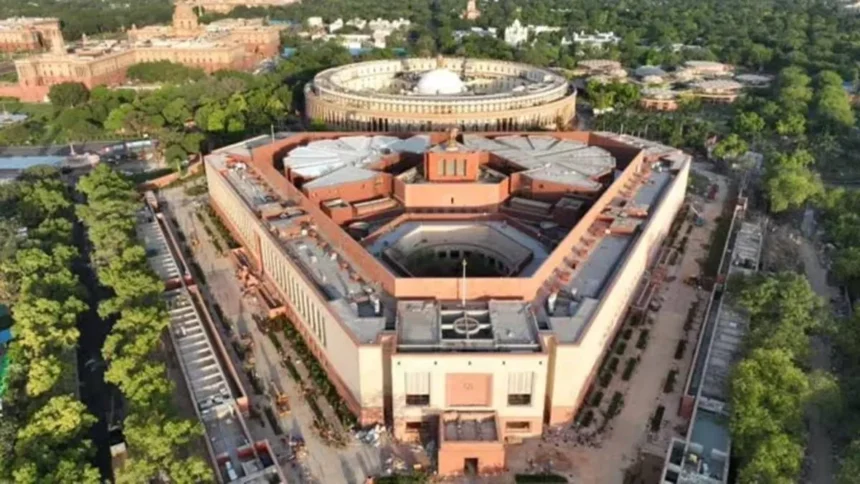
The Centre has released ₹44,544 crore in interest-free capital expenditure loans to states so far in FY2026-27, reinforcing its strategy of using public investment to drive economic growth. The funds are expected to support infrastructure projects ranging from roads and railways to water supply, power and urban development while encouraging higher state-level capital spending.
The Centre’s release of ₹44,544 crore in capital expenditure loans to states marks one of the earliest and largest infrastructure funding pushes in the current financial year. The amount has been disbursed under the Scheme for Special Assistance to States for Capital Investment (SASCI), which offers 50-year interest-free loans to state governments for productive capital projects rather than routine expenditure.
The announcement is clearly a time-sensitive news development, as it relates to current FY2026-27 fund releases and recent government data. The reporting therefore focuses on the latest policy actions and their economic implications.
Infrastructure Spending Remains a Key Growth Strategy
Capital expenditure has become one of the government’s primary tools for sustaining economic momentum even as global uncertainties continue to affect trade and private investment.
Unlike revenue expenditure, capital expenditure creates long-term assets such as highways, bridges, metro systems, irrigation projects, industrial parks and power infrastructure. These investments typically generate employment during construction while improving productivity for years afterward.
The Centre has budgeted ₹2 lakh crore for the FY2026-27 state capex loan programme, making it the largest allocation under the scheme since its launch during the pandemic. By July 15, ₹44,544 crore had already been released, representing a strong start to this year’s disbursement cycle.
What the SASCI Scheme Means for States
The Scheme for Special Assistance to States for Capital Investment was introduced during the Covid-19 period to encourage states to continue infrastructure investment despite fiscal pressures.
Since then, the programme has expanded significantly. The allocation has grown from ₹12,000 crore during its initial year to ₹2 lakh crore in FY2026-27, reflecting the Centre’s continued emphasis on infrastructure-led development.
For the current financial year, ₹75,000 crore has been earmarked as the untied component, allowing states flexibility in selecting eligible infrastructure projects. Another ₹25,000 crore has been linked to states’ own capital expenditure performance, rewarding governments that increase infrastructure investment over previous years.
The remaining allocation supports targeted reforms, critical centrally sponsored schemes and special categories such as hill states. This approach aims to combine financial support with incentives for stronger fiscal management and better project execution.
Which Sectors Are Expected to Benefit?
The released funds are expected to finance a broad range of infrastructure projects across India.
Major sectors include national and state highways, metro rail systems, railway connectivity, drinking water projects, electricity infrastructure, irrigation networks and urban civic facilities. These investments are intended to improve connectivity, reduce logistics costs and strengthen public services.
Several states have already announced projects under the scheme. Recent approvals include transport infrastructure, metro expansion, elevated corridors and electric vehicle charging infrastructure in Delhi, while similar proposals from other states continue to move through the approval process.
The government’s broader infrastructure strategy also includes investments in semiconductor manufacturing, industrial corridors, railway modernisation and logistics, indicating that public spending remains central to India’s long-term growth agenda.
Why Capital Expenditure Matters for the Economy
Economists generally consider capital expenditure one of the most productive forms of government spending because it creates assets that support economic activity over many years.
Improved roads reduce transportation costs. Better logistics attract manufacturing investment. Reliable power and water systems help industries operate more efficiently. Urban infrastructure also improves quality of life and encourages private investment.
The Centre’s strategy has increasingly relied on encouraging states to complement central infrastructure projects with their own investments. By providing long-term, interest-free financing, the government seeks to reduce borrowing costs for states while ensuring that capital projects continue despite budgetary pressures.
This coordinated approach is expected to play an important role in maintaining economic growth, supporting employment and strengthening India’s competitiveness.
Focus Now Shifts to Faster Project Execution
While funding availability is important, successful implementation remains equally critical.
The effectiveness of the capex programme will depend on how quickly states approve projects, complete land acquisition where required, award contracts and monitor construction timelines.
The scheme also includes utilisation conditions, with subsequent fund releases linked to the use of earlier allocations. This is designed to improve accountability while ensuring that money translates into completed infrastructure rather than remaining unspent.
As infrastructure continues to be a major pillar of India’s development strategy, both the Centre and state governments will be closely watched for execution quality during the remainder of FY2026-27.
Key Takeaways
- The Centre has released ₹44,544 crore in interest-free capex loans to states during FY2026-27 so far.
- The funding is provided under the Scheme for Special Assistance to States for Capital Investment.
- Roads, railways, metro projects, power, water supply and urban infrastructure are expected to benefit.
- The government has allocated ₹2 lakh crore for the scheme this financial year to encourage higher state infrastructure spending.
Frequently Asked Questions
Q1. What is the ₹44,544 crore capex loan announcement?
It refers to the amount released by the Centre to states under the interest-free capital expenditure loan scheme as of July 15 in FY2026-27 to support infrastructure projects.
Q2. What is the SASCI scheme?
The Scheme for Special Assistance to States for Capital Investment provides 50-year interest-free loans to states for creating productive infrastructure assets.
Q3. Which sectors will receive funding?
Eligible sectors include highways, railways, metro systems, water supply, power infrastructure, irrigation, urban development and other public infrastructure projects.
Q4. Why is capital expenditure important for India’s economy?
Capital expenditure creates long-term public assets, generates employment, improves logistics and supports private investment, making it an important driver of sustainable economic growth.