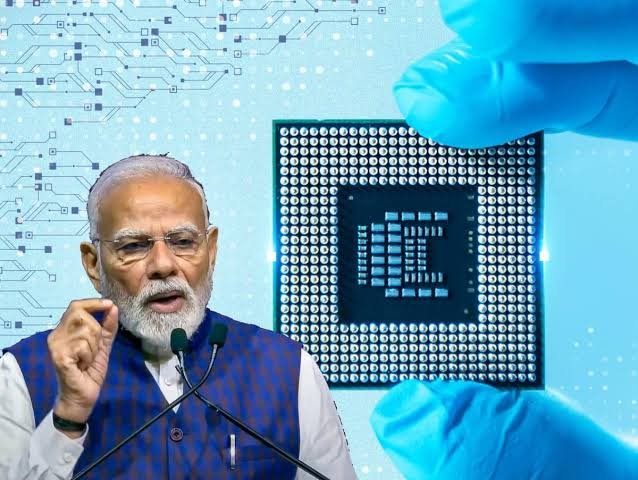
India’s semiconductor manufacturing ambitions have received fresh momentum after recent government policy signals reinforced long-term support for the domestic chip ecosystem. With initiatives such as India Semiconductor Mission 2.0, continued incentives for electronics manufacturing, and renewed focus on strategic industries, the government is aiming to accelerate investments, strengthen supply chains, and position India as a global semiconductor hub.
Semiconductors have become one of the world’s most strategically important industries. They power smartphones, electric vehicles, artificial intelligence, medical devices, industrial automation, telecom equipment, defence systems, and consumer electronics. As countries compete to secure chip production capabilities, India is attempting to build an ecosystem that reduces import dependence while attracting global manufacturers.
Government Signals Strengthen Investor Confidence
The latest policy direction suggests that semiconductor manufacturing remains among India’s highest industrial priorities. Reports indicate that the government is preparing the next phase of its manufacturing incentive strategy, with greater emphasis on sectors demonstrating strong investment potential and long-term economic value. Semiconductors are widely expected to remain a key beneficiary because of their strategic importance.
The Union Budget earlier introduced India Semiconductor Mission 2.0, expanding support beyond fabrication to include chip design, advanced packaging, research infrastructure, workforce development, and domestic supply chain capabilities. The programme reflects the government’s view that building a semiconductor industry requires sustained policy support over many years rather than short-term incentives.
For investors, these policy signals reduce uncertainty and encourage companies to continue evaluating India for future manufacturing facilities.
India Expands Its Semiconductor Ecosystem
India’s semiconductor strategy extends far beyond building fabrication plants. Policymakers are attempting to develop an integrated ecosystem that includes chip design, assembly, testing, packaging, specialty materials, equipment suppliers, logistics providers, and skilled engineering talent.
Several semiconductor projects have already received approvals under earlier government schemes, while additional facilities are expected to strengthen the country’s manufacturing base over the coming years. Industry experts believe ecosystem development is just as important as attracting a single fabrication plant because semiconductor manufacturing depends on thousands of specialised suppliers operating together.
The government’s approach also recognises India’s existing strength in semiconductor design, where Indian engineers already contribute significantly to global chip development.
Global Supply Chains Create New Opportunities
The global semiconductor industry has undergone significant changes over the past few years. Companies are increasingly diversifying manufacturing locations to improve supply chain resilience after disruptions caused by geopolitical tensions, logistics bottlenecks, and rising demand for advanced electronics.
This changing environment has created opportunities for countries capable of offering policy stability, skilled talent, competitive manufacturing costs, and reliable infrastructure.
India hopes to benefit from this shift by positioning itself as both a large domestic market and a future manufacturing destination. According to policy assessments, India’s semiconductor demand is expected to grow rapidly over the next decade, driven by artificial intelligence, electric mobility, telecom expansion, industrial automation, consumer electronics, and digital infrastructure.
Growing domestic demand also gives manufacturers confidence that India can support long-term production investments.
Challenges Continue Despite Strong Momentum
While recent government signals are encouraging, semiconductor manufacturing remains one of the most complex industries in the world.
Building fabrication plants requires billions of dollars in investment, highly specialised machinery, reliable electricity, ultra-pure water, advanced chemicals, precision manufacturing, and a deeply integrated supplier network. Workforce development also remains essential because chip manufacturing depends on highly skilled engineers and technicians.
Industry observers note that India is likely to build its semiconductor capabilities gradually rather than attempting to compete immediately with established manufacturing leaders. Many experts expect India to initially strengthen mature semiconductor technologies, packaging facilities, and design capabilities before expanding into more advanced manufacturing processes.
Long-term policy consistency will therefore be as important as financial incentives.
Why This Matters for India’s Economy
A stronger semiconductor manufacturing ecosystem could create benefits across multiple industries.
Domestic chip production can improve supply security for electronics manufacturers, reduce dependence on imports, encourage foreign direct investment, generate high-value employment, strengthen exports, and support innovation in sectors such as automotive, defence, telecommunications, healthcare, renewable energy, and artificial intelligence.
The semiconductor industry also has a multiplier effect because it encourages investment in research institutions, advanced manufacturing, logistics, specialised chemicals, precision engineering, and technical education.
Fresh government signals indicate that semiconductor manufacturing will remain central to India’s broader industrial strategy as the country seeks to become a major technology and manufacturing economy over the coming decade. Although significant execution challenges remain, continued policy support has strengthened confidence that India’s semiconductor ambitions are moving from planning toward long-term implementation.
Takeaways
- Fresh government policy signals have reinforced India’s commitment to semiconductor manufacturing.
- India Semiconductor Mission 2.0 expands support across fabrication, chip design, packaging, research, and talent development.
- Global supply chain diversification is creating opportunities for India to attract semiconductor investments.
- Long-term success will depend on sustained policy support, infrastructure development, and ecosystem expansion.
FAQ
Q1. Why is semiconductor manufacturing important for India?
Semiconductors power modern electronics, AI, automobiles, telecom, healthcare, and defence systems. Domestic manufacturing can reduce import dependence while strengthening economic and technological capabilities.
Q2. What is India Semiconductor Mission 2.0?
It is the government’s expanded semiconductor programme focused on strengthening fabrication, advanced packaging, chip design, research, supply chains, and workforce development to build a complete semiconductor ecosystem.
Q3. Why are companies interested in manufacturing chips in India?
India offers a growing domestic electronics market, skilled engineering talent, government incentives, and increasing policy support as companies diversify global supply chains.
Q4. What are the biggest challenges facing India’s semiconductor industry?
High capital costs, complex manufacturing technology, infrastructure requirements, skilled workforce availability, and building a complete supplier ecosystem remain the primary challenges.