Open up a genuinely well made piece of furniture and you’ll find something rarely seen in mass produced alternatives: real joinery. Mortise and tenon joints, dovetails, finger joints. These aren’t decorative details. They’re the difference between a piece that lasts decades and one that doesn’t.
A mortise and tenon joint works like a lock. The tenon fits precisely into the mortise, and when it’s done well, the joint actually gets stronger over time as the wood shrinks and tightens its grip. Stress gets distributed across the whole joint rather than resting entirely on glue.
Dovetail joints go a step further, interlocking at angles that create real mechanical resistance to pulling apart. A drawer with proper dovetails still glides smoothly decades later, a sharp contrast to drawers held together by simpler methods that tend to fail within a few years.
Mass production typically relies on dowels, pocket screws, or staples. These work at first but wear out faster, and unlike traditional joinery, they generally can’t be repaired once they fail; replacement becomes the only option. Wootique uses traditional joinery methods deliberately, built on the understanding that these joints are meant to outlast the people who commissioned them.
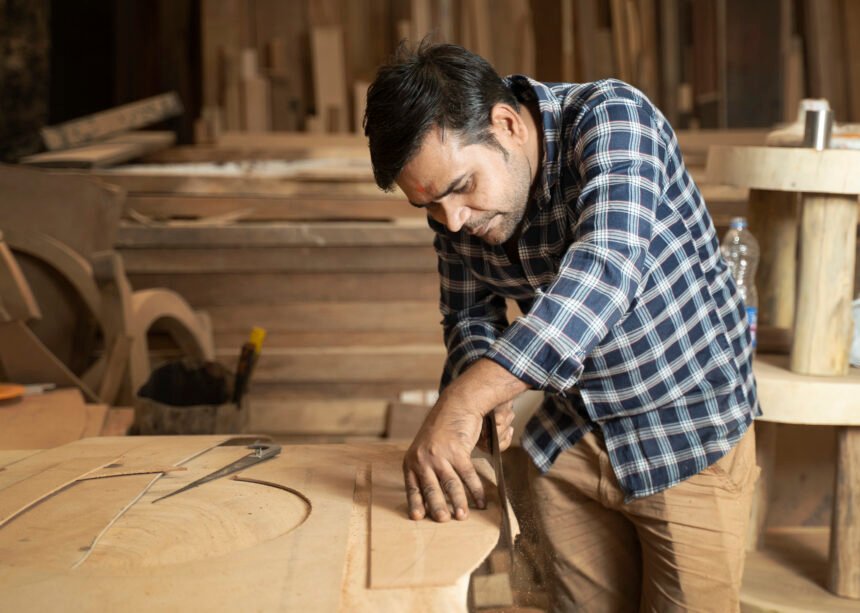
Learning traditional joinery takes years. A craftsperson doesn’t just understand the theory; they’ve cut thousands of joints by hand and developed real intuition for how wood moves, how much clearance to leave, and how tight a cut needs to be. Those small judgment calls matter enormously.
This is part of why custom furniture costs more upfront. The price reflects knowledge, precision, and methods that have survived centuries because they simply work, along with the care of someone who chooses to do it properly when shortcuts are readily available.
Open an old, well made piece of furniture and what you’re really looking at is the craft itself, visible in the joints. That’s not sentimentality. It’s simply what happens when something is built to last, and the joints are the proof of it.