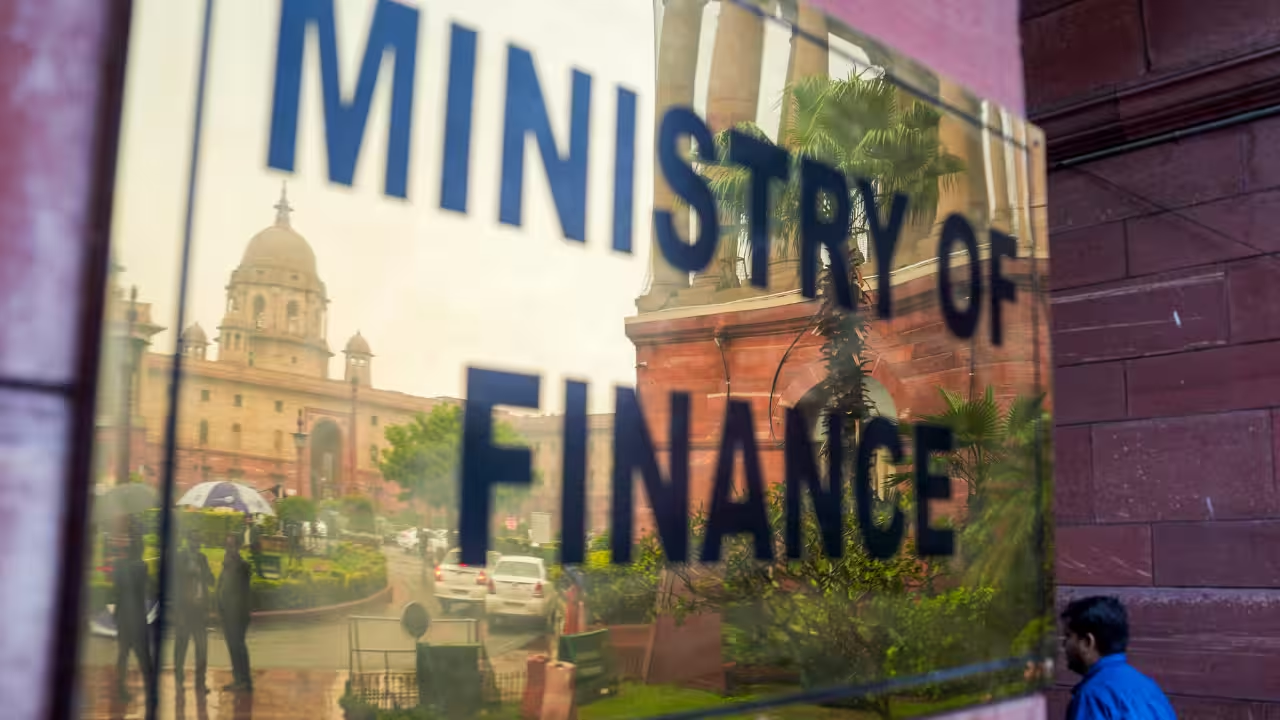
India’s economic outlook remains under close watch as markets assess the Finance Ministry’s latest view on growth amid rising geopolitical tensions, volatile crude oil prices, and global financial uncertainty. Despite external risks, the ministry believes resilient domestic demand and policy stability continue to support the country’s growth momentum.
India’s growth outlook has become a key focus for investors as the Finance Ministry reiterates confidence in the economy despite a challenging global environment. The latest assessment comes at a time when financial markets are balancing optimism over India’s domestic demand with concerns surrounding elevated crude oil prices, geopolitical tensions in West Asia, and uncertainty over global monetary policy. The ministry’s comments are particularly significant because they help shape investor expectations for economic activity, inflation, fiscal policy, and corporate earnings over the coming quarters.
Finance Ministry Sees Domestic Demand Supporting Growth
According to the Finance Ministry’s latest Monthly Economic Review, India’s economy maintained its growth momentum during the first quarter of FY27 despite increasing global uncertainty. The ministry highlighted that resilient domestic demand, continued public investment, prudent macroeconomic management, and ongoing structural reforms remain the primary drivers of economic expansion.
The report noted that while global conditions have become more unpredictable, India’s internal consumption continues to provide stability. Household spending, infrastructure development, manufacturing activity, and services remain important contributors to economic growth.
Officials also stressed that swift policy implementation and continued reforms will be essential to sustain investment momentum as global conditions evolve. The emphasis on execution reflects the government’s effort to maintain investor confidence amid external volatility.
Global Risks Continue to Cloud the Economic Outlook
While the domestic economy remains relatively resilient, the Finance Ministry acknowledged that several international developments could influence India’s growth trajectory.
One of the biggest concerns is the rise in global crude oil prices following geopolitical tensions in West Asia. India imports a significant share of its crude oil requirements, making higher energy prices a direct risk to inflation, the current account deficit, and fiscal management.
The ministry also pointed to volatility in global commodity markets, disruptions in supply chains, and uncertainty in international trade as factors that require close monitoring. These external challenges may affect exports, business investment, and financial market sentiment if they persist.
At the same time, global investors continue to monitor upcoming inflation data from major economies, particularly the United States, as expectations surrounding central bank interest rate decisions could influence capital flows into emerging markets like India.
Markets Are Closely Watching Policy Signals
Financial markets often respond not only to economic data but also to government policy guidance. The Finance Ministry’s assessment provides reassurance that policymakers remain confident about India’s medium term growth prospects despite external headwinds.
Investors are expected to closely track future macroeconomic indicators including retail inflation, industrial production, GST collections, manufacturing activity, and corporate earnings. These indicators will help determine whether domestic demand continues to offset weakness in the global economy.
The Reserve Bank of India’s monetary policy decisions will also remain an important factor. Rising oil prices and currency movements could influence inflation expectations, while global interest rate trends may affect foreign investment flows into Indian equities and bonds.
Rating Agencies Continue to Back India’s Growth Story
Adding further support to investor sentiment, Fitch Ratings recently reaffirmed India’s sovereign credit rating at BBB minus with a Stable Outlook. The agency cited India’s strong economic growth, improving policy credibility, healthy foreign exchange reserves, and macroeconomic stability as key strengths.
However, Fitch also highlighted challenges including elevated public debt, fiscal pressures, and India’s vulnerability to external energy shocks. While these issues remain manageable, they reinforce the importance of maintaining disciplined fiscal policies and continued economic reforms.
Overall, rating agencies continue to view India as one of the fastest growing major economies, even as global growth slows.
Outlook Remains Positive but Cautious
The Finance Ministry’s latest outlook suggests that India is entering the second half of FY27 with relatively strong domestic fundamentals. Consumption, infrastructure spending, manufacturing expansion, and government investment continue to provide support even as international conditions remain uncertain.
Nevertheless, policymakers and investors recognize that external developments can quickly alter market sentiment. Oil prices, geopolitical conflicts, inflation trends, and global financial conditions will remain key variables over the coming months.
For now, markets appear to be taking a balanced approach. While optimism surrounding India’s structural growth story remains intact, investors are also preparing for potential volatility driven by international events. The Finance Ministry’s assessment reinforces the view that policy stability and domestic demand will remain India’s strongest defenses against global uncertainty.
Key Takeaways
- The Finance Ministry says resilient domestic demand continues to support India’s economic growth.
- Rising crude oil prices and geopolitical tensions remain the biggest external risks.
- Investors are closely tracking inflation, monetary policy, and global financial developments.
- Rating agencies continue to view India as one of the world’s fastest growing major economies despite external challenges.
Frequently Asked Questions
Q1. Why are markets watching the Finance Ministry’s growth outlook?
The ministry’s economic assessment influences investor expectations regarding growth, inflation, government policy, and future market direction.
Q2. What are the biggest risks to India’s economy right now?
Higher crude oil prices, geopolitical tensions, global inflation, and financial market volatility are currently the major external risks.
Q3. What is supporting India’s economic growth?
Strong domestic consumption, public investment, manufacturing activity, services growth, and ongoing policy reforms continue to support the economy.
Q4. How are rating agencies viewing India’s outlook?
Fitch Ratings has reaffirmed India’s BBB minus sovereign rating with a Stable Outlook, citing robust growth while warning about fiscal and energy-related risks.