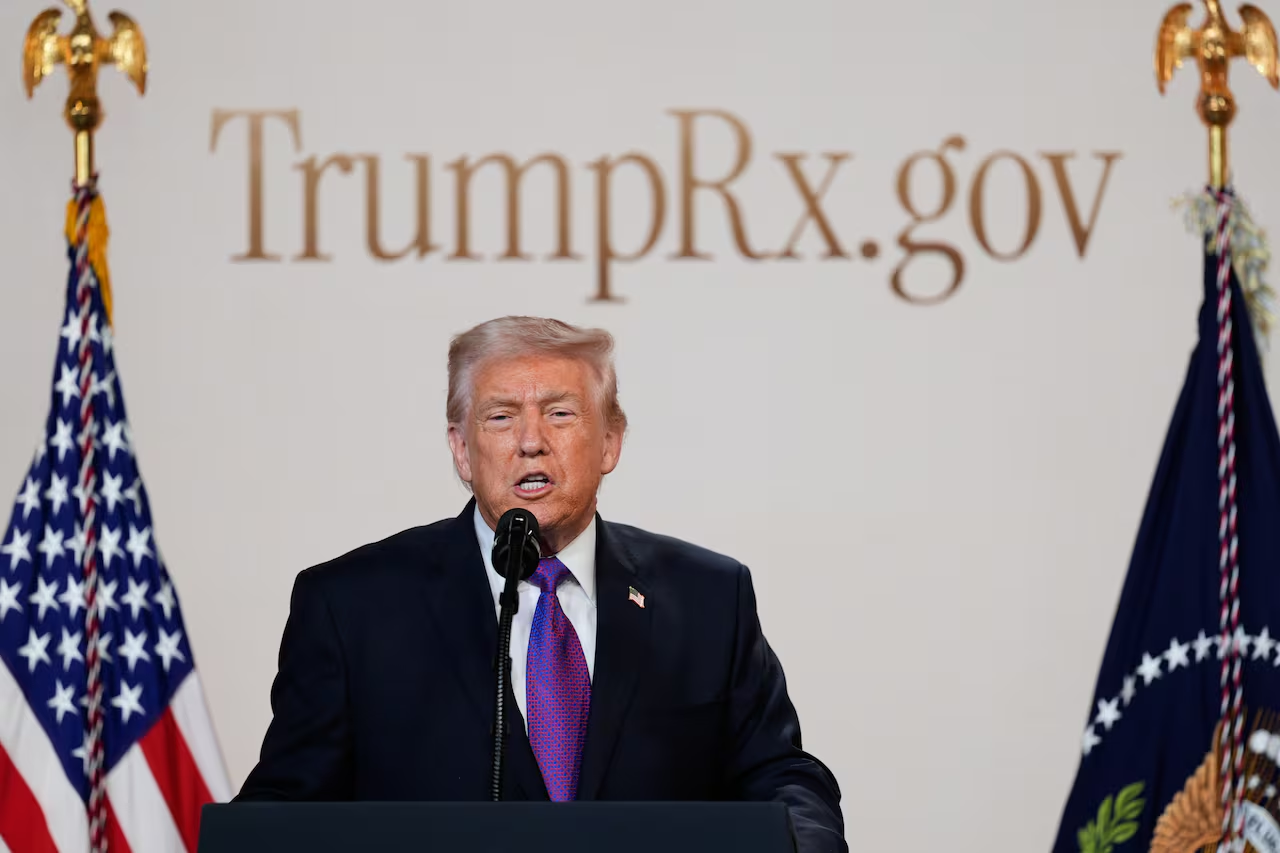
Trump has launched a fresh economic pressure campaign against Iran, warning countries, companies and financial institutions that help Tehran could face severe economic consequences. The move expands Washington’s focus beyond Iran itself and puts its international trading and financial partners under renewed pressure.
Trump Targets Iran’s Economic Lifelines
The latest Trump Iran economic pressure campaign became a major international business story on August 20, 2026, after the US president warned that countries providing economic support to Tehran could face what he described as tremendous economic consequences. Reuters reported that Trump said Washington was launching a major campaign against Iran’s economy and would target those providing it with a financial lifeline.
The warning marks a sharper focus on the commercial networks that allow Iran to continue trading despite years of US sanctions.
Trump has specifically pointed toward activities including oil smuggling, financial transactions and other channels that can help Iran generate or move money. The stated objective is to make it harder for Tehran to maintain access to international commerce.
The development comes as the conflict between the US and Iran approaches its sixth month and diplomatic efforts remain stalled. On August 18, Trump said there were no talks with Iran underway or scheduled.
Secondary Sanctions Threaten Iran’s Trading Partners
The most important business implication is the potential use of secondary economic pressure.
Instead of limiting penalties to Iranian companies and institutions, Washington could put pressure on foreign businesses and financial institutions that continue certain dealings with Tehran. That creates a difficult choice for companies operating across multiple markets.
A business may have legitimate commercial interests in Iran, but continued transactions could expose it to restrictions in the US financial system or other forms of American economic pressure.
The threat is particularly relevant for countries that maintain significant commercial relationships with Iran. China has been one of Iran’s largest trading partners, while the United Arab Emirates has historically served as an important commercial and re-export gateway for Iranian businesses. Recent developments suggest that this network is already under strain.
For global companies, the issue is therefore not only whether they want to trade with Iran. It is whether the potential revenue from that trade is worth the wider financial and regulatory risk.
UAE Suspends Trade and Financial Transactions With Iran
The pressure campaign comes as Iran’s economic links with a major regional trading hub have already taken a serious hit.
The United Arab Emirates announced on August 19 that it was suspending trade exchanges and financial transactions with Iran until further notice. The UAE foreign ministry cited regional escalation and concerns over regional and international peace and security.
The timing is significant because the UAE has historically played an important role in Iran’s access to goods, services and international commercial infrastructure.
The UAE’s decision followed reports that its defence ministry had detected two ballistic missiles launched from Iran. The Emirati government said the move was driven by the broader regional escalation. Iran has denied some of the allegations surrounding the attacks.
The suspension could make Iran’s already complicated trade environment even more difficult, particularly for companies relying on regional intermediaries.
Oil Markets Face Another Supply Risk
Energy markets are one of the biggest channels through which the latest US-Iran escalation could affect the global economy.
Iran remains an important oil producer, and attempts to restrict its exports can have consequences beyond the country’s borders. The Strait of Hormuz is especially important because of its role in global energy transportation.
Trump has said the waterway is open and operating, while Iranian officials have disputed that assessment. Reuters reported earlier this week that uncertainty surrounding the waterway and the lack of progress toward a deal had already pushed oil prices higher.
Brent crude moved above $91 a barrel earlier in the week after Trump cast doubt on the prospects of a new agreement with Tehran.
A prolonged disruption could raise costs for refiners, airlines, shipping companies and manufacturers. Higher energy prices can also feed into transportation and production costs, making inflation another concern for major economies.
India Could Face Pressure From Iran Trade Disruptions
India is also watching the latest developments closely because its relationship with Iran includes trade, energy and strategic connectivity.
Indian businesses sell products to the Iranian market, meaning tougher US action against companies dealing with Tehran could create additional compliance and payment challenges. NDTV reported that India’s exports to Iran could be affected if Washington expands economic measures against countries and businesses maintaining trade with Tehran.
The impact, however, should not be overstated. A US warning does not automatically mean that every Indian company trading with Iran will face penalties.
The actual effect would depend on the specific US measures, the transactions involved and whether individual businesses are covered by sanctions or other restrictions.
For Indian exporters, payment channels, shipping arrangements and access to insurance and financial services could become particularly important if restrictions tighten.
Global Businesses Face a Tougher Compliance Test
The new campaign also increases the compliance burden for multinational companies.
Businesses dealing with Iran may need to review customers, banks, shipping companies, insurers, intermediaries and ownership structures more closely. Companies can face significant risks if transactions are routed through entities designed to conceal their Iranian connection.
That is why Trump’s focus on financial institutions, front companies and other mechanisms matters for global commerce.
The pressure campaign could encourage banks to become more cautious even in cases where a transaction may not immediately appear to violate US restrictions. Financial institutions often respond to sanctions risk by tightening internal screening and reducing exposure to higher-risk markets.
For companies, that can make legitimate trade slower and more expensive.
China Becomes a Key Test for Washington
China is likely to be one of the most important countries to watch as the US increases pressure on Iran.
Iran’s commercial relationship with China is significant, and Beijing has maintained economic ties with Tehran despite US sanctions. The Guardian reported that the campaign could particularly test Washington’s relationship with China if American pressure begins targeting Iranian oil trade involving Chinese entities.
That creates a larger geopolitical risk for global markets.
If Washington moves aggressively against Chinese companies involved in Iranian trade, the dispute could extend beyond US-Iran relations and become another point of tension between the world’s two largest economies.
For businesses, that could mean another layer of uncertainty around energy, shipping, insurance and cross-border payments.
Economic Pressure Replaces Some Military Focus
The latest announcement also reflects a change in emphasis in Washington’s Iran strategy.
The Trump administration has already used military pressure, sanctions and a naval blockade as part of its campaign against Tehran. Fortune reported last week that Washington was increasingly relying on economic pressure as the military campaign faced limitations.
The economic strategy aims to make Iran’s financial position increasingly difficult without necessarily requiring a corresponding expansion of military operations.
That approach could involve restrictions on oil revenue, financial transactions and international commercial networks.
The challenge for Washington is effectiveness. Iran has spent years adapting to sanctions and developing alternative trading channels. Further restrictions may increase the cost of doing business with Tehran, but they do not automatically guarantee a change in Iranian policy.
Markets Watch Oil, Shipping and Trade Fallout
For investors, the next stage of the Iran economic pressure campaign will be measured through markets.
Oil prices remain the most immediate indicator because additional restrictions on Iranian exports or disruption around the Strait of Hormuz could tighten global supply expectations.
Shipping companies and insurers are another area to watch. Greater geopolitical risk can increase freight and insurance costs, particularly for vessels operating around the Gulf.
Currency markets could also react if higher energy prices increase inflation concerns or weaken the trade positions of major oil-importing countries.
The broader question is whether the latest US pressure remains a threat or turns into concrete sanctions against specific foreign entities.
What Comes Next for Iran’s Global Trade
Trump’s latest warning raises the possibility of a wider economic confrontation involving not only Iran but also countries and businesses that maintain commercial links with Tehran.
The UAE’s decision to suspend trade and financial transactions has already removed one important channel for Iranian commerce.
The next major test will be how China, India, Gulf economies and international financial institutions respond if Washington moves from broad warnings to specific enforcement actions.
For global businesses, the message is clear: Iran-related trade is becoming a higher-risk area as the US seeks to squeeze Tehran’s remaining economic lifelines.
The consequences will depend on how aggressively Washington implements the campaign and how other countries respond. For now, oil prices, shipping routes, financial flows and cross-border trade are likely to remain at the centre of the market’s attention.
Key Takeaways
- Trump has warned countries and businesses supporting Iran of severe economic consequences.
- The US campaign is increasingly focused on oil smuggling, financial networks and other channels supporting Iranian trade.
- The UAE has suspended trade and financial transactions with Iran amid the wider regional escalation.
- Higher pressure on Iranian oil exports could affect global energy prices, shipping costs and inflation.
FAQ
What is Trump’s new economic pressure campaign against Iran?
It is a renewed US effort to isolate Iran economically by targeting the financial and commercial networks that help Tehran maintain international trade, including oil-related and financial channels.
Why are Iran’s trading partners concerned?
Countries and companies doing business with Iran could face additional sanctions or other US economic measures if Washington decides to target entities that provide Tehran with financial or commercial support.
What has the UAE done?
The UAE announced on August 19 that it was suspending trade exchanges and financial transactions with Iran until further notice, citing regional escalation and concerns about peace and security.
Could the new US pressure affect oil prices?
Yes. Any restrictions that materially reduce Iranian oil exports or increase uncertainty around the Strait of Hormuz could put upward pressure on global oil prices. Brent crude had already moved above $91 a barrel earlier this week amid renewed uncertainty over the Iran conflict.