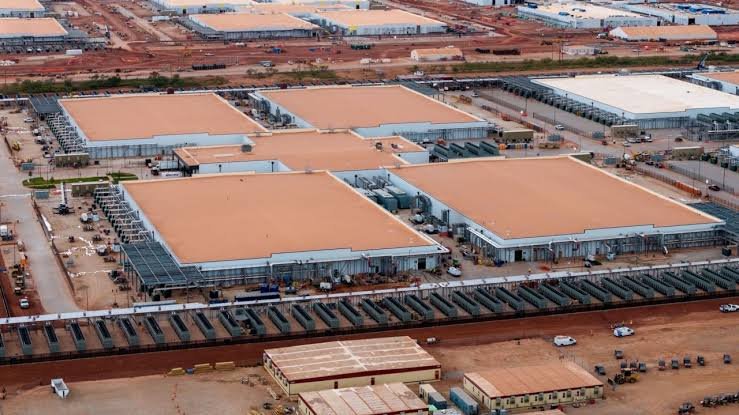
OpenAI has lost its head of data centres, Chris Malone, as the company races to secure the computing capacity needed for its next phase of AI growth. His departure comes after an infrastructure reorganisation and amid a broader series of senior leadership changes at OpenAI.
Chris Malone leaves OpenAI after infrastructure reorganisation
Chris Malone, who served as OpenAI’s head of data centres, left the company last week, according to reporting by The Wall Street Journal and TechCrunch. OpenAI confirmed that Malone is no longer with the company.
Malone joined OpenAI in March 2025 after spending nearly five years at Meta and more than a decade at Google, where he worked on data centre infrastructure. His relatively short tenure at OpenAI makes the departure notable because he joined at a time when the company was rapidly expanding its physical computing footprint.
OpenAI said it had reorganised its infrastructure organisation earlier this year to support the scale and pace of its work. The company also said it has an experienced data centre team in place to execute its infrastructure plans.
AI infrastructure has become a strategic priority
The departure comes at a critical point for the AI industry. Companies developing large AI models increasingly need enormous amounts of computing power for both model training and serving users.
That has turned data centres into a strategic asset rather than simply a technology back-end.
OpenAI’s products depend on large quantities of specialised computing capacity, while competition from companies such as Anthropic, Google and Meta is also driving demand for advanced chips, electricity and data centre space.
This has made infrastructure leadership particularly important. Building or securing new facilities involves negotiations over land, power availability, cooling systems, networking equipment, chips, construction schedules and financing.
For OpenAI, the challenge is particularly significant because demand for its AI services continues to require additional computing capacity. Malone’s departure therefore arrives during one of the most infrastructure-intensive periods in the company’s history.
Stargate put OpenAI at the centre of data centre expansion
Malone joined OpenAI shortly after the company announced Stargate, its major infrastructure initiative involving SoftBank and Oracle.
The project was announced in January 2025 with plans to invest up to $500 billion over four years in AI infrastructure in the United States. OpenAI described Stargate as a way to build the computing infrastructure needed to support the next generation of AI systems.
Malone was brought in with extensive hyperscale data centre experience, including work at Meta and Google. His background made him a natural fit for an organisation trying to expand physical infrastructure at unprecedented speed.
However, OpenAI’s infrastructure strategy has evolved since Stargate was announced. The company has increasingly considered leasing entire data centre facilities rather than depending entirely on newly constructed sites or traditional cloud arrangements.
OpenAI shifts infrastructure leadership
OpenAI’s infrastructure organisation has undergone changes as the company tries to increase the speed of its computing expansion.
According to reports, Sachin Katti now leads the infrastructure organisation, while Uday Ruddarraju has taken responsibility for data centre work. Brent Mayo is overseeing construction delivery and Spas Lazarov is leading engineering operations, according to reporting on the restructuring.
The restructuring means Malone’s departure does not leave OpenAI without dedicated leadership for its data centre operations.
That distinction matters. While the departure of a senior executive can raise questions about continuity, OpenAI has indicated that the broader infrastructure team remains in place.
The company is also attempting to divide responsibilities more clearly across computing capacity, data centres, construction and engineering operations as the scale of its infrastructure programme increases.
OpenAI faces a huge computing requirement
The timing of the leadership change is significant because OpenAI’s future growth is closely tied to its ability to obtain enough computing power.
The company is reportedly planning hundreds of billions of dollars in computing expenditure through the end of the decade. Recent reports have put the projected figure at around $750 billion through 2030, although estimates and plans can change as infrastructure projects evolve.
That scale highlights why AI infrastructure has become one of the industry’s biggest constraints.
AI companies are competing not only for GPUs and other specialised hardware, but also for electricity and suitable sites. A facility can be technically ready but still face delays if sufficient power connections are unavailable.
The infrastructure race is therefore becoming a race involving technology companies, semiconductor manufacturers, utilities, data centre operators and governments.
Competition is intensifying across the AI industry
OpenAI is not expanding infrastructure in isolation.
Rival AI companies are also spending heavily to secure computing resources. Anthropic, Google, Meta and other technology firms are pursuing increasingly large AI infrastructure programmes as demand for their models grows.
The competition has created pressure to secure capacity years ahead of actual demand.
This is particularly important for frontier AI companies because model development can require huge training runs, while successful products can generate continuous demand for inference capacity once models are released.
The result is a shift in how AI companies view infrastructure. Instead of treating data centres as an external service that can always be purchased when required, companies increasingly view guaranteed computing capacity as a competitive advantage.
OpenAI’s infrastructure reorganisation is taking place within this much larger industry shift.
Executive departures add another layer of attention
Malone’s exit is also attracting attention because it follows several other senior-level changes at OpenAI.
Recent departures have included Chief Revenue Officer Denise Dresser and Chief Operating Officer Brad Lightcap, while Fidji Simo stepped down from her full-time leadership role after taking medical leave. Former product chief Kevin Weil also left the company earlier this year.
The concentration of leadership changes has generated questions about organisational stability as OpenAI moves into a more mature phase of its development.
However, individual departures can have different reasons, and OpenAI has not indicated that Malone’s exit was caused by a broader problem with its infrastructure strategy.
The company has instead pointed to its reorganisation and the strength of its existing infrastructure team.
Data centre leasing could speed up AI capacity
One important part of OpenAI’s evolving strategy is its increased focus on leasing entire facilities.
Building a data centre from the ground up can take years because projects require land, permits, power infrastructure, construction and specialised equipment.
Leasing an existing or developing facility can potentially reduce some of those delays and give an AI company access to capacity more quickly.
This approach also reflects the broader shift in the data centre industry. Hyperscalers and AI companies are increasingly competing for large blocks of power and physical space rather than simply buying computing services on demand.
For OpenAI, the ability to secure capacity quickly could be just as important as the ability to design and build its own facilities.
What Malone’s exit means for OpenAI
Chris Malone’s departure does not by itself indicate that OpenAI’s data centre plans are being reduced.
The available reporting points instead to an infrastructure reorganisation that was already underway. OpenAI says the data centre team remains experienced and capable of executing its plans.
The bigger issue is execution.
OpenAI has to secure enough computing capacity while managing enormous infrastructure costs and increasingly complex relationships with cloud providers, data centre operators and hardware suppliers.
The company is also operating in a market where delays can have strategic consequences. If a rival secures power, chips or data centre capacity first, it can potentially deploy new AI systems faster.
That makes infrastructure leadership a central part of the AI competition, not merely an operational function.
The AI infrastructure race is entering a new phase
OpenAI’s latest leadership change highlights how quickly the economics of artificial intelligence are changing.
The next stage of the AI race will depend not only on who develops the most capable models, but also on who can secure enough computing power to train and operate them at scale.
Data centres require enormous investments in electricity, cooling, networking and specialised chips. They also require long-term planning and coordination across multiple industries.
OpenAI is reorganising its infrastructure leadership while increasing its push for computing capacity. Malone’s departure is therefore significant mainly because of the timing.
The company says its infrastructure team remains equipped to execute its plans. The market will ultimately judge that claim by how quickly OpenAI can turn capital commitments and infrastructure partnerships into operational computing capacity.
Key Takeaways
- Chris Malone, OpenAI’s former head of data centres, left the company last week after joining in March 2025.
- OpenAI says it recently reorganised its infrastructure organisation and has an experienced data centre team in place.
- Malone’s departure comes as OpenAI continues a major expansion of computing capacity linked to the Stargate initiative.
- The wider AI industry is competing aggressively for data centres, electricity, chips and other infrastructure needed to scale advanced AI models.
FAQ
Who is Chris Malone?
Chris Malone is a data centre infrastructure executive who previously worked at Meta and Google. He joined OpenAI in March 2025 and served as the company’s head of data centres before leaving in August 2026.
Why did Chris Malone leave OpenAI?
OpenAI confirmed that Malone is no longer with the company but did not publicly provide a specific reason for his departure. The exit follows an earlier reorganisation of the company’s infrastructure organisation.
What is Stargate?
Stargate is a major AI infrastructure initiative involving OpenAI, SoftBank and Oracle. It was announced in 2025 with plans for up to $500 billion in investment over four years to build AI infrastructure in the United States.
Why are data centres so important to OpenAI?
Training and operating advanced AI models requires enormous computing capacity. Data centres provide the physical infrastructure needed to run specialised chips, networking systems and cooling equipment. Securing enough capacity can therefore directly affect how quickly an AI company can develop and deploy its technology.
(Internal keyword suggestions: OpenAI Chris Malone, OpenAI data centre chief, OpenAI data centres, AI infrastructure race, OpenAI Stargate, AI data centre investment, OpenAI leadership changes, AI computing capacity, data centre industry, OpenAI infrastructure strategy)