
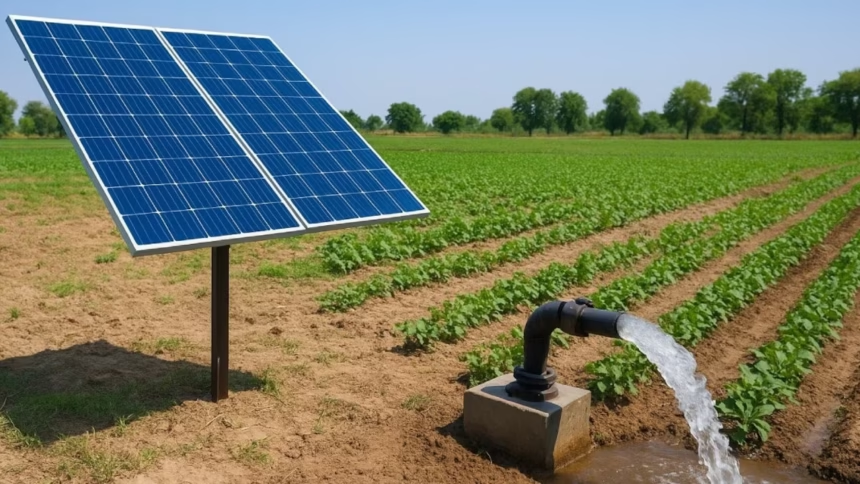
India is considering a fresh ₹35,000 crore investment under a proposed PM-KUSUM-II initiative to expand solar energy use in agriculture. The plan could strengthen solar-powered irrigation, improve farm energy efficiency and encourage farmers to generate electricity alongside growing crops, although the final funding structure and scheme design remain under consideration.
PM-KUSUM-II Proposal Puts Farm Solarisation in Focus
The Centre is evaluating a proposed outlay of approximately ₹35,000 crore for PM-KUSUM-II, a possible next phase of the Pradhan Mantri Kisan Urja Suraksha evam Utthaan Mahabhiyan. The development signals a potential shift towards integrating renewable energy more closely with agricultural productivity and water conservation.
According to a report published on October 21, 2026, Renewable Energy Secretary Santosh Kumar Sarangi indicated that the government was examining the proposal and discussing its structure with the Agriculture Ministry. The proposed investment is comparable to the ₹34,422 crore central financial support originally earmarked for the existing PM-KUSUM scheme.
However, the ₹35,000 crore figure should be understood as a proposal under consideration, not an officially approved allocation. The final budget, eligibility requirements and implementation framework will determine how the next phase reaches farmers.
Existing PM-KUSUM Scheme Supports Solar Pumps
The original PM-KUSUM scheme was designed to reduce dependence on diesel-powered irrigation, improve energy security in rural areas and create additional income opportunities for farmers.
It operates through three principal components. Component A supports decentralised grid-connected renewable energy plants. Component B provides assistance for standalone solar agricultural pumps, while Component C focuses on solarising existing grid-connected agricultural pumps and agricultural feeders.
Under the existing framework, eligible beneficiaries can receive central financial assistance, with support levels depending on the component, location and applicable guidelines. State governments also play an important role in implementation, including beneficiary identification and subsidy arrangements.
The Ministry of New and Renewable Energy had set an original target of adding 34,800 megawatts of solar capacity by March 2026, backed by ₹34,422 crore in central financial support, including implementation-related service charges.
A new phase could build on this framework, but its exact targets and funding arrangements have not yet been finalised.
Agrivoltaics Could Connect Farming With Solar Power
One important development in India’s agricultural energy transition is agrivoltaics, a system that combines electricity generation from solar panels with agricultural activity on the same land.
Unlike conventional ground-mounted solar installations, agrivoltaic projects can use elevated solar panels that allow crops to grow beneath or between the structures. This approach could help farmers generate renewable electricity without completely giving up agricultural use of their land.
The Ministry of New and Renewable Energy is exploring financial incentives to encourage this model. Discussions are taking place on whether such support should be incorporated into an expanded PM-KUSUM programme or introduced through a separate initiative.
The government has cited an estimated agrivoltaic potential of 1 to 2 terawatts in India. This represents a substantial technical opportunity, although actual deployment would depend on land conditions, suitable crops, project economics, grid connectivity and local agricultural practices.
Agrivoltaics could be particularly relevant in regions where competition for land makes conventional solar installations difficult. However, elevated structures typically cost more to construct, making appropriate financial support and project planning important for wider adoption.
Solar Irrigation Could Reduce Energy Costs for Farmers
Electricity and diesel are important operating costs for farmers who depend on irrigation. Solar-powered pumps can reduce exposure to diesel prices and, where grid electricity is unreliable or expensive, offer an alternative source of power.
The financial benefits depend on the initial investment, government assistance, maintenance expenses and the availability of water. Solar pumps can also improve access to irrigation in suitable locations, helping farmers manage agricultural operations more efficiently.
A revamped PM-KUSUM programme could potentially combine solarisation with better irrigation practices and water conservation. This would be important because cheaper electricity alone does not guarantee sustainable farming.
When groundwater is already under pressure, unrestricted pumping can worsen water depletion. Solarisation policies therefore need to encourage efficient irrigation methods, appropriate crop selection and responsible groundwater management.
The proposed scheme’s final guidelines will be important in determining whether these priorities receive adequate attention.
Funding and Implementation Will Determine the Impact
A ₹35,000 crore programme would require careful coordination between the central government, state departments, electricity distribution companies, financial institutions and solar equipment suppliers.
For farmers, the practical details matter as much as the headline allocation. These include the subsidy available, the farmer’s contribution, loan accessibility, vendor quality, installation timelines and the process for receiving payments or selling surplus electricity.
For solar developers and equipment manufacturers, a new phase could create additional opportunities in pump manufacturing, installation, maintenance and decentralised power generation. However, the scale of these opportunities will depend on approved targets, tender conditions and the pace of implementation.
Electricity distribution companies will also remain important stakeholders, particularly where solar power is supplied to the grid or agricultural feeders are solarised. Clear power-purchase arrangements and timely payments can influence whether projects attract sustained investment.
The experience of the existing scheme also highlights the need to monitor the difference between sanctioned projects and completed installations. Strong funding commitments deliver meaningful benefits only when equipment reaches beneficiaries and functions reliably.
India’s Renewable Energy Strategy Extends Into Agriculture
The proposal comes as India explores ways to expand renewable electricity generation while addressing land availability, grid infrastructure and energy storage requirements.
Agriculture offers an opportunity to distribute solar generation beyond large utility-scale projects. Solar pumps, feeder-level solarisation and agrivoltaic installations could support decentralised electricity production while giving farmers a more active role in the renewable energy transition.
However, agricultural solarisation cannot succeed through funding alone. Its long-term value will depend on whether farmers can afford the systems, access dependable technical support and obtain fair returns from electricity generation.
The proposed PM-KUSUM-II outlay could become an important step in this direction if the government establishes clear targets and practical implementation mechanisms. For now, the ₹35,000 crore proposal remains under consideration, and the final policy details will determine the programme’s reach.
Key Takeaways
- The Centre is considering an approximately ₹35,000 crore outlay for a proposed PM-KUSUM-II programme.
- The existing PM-KUSUM scheme supports standalone solar pumps, grid-connected pump solarisation and decentralised solar power plants.
- Agrivoltaics could allow farmers to generate solar electricity while continuing agricultural activity on the same land.
- Final approval, subsidy rules, implementation timelines and water conservation measures will determine the proposal’s impact.
Frequently Asked Questions
1. What is the proposed PM-KUSUM-II outlay?
The Centre is considering an outlay of approximately ₹35,000 crore for a possible next phase of PM-KUSUM. The proposal has not been confirmed as an approved allocation.
2. What is the PM-KUSUM scheme?
PM-KUSUM is a central government initiative designed to promote solar energy in agriculture through standalone solar pumps, solarisation of grid-connected agricultural pumps and decentralised renewable energy plants.
3. How could PM-KUSUM-II benefit farmers?
Depending on the final guidelines, an expanded programme could improve access to solar irrigation, reduce dependence on diesel and create opportunities to earn income from renewable electricity.
4. What is agrivoltaics, and why is it relevant?
Agrivoltaics combines solar electricity generation with farming on the same land. It could help increase renewable energy production while preserving agricultural use, although costs, crop suitability and local conditions will influence its viability.