
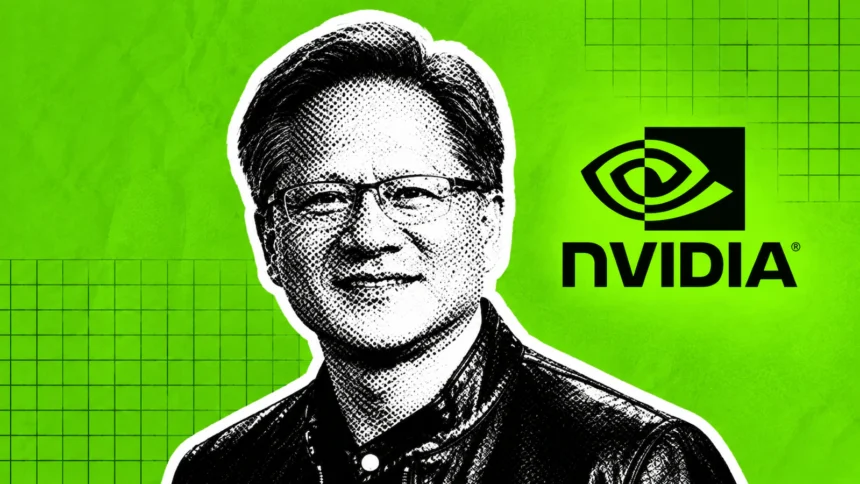
Nvidia shares surged more than 31% after the company reinstated co-founder Jensen Huang as chief executive, triggering a powerful recovery across global technology and artificial intelligence stocks. The leadership decision eased investor concerns and helped Wall Street recover from a sharp technology-led sell-off.
Nvidia Reinstates Jensen Huang as CEO After Leadership Turmoil
Nvidia has reinstated Jensen Huang as its president and chief executive officer, reversing a leadership change that had unsettled investors and raised concerns about the future direction of the world’s most influential artificial intelligence chipmaker.
The company’s board announced the decision on November 23, 2026, confirming that Huang would immediately resume his responsibilities as CEO and return as a member of the board of directors.
According to Nvidia’s regulatory filing with the US Securities and Exchange Commission, the board voted unanimously to reinstate Huang following discussions and meetings with him. The directors said they were satisfied with his candour and ability to lead the company.
The announcement came after a turbulent period for Nvidia, during which uncertainty surrounding its leadership contributed to pressure on technology shares.
The board also confirmed that Colette Kress would continue as executive vice president and chief financial officer after serving in an interim leadership capacity.
The decision immediately changed market sentiment. Investors who had been concerned about leadership uncertainty welcomed Huang’s return, viewing it as a sign of continuity at a company central to the global AI industry.
Nvidia Stock Jumps 31%, Adding Nearly $1 Trillion in Value
Nvidia shares delivered one of their strongest single-session performances on November 23.
The stock closed at $165.05, gaining approximately 31.48% during the trading session. The sharp increase added around $950 billion to the company’s market capitalisation, bringing its valuation close to $4 trillion.
The rally was significant because Nvidia had faced substantial selling pressure during the preceding market downturn. Investors had been reassessing technology valuations, the sustainability of artificial intelligence spending and the financial returns expected from large-scale data centre investments.
The company’s leadership announcement provided an immediate reason for investors to reconsider their positions.
Nvidia’s influence extends well beyond its own stock performance. Its graphics processing units (GPUs) are widely used to train and operate advanced AI systems. Major technology companies depend on its hardware to develop cloud computing infrastructure, generative AI platforms and large-scale data centres.
Consequently, changes in investor confidence surrounding Nvidia often influence the broader semiconductor and technology markets.
The latest rally demonstrated how closely global financial markets are watching the company’s leadership and business outlook.
Wall Street Records Strongest Recovery in Months
The impact of Nvidia’s announcement quickly spread across Wall Street.
According to Associated Press market data, the S&P 500 climbed 4.7% on November 23, while the Nasdaq Composite advanced 6.5%. The Dow Jones Industrial Average gained 3%, and the Russell 2000 rose 3.4%.
The technology-heavy Nasdaq benefited particularly from the recovery in AI-linked shares.
The rebound also helped the S&P 500 recover more than half of its losses from the previous week. Before the recovery, the index had fallen more than 10% below its record level and experienced a seven-session losing streak.
Semiconductor manufacturers and companies associated with AI infrastructure also attracted renewed buying interest.
The rally reflected a broader improvement in investor sentiment rather than a change in Nvidia’s immediate financial performance. The leadership announcement did not automatically resolve concerns about technology valuations or the profitability of AI investments.
Nevertheless, the scale of the recovery highlighted Nvidia’s importance to the direction of global technology stocks.
Asian Markets Join the Global AI Stock Rally
The positive sentiment extended into Asian markets on November 24, with semiconductor and technology companies leading regional gains.
South Korea’s KOSPI advanced sharply, supported by buying in major chipmakers such as Samsung Electronics and SK Hynix. Japan’s Nikkei 225 also recorded substantial gains as investors responded to the recovery in US technology shares.
Taiwan’s stock market experienced a particularly strong rebound, with major companies including Taiwan Semiconductor Manufacturing Company (TSMC) and Foxconn benefiting from renewed demand for technology stocks.
The recovery was important for Asia because the region plays a central role in the global semiconductor supply chain. Companies based in South Korea, Taiwan and Japan manufacture memory chips, semiconductor equipment and electronic components used in AI infrastructure.
Nvidia’s business therefore has significant connections with Asian manufacturers. Stronger demand for its processors can support suppliers involved in producing, assembling and distributing advanced computing hardware.
However, the regional recovery also reflects investor expectations rather than guaranteed future earnings. Sustained gains will depend on continued demand for AI-related products and stable global technology investment.
Why Jensen Huang’s Leadership Matters to Nvidia
Jensen Huang co-founded Nvidia in 1993 and has played a central role in transforming the company from a graphics processor manufacturer into a major supplier of AI computing technology.
Under his leadership, Nvidia expanded its GPU business beyond gaming and graphics into high-performance computing, artificial intelligence and data centre infrastructure.
Its hardware has become an important component of the AI development strategies of companies including Microsoft, Amazon, Alphabet and Meta.
These businesses are investing heavily in computing infrastructure to support generative AI applications, cloud services and advanced machine learning systems.
Huang’s return is therefore significant because investors associate his leadership with Nvidia’s long-term technology strategy, product development and relationships with major customers.
Leadership continuity can also matter in an industry where product development requires substantial research investment, manufacturing partnerships and coordination across international supply chains.
For investors, the board’s decision reduces one immediate source of uncertainty. However, it does not remove the need for Nvidia to demonstrate that its business growth can justify the substantial expectations built into its market valuation.
Governance Questions and Regulatory Scrutiny Remain
Although markets welcomed Huang’s reinstatement, the decision has not eliminated the questions surrounding Nvidia’s corporate governance and regulatory position.
The leadership disruption had been associated with reports involving Huang’s personal conduct and allegations raising potential national security concerns. These reports generated scrutiny and uncertainty around the company’s leadership.
Nvidia’s board said it received input from senior levels of the US government before reaching its decision. The board stated that it was confident Huang’s reinstatement posed no national security risk.
However, the company’s announcement does not mean that all regulatory and political questions have been resolved.
US lawmakers have raised questions about the circumstances surrounding the leadership decision, potential national security implications and the government’s role in the process.
The company’s business also remains exposed to US restrictions on advanced semiconductor exports to China. These controls are an important consideration for Nvidia because access to international markets can influence its long-term revenue opportunities.
The distinction between investor confidence and regulatory certainty will remain important as the company moves forward.
AI Investment Concerns Continue Despite Market Recovery
The latest rally has restored some confidence in AI-related stocks, but concerns about the economics of the artificial intelligence industry remain.
Technology companies are committing enormous amounts of capital to data centres, specialised processors, networking equipment and electricity infrastructure.
Investors increasingly want evidence that these investments will generate sustainable revenue and profits.
Nvidia benefits directly from demand for AI processors, but its future performance also depends on customer spending decisions, competition and the availability of manufacturing capacity.
Companies developing their own AI chips could also change the competitive landscape over time. Meanwhile, restrictions on international chip sales and possible delays in data centre construction could affect industry growth.
Another concern is valuation. A strong share price recovery does not necessarily mean that a stock has become inexpensive. Investors must assess whether expected earnings growth supports the current market price.
The November 23 rally was therefore a major improvement in market sentiment, but it should not be interpreted as proof that the broader AI investment cycle has become risk-free.
What Investors Will Watch Next
Nvidia’s next phase will be judged by more than its CEO’s return. Investors will monitor the company’s financial performance, product launches, customer demand and ability to maintain its position in the AI semiconductor market.
Upcoming financial results from major technology companies and semiconductor suppliers will provide further indications of whether AI infrastructure spending remains strong.
Market participants will also watch developments involving US export controls, regulatory investigations and the broader relationship between technology companies and government authorities.
For Nvidia, maintaining confidence among employees, customers, investors and manufacturing partners will be essential.
The company’s leadership change has provided immediate relief to markets, but long-term confidence will depend on business execution and the resolution of outstanding governance concerns.
Key Takeaways
- Nvidia reinstated co-founder Jensen Huang as CEO on November 23, 2026, following a unanimous board decision.
- Nvidia shares surged approximately 31.48%, adding around $950 billion to the company’s market value.
- The S&P 500 gained 4.7%, while the Nasdaq Composite advanced 6.5% during Monday’s Wall Street session.
- Asian semiconductor stocks also rallied, although concerns about AI valuations, export restrictions and corporate governance remain.
Frequently Asked Questions
1. Why did Nvidia shares surge on November 23, 2026?
Nvidia shares surged after the company’s board reinstated Jensen Huang as president and CEO. His return reduced immediate leadership uncertainty and restored investor confidence in the company’s direction.
2. How much did Nvidia’s stock increase?
Nvidia shares gained approximately 31.48% on November 23, closing at $165.05 and adding around $950 billion to the company’s market capitalisation.
3. How did Jensen Huang’s return affect global stock markets?
The announcement triggered a rally across global technology and semiconductor stocks. The Nasdaq Composite gained 6.5%, while Asian markets also recorded strong advances on November 24.
4. Are concerns about Nvidia and the AI industry over?
No. Investors continue to monitor regulatory scrutiny, US chip export restrictions, AI infrastructure spending, corporate governance and concerns about technology stock valuations.
(Internal keywords: Nvidia stock rally 2026, Jensen Huang returns as Nvidia CEO, global AI stocks, Nvidia market capitalisation, semiconductor stocks rally, artificial intelligence investment, US technology stocks, Asian stock market rally, AI chip industry, Nvidia leadership news)