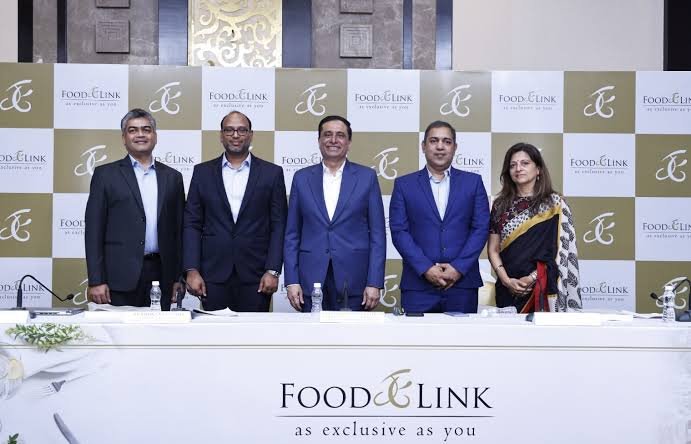
Foodlink F&B Holdings has opened its ₹360.76 crore initial public offering (IPO), with a price band of ₹181 to ₹191 per share. The Mumbai-based luxury food services company plans to use the proceeds for business expansion, new restaurants, banquet facilities and debt repayment.
Foodlink F&B Holdings IPO Opens on November 26
Foodlink F&B Holdings (India) Limited has opened its initial public offering on November 26, 2026, entering India’s primary market with a public issue worth approximately ₹360.76 crore.
The Mumbai-based company operates across luxury catering, casual dining restaurants, cloud kitchens, banquets and integrated food and beverage services.
The IPO will remain open for subscription until November 30, 2026. The company has fixed its price band at ₹181 to ₹191 per equity share, with a face value of ₹2 per share.
The public issue consists of a fresh issue of equity shares worth ₹192 crore and an offer for sale (OFS) of up to 88.35 lakh shares valued at approximately ₹168.76 crore.
At the upper end of the price band, the total issue size works out to ₹360.76 crore.
Ahead of the public offering, Foodlink raised ₹162.34 crore from institutional investors through its anchor book on November 25. The company allotted approximately 84.99 lakh shares to 12 institutional investors at ₹191 per share.
The IPO marks an important fundraising milestone for the company as it looks to expand its restaurant and catering operations.
Foodlink IPO Price Band, Lot Size and Important Dates
Foodlink F&B Holdings has set the IPO price band between ₹181 and ₹191 per share.
Retail investors must apply for a minimum of 78 shares, which translates into an investment of ₹14,898 at the upper price band.
The issue follows the book-building process, under which investors can bid within the announced price range.
The key IPO details are:
| Particulars | Details |
|---|---|
| Company | Foodlink F&B Holdings (India) Ltd |
| Issue size | ₹360.76 crore |
| Fresh issue | ₹192 crore |
| Offer for sale | ₹168.76 crore |
| Price band | ₹181 to ₹191 |
| Lot size | 78 shares |
| Minimum retail investment | ₹14,898 |
| IPO opening | November 26, 2026 |
| IPO closing | November 30, 2026 |
| Expected allotment | December 1, 2026 |
| Expected listing | December 3, 2026 |
| Exchanges | NSE and BSE |
The company has reserved 75% of the net offer for qualified institutional buyers, 15% for non-institutional investors and 10% for retail individual investors.
The allotment process is expected to be completed on December 1, while refunds and share credits are scheduled for December 2.
The shares are expected to list on the NSE and BSE on December 3, 2026.
Foodlink Raises ₹162.34 Crore From Anchor Investors
Before opening its IPO to the public, Foodlink F&B Holdings raised ₹162.34 crore through its anchor investor allocation on November 25.
The company allotted approximately 84.99 lakh equity shares to 12 institutional investors at ₹191 per share, the upper end of the IPO price band.
Amicorp Capital (Mauritius) emerged as the largest investor in the anchor allocation, receiving approximately 18.33 lakh shares worth ₹35.01 crore.
Other participants included Founders Collective Fund, SG Finserve, ITI Mutual Fund, Cognizant Capital, SVAN Velocity Fund and Meru Investment Fund.
The participation of institutional investors provides an indication of demand ahead of the public subscription period.
However, anchor investment does not guarantee strong subscription from retail investors or a positive listing performance.
The remaining IPO subscription will determine demand across institutional, non-institutional and retail investor categories.
Where Foodlink Will Use Its ₹192 Crore Fresh Issue Proceeds
A significant portion of the IPO proceeds will be directed towards expanding Foodlink’s existing business operations.
The company plans to use the fresh issue proceeds for new restaurant openings, banquet facilities, central kitchen infrastructure and repayment of borrowings.
The proposed allocation includes:
- ₹21.3 crore for establishing a new centralised kitchen.
- ₹41.5 crore for setting up two new banquet facilities.
- ₹50.8 crore for establishing four new casual dining restaurants through its subsidiary, Foodlink Global Restaurants & Catering Services LLC.
- ₹21 crore for repayment of borrowings.
- The remaining amount for general corporate purposes and related expenses.
The expansion plans reflect the company’s intention to strengthen its presence in the organised food services industry.
New restaurants could help expand its casual dining business, while additional banquet facilities may support demand for weddings, corporate gatherings and private events.
Investment in centralised kitchens is also important for businesses operating across multiple locations because it can support food preparation, quality control and operational consistency.
The company will need to execute these expansion plans efficiently to convert the additional investment into sustainable revenue growth.
Foodlink’s Business Model Covers Catering, Restaurants and Banquets
Foodlink F&B Holdings operates through multiple segments within the food and beverage industry.
Its business model includes event catering, casual dining restaurants, cloud kitchens, banquets and integrated food services.
The event catering segment provides customised food and beverage services for weddings, corporate functions, social gatherings and large events.
Its casual dining and cloud kitchen operations serve customers through restaurant outlets and delivery-oriented kitchens.
The company operates restaurant brands including China Bistro, India Bistro, Glocal and Art of Dum.
Its banquet business operates under the Jade Banquets brand, with facilities in cities including Mumbai, Ahmedabad and New Delhi.
According to the company’s IPO disclosures, its operations extend across India, the United Arab Emirates, the United Kingdom and Malaysia.
The company operates 28 casual dining restaurants and cloud kitchens across India and the UAE. Its infrastructure also includes six centralised kitchens in India and one in Dubai.
This diversified operating structure gives Foodlink exposure to different parts of the food services industry.
However, the performance of these segments can depend on consumer spending, event bookings, restaurant occupancy, food costs and operating expenses.
Foodlink Financial Results: FY2026 Revenue Rises 25.87%
Foodlink reported improved financial performance during the financial year ended March 2026.
Its operating revenue increased 25.87% to ₹567.50 crore in FY2026, compared with ₹450.9 crore in FY2025.
Net profit more than doubled to ₹29.11 crore from ₹14.3 crore in the previous financial year.
The increase in revenue reflects growth in the company’s food services operations, while the higher net profit indicates an improvement in its overall earnings performance.
However, the company’s latest financial position also presents some challenges.
For the six months ended September 2026, Foodlink reported revenue of approximately ₹219.8 crore but recorded a net loss of ₹16.15 crore.
This difference between annual profitability and the first-half loss is an important factor for investors assessing the IPO.
The catering and events industry can experience seasonal fluctuations because revenue depends partly on wedding seasons, festivals, corporate events and other large gatherings.
As a result, financial performance across individual quarters may not always reflect the company’s full-year earnings potential.
Investors will need to examine the company’s complete financial statements, cash flows, borrowings and seasonal business patterns rather than relying only on its FY2026 profit growth.
Foodlink’s Growth Plans and Challenges in India’s Food Services Market
India’s organised food services industry includes restaurant chains, catering companies, cloud kitchens, banquet operators and integrated food service providers.
Companies in this segment compete on food quality, brand recognition, pricing, customer experience and operational efficiency.
Foodlink’s expansion strategy focuses on increasing its restaurant footprint and strengthening its banquet and catering capabilities.
Its proposed investment in four additional casual dining restaurants could help expand its customer base and increase its presence in selected markets.
The planned banquet facilities may also provide opportunities to capture demand from weddings, corporate events and other large-scale gatherings.
However, expanding food services operations requires significant capital and consistent management.
Restaurant businesses face challenges involving rental costs, employee expenses, food inflation, customer acquisition and competition from both organised chains and independent establishments.
Catering operations also require careful planning because large events involve advance bookings, staffing arrangements, supply management and strict service expectations.
Foodlink’s ability to maintain margins while expanding its operations will therefore be an important factor in its future financial performance.
What Investors Should Watch During the Foodlink IPO
The Foodlink IPO comes with both expansion opportunities and financial considerations.
The company’s FY2026 revenue and profit growth demonstrate an improvement in its business performance. Its expansion plans also provide a clear explanation of how it intends to use the fresh issue proceeds.
At the same time, the first-half FY2027 net loss highlights the importance of understanding seasonal revenue patterns and operating costs.
Another distinction investors should consider is the difference between fresh issue proceeds and offer-for-sale proceeds.
The ₹192 crore fresh issue will provide funds to the company for its stated business purposes, including expansion and debt repayment.
The ₹168.76 crore OFS involves existing shareholders selling their shares. This portion does not represent new capital raised by Foodlink for its operations.
The IPO’s subscription levels, institutional participation, financial performance and valuation will remain important factors during the offer period.
The final market response will become clearer after the subscription closes on November 30 and the shares proceed towards their expected December 3 listing.
Key Takeaways
- Foodlink F&B Holdings opened its ₹360.76 crore IPO on November 26, with a price band of ₹181 to ₹191 per share.
- The company raised ₹162.34 crore from anchor investors ahead of the public issue.
- Fresh issue proceeds will support new restaurants, banquet facilities, a centralised kitchen and debt repayment.
- FY2026 revenue increased 25.87% to ₹567.50 crore, but the company reported a net loss of ₹16.15 crore in the first half of FY2027.
Frequently Asked Questions
1. When does the Foodlink F&B Holdings IPO open and close?
The IPO opened on November 26, 2026, and will close on November 30, 2026. The shares are expected to list on December 3, 2026.
2. What is the price band of the Foodlink IPO?
The price band is ₹181 to ₹191 per equity share. The minimum application lot is 78 shares, requiring ₹14,898 at the upper price band.
3. How much is Foodlink F&B Holdings raising through its IPO?
The company aims to raise approximately ₹360.76 crore, comprising a fresh issue of ₹192 crore and an offer for sale of ₹168.76 crore.
4. What will Foodlink do with the IPO proceeds?
The company plans to establish a centralised kitchen, two banquet facilities and four casual dining restaurants. It will also use a portion of the proceeds to repay borrowings and meet general corporate requirements.
(Internal Keywords: Foodlink F&B Holdings IPO 2026, Foodlink IPO date, Foodlink IPO price band, Foodlink IPO subscription, Foodlink IPO listing date, Foodlink F&B Holdings financial results, Foodlink ₹361 crore IPO, luxury catering company India, Foodlink restaurant expansion, India primary market news, Indian IPO market November 2026)