
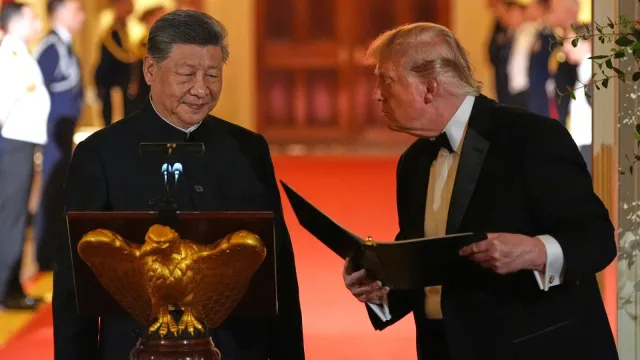
The Trump administration has proposed new tariffs on imports from 14 major trading partners, including India, China and the European Union. The measures follow a US investigation into manufacturing overcapacity and remain subject to public consultation before any final decision.
US Proposes New Tariffs Under Section 301
The Trump administration has proposed a fresh round of tariffs targeting imports from 14 major trading partners, including India, China and the European Union, in a move that could affect global trade and manufacturing supply chains.
The Office of the United States Trade Representative (USTR) announced the proposals on November 25, 2026, after concluding investigations into what it described as structural excess capacity and production in manufacturing sectors.
US Trade Representative Jamieson Greer determined that certain industrial policies and practices followed by the 14 economies were unreasonable and burdened or restricted American commerce. The administration has proposed additional import duties under Section 301 of the Trade Act of 1974.
However, the distinction is important: these are proposed tariffs, not duties that have already come into force. The USTR has opened the proposals for public comments and scheduled hearings before deciding on final action.
The development adds another layer of uncertainty to international trade relations as businesses assess the possible impact on exports, production costs and cross-border investment.
Which Countries Face the Proposed US Tariffs?
The latest US trade action covers 14 economies. Apart from India, China and the European Union, the list includes Bangladesh, Cambodia, Indonesia, Japan, Malaysia, Singapore, South Korea, Switzerland, Taiwan, Thailand and Vietnam.
The proposed tariff ceilings vary by trading partner.
| Trading partner | Proposed tariff |
|---|---|
| China | Up to 20% on specified goods, with a separate rate of up to 10% for certain listed goods |
| India | Up to 25% |
| European Union | 15%, subject to the proposal’s calculation rules |
| Vietnam | Up to 35% |
| Singapore | Up to 20% |
| Bangladesh | Up to 18% |
| Cambodia | Up to 18% |
| Indonesia | Up to 18% |
| Malaysia | Up to 18% |
| Thailand | Up to 18% |
| Japan | Up to 15% |
| South Korea | Up to 15% |
| Switzerland | Up to 15% |
| Taiwan | Up to 15% |
These figures are proposed rates and are subject to product exemptions, existing duties and the terms outlined in individual country notices. They should not be interpreted as a uniform additional charge on every shipment.
The USTR has not made determinations under this group of investigations for Mexico or Norway, although both economies were included in the original investigation process.
India Could Face Tariffs of Up to 25%
India is among the major economies covered by the latest US trade proposal. The USTR has proposed tariffs of up to 25% on Indian goods, subject to exemptions and adjustments for certain existing duties.
The proposal also provides for consideration of a lower tariff rate of 17% if India reaches a reciprocal trade agreement with the United States that addresses the concerns raised in the investigation.
Washington’s findings on India refer to several areas, including industrial expansion plans, labour protections, financial policies, market access barriers and the country’s approach to global manufacturing overcapacity.
The USTR has specifically highlighted sectors such as pharmaceuticals, medical devices, steel, solar products and information and communications technology.
These sectors are important to India’s export relationship with the United States. Any eventual tariff changes could influence the relative cost of Indian products in the American market and affect exporters competing with suppliers from other countries.
However, the final impact will depend on the products covered, applicable exemptions, existing tariff arrangements and the outcome of trade discussions between New Delhi and Washington.
The proposed 17% rate is also conditional. It should not be treated as an agreed tariff or a confirmed outcome of ongoing negotiations.
China and European Union Face Different Tariff Proposals
China is facing a proposed tariff of up to 20% on goods outside specified annexes, while certain goods listed in Annex A could face duties of up to 10%. Products identified in Annex B are exempt under the proposal.
The USTR says the measures take account of the existing US-China trade arrangements, including commitments associated with the Kuala Lumpur Joint Arrangement reached by President Donald Trump and Chinese President Xi Jinping on October 30, 2025.
The investigation covers several Chinese manufacturing industries, including automobiles, batteries, semiconductors, steel, solar products, telecommunications equipment, robotics and consumer electronics.
The European Union faces a proposed tariff rate of 15%, calculated net of most-favoured-nation duties and existing Section 301 tariffs. Certain products would also be exempt.
The USTR’s findings concerning the EU refer to industrial expansion plans, export support, market access barriers and preferential lending for manufacturing sectors. The report identifies automobiles, chemicals and pharmaceuticals among the industries particularly affected by these concerns.
The EU proposal also takes account of existing trade commitments and discussions between Washington and Brussels.
The different structures of the China and EU proposals show why headline tariff percentages cannot be compared without considering existing duties and product-level exemptions.
Why the Trump Administration Is Targeting Manufacturing Overcapacity
The latest tariff proposals follow investigations launched by the USTR on March 11, 2026, covering 16 economies.
The administration argues that some trading partners support manufacturing capacity through industrial policies, financial assistance, export incentives and other measures that can result in production exceeding market demand.
According to the US government, excess production can place downward pressure on international prices and make it harder for American manufacturers to compete.
The administration also raised concerns about labour protections, market access restrictions and the role of non-market economy inputs in certain supply chains.
The investigation involved a public consultation process. The USTR said it received testimony from nearly 140 witnesses and approximately 1,070 comments relating to the economies under review.
These findings represent the US government’s assessment under Section 301. The targeted economies may present different positions during the consultation process, and the investigations do not establish that every allegation is accepted by the affected governments.
Section 301 of the Trade Act of 1974 allows the US government to investigate and respond to foreign practices it considers unfair and harmful to American commerce.
The administration is using this legal framework for the latest proposals rather than relying on the emergency-powers approach used for some earlier tariff measures.
When Could the New US Tariffs Take Effect?
The proposed tariffs are not yet final. The USTR has invited interested parties to submit written comments and requests to participate in hearings.
The deadline for written comments and requests to appear at the hearings is January 5, 2027. Hearings are scheduled to begin on January 25, 2027, and may continue as appropriate.
The USTR has not specified a final implementation date for the proposed duties in its announcement.
The consultation process could influence the final tariff rates, product exemptions and other conditions. The agency may also consider commitments made through trade negotiations with individual economies.
For businesses, this means the current announcement creates a period of uncertainty rather than an immediate change in import costs.
Exporters may need to review their exposure to the US market, while importers could assess alternative suppliers and the potential effect of future duties on procurement budgets.
What the Tariff Proposals Could Mean for Global Trade
The proposed measures could affect businesses that depend on international manufacturing networks. Products often move across several countries during production, making tariff changes relevant beyond the country where a finished item is manufactured.
For example, an Indian exporter supplying pharmaceutical products or engineering goods to the US may need to assess the final tariff treatment applicable to its product. Similarly, manufacturers using components sourced from China or other affected economies could face changes in sourcing costs if duties are eventually implemented.
US importers would be responsible for paying applicable import duties at the border. Depending on market conditions and bargaining power, businesses may absorb some of the additional cost, pass it on to customers or seek alternative suppliers.
The proposals also arrive at a time when companies are balancing supply-chain diversification with the cost of moving production and sourcing operations.
Financial markets have so far responded without a uniform sell-off. Reuters reported that Asian and European equities rallied on November 26 as investors judged the proposals less severe than initially feared. The report noted that the duties were not expected to stack on top of July’s tariffs and might not take effect until February or March, although the official USTR announcement itself does not provide an implementation date.
The immediate market response does not remove the longer-term uncertainty. The final measures, government responses and progress in trade negotiations will determine how businesses and investors assess the consequences.
For India, China and the European Union, the coming consultation period will be important in understanding whether the proposals lead to changes in trade arrangements or become a source of further disagreement with Washington.
Key Takeaways
- The Trump administration has proposed new tariffs on 14 economies, including India, China and the European Union.
- India could face tariffs of up to 25%, with a proposed 17% rate subject to a qualifying trade agreement.
- The measures are being considered under Section 301 of the Trade Act of 1974 and are not yet final.
- Written comments are due by January 5, 2027, with hearings scheduled to begin on January 25.
Frequently Asked Questions
1. Has the Trump administration officially imposed new tariffs on India, China and the EU?
No. The administration has proposed new tariffs following Section 301 investigations. The measures remain subject to public comments, hearings and a final decision by the USTR.
2. What tariff rate has the US proposed for India?
The USTR has proposed tariffs of up to 25% on Indian goods, with certain exemptions. It has also proposed considering a 17% rate if India reaches a reciprocal trade agreement addressing the concerns raised in the investigation.
3. What is the proposed tariff rate for China and the European Union?
China could face tariffs of up to 20% on certain goods and up to 10% on specified goods listed in Annex A, with exemptions for Annex B products. The EU proposal sets a 15% rate, calculated net of most-favoured-nation duties and existing Section 301 tariffs.
4. When will the proposed US tariffs take effect?
The USTR has not announced a final implementation date. Written comments are due by January 5, 2027, and hearings are scheduled to begin on January 25, 2027.
(Internal Keywords: Trump new tariffs 2026, US tariffs on India, US tariffs on China, US EU trade tariffs, Trump trade policy, Section 301 tariffs, India US trade relations, global trade tensions, US import duties, manufacturing overcapacity, USTR tariff investigation, international trade news)