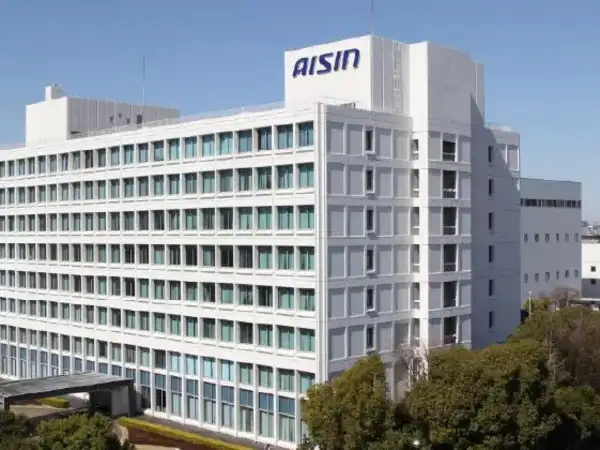
Aisin Maharashtra expansion is drawing attention across the auto supply chain as the global OEM commits ₹32 billion to scale capacity in India. The move signals a clear priority toward electric vehicles and advanced transmission systems, reinforcing India’s role in global automotive manufacturing.
Aisin’s expansion marks a strategic supply chain bet
Aisin Maharashtra expansion represents more than a routine capacity addition. The investment reflects a strategic decision by a major global auto component supplier to deepen its footprint in India at a time when vehicle technology is undergoing rapid change. By allocating ₹32 billion toward plant expansion, Aisin is signaling confidence in India as both a manufacturing base and a demand market.
The focus areas include components aligned with electric vehicles and advanced automatic transmissions. These segments are seeing rising adoption as automakers push for efficiency, lower emissions, and better drivability. For the auto supply chain, this investment underscores a shift away from purely internal combustion focused capacity toward future ready systems.
Why Maharashtra remains a preferred auto hub
Maharashtra continues to attract large automotive investments due to its established ecosystem. The state offers proximity to major OEMs, ports, logistics infrastructure, and a skilled supplier base. For Aisin, expanding in Maharashtra allows seamless integration with existing clients and access to export channels.
The state’s auto clusters already support complex manufacturing processes, making it easier to introduce advanced production lines. This reduces execution risk for high value components such as EV drivetrains and sophisticated transmission assemblies. The Aisin Maharashtra expansion leverages these advantages while aligning with broader national manufacturing priorities.
EV and automatic transmission focus reshapes supplier strategy
The emphasis on EV and AT components reflects changing OEM requirements. Electric vehicles demand different supply chains compared to traditional vehicles, with higher precision components and tighter quality standards. Automatic transmissions, meanwhile, are becoming standard across price segments in India, driven by consumer preference and urban traffic conditions.
By expanding capacity in these areas, Aisin is positioning itself to serve both domestic and global OEM demand. This reduces dependence on imports and shortens supply chains, a priority for automakers seeking resilience. The investment also suggests that India is no longer viewed only as a low cost assembly destination but as a location for advanced component manufacturing.
Global OEMs doubling down on India capacity
Aisin’s move fits into a broader pattern of global OEMs and suppliers doubling down on India capacity. Rising vehicle penetration, policy support for electrification, and supply chain diversification are driving this trend. India offers scale, cost competitiveness, and improving infrastructure, making it attractive amid global uncertainty.
For multinational suppliers, localizing production also helps meet regulatory and sourcing requirements. As EV adoption accelerates, proximity to OEM plants becomes critical for cost control and speed. The Aisin Maharashtra expansion reinforces India’s position as a strategic node in global automotive supply chains rather than a peripheral market.
Implications for domestic suppliers and employment
Large investments by global suppliers have ripple effects across the domestic ecosystem. Tier two and tier three suppliers often benefit from increased sourcing opportunities, technology transfer, and quality upgrades. As advanced components enter local production, domestic firms are pushed to raise standards and capabilities.
Employment impact is also significant. While EV manufacturing is less labor intensive than traditional assembly, it creates demand for higher skilled roles in automation, quality control, and engineering. Over time, this supports a shift toward higher value manufacturing jobs rather than volume driven employment alone.
Policy alignment and execution challenges
The timing of the Aisin Maharashtra expansion aligns with policy signals promoting EV adoption and manufacturing. Incentives aimed at localization and clean mobility have encouraged suppliers to commit capital. However, execution challenges remain.
EV supply chains require reliable power, consistent policy frameworks, and skilled manpower. Delays in infrastructure or regulatory approvals can affect project timelines. For investments of this scale, coordination between central and state authorities becomes critical. The success of this expansion will depend on how smoothly these elements come together.
Competitive pressure within the auto component sector
As global suppliers expand capacity in India, competition within the auto component sector intensifies. Domestic players face pressure to invest in technology and capacity to stay relevant. At the same time, partnerships and joint ventures may increase as firms seek to bridge capability gaps.
The Aisin Maharashtra expansion raises the bar for quality and scale. Suppliers that adapt quickly could integrate into global value chains. Those that lag risk being sidelined as OEMs consolidate sourcing around fewer, more capable partners.
What this means for India’s EV ambitions
India’s EV ambitions depend heavily on supply chain readiness. While vehicle assembly often grabs headlines, components determine cost, reliability, and scalability. Investments like Aisin’s help build the foundation required for sustained EV growth.
Local production of critical components reduces exposure to global disruptions and currency volatility. It also supports faster model rollouts and customization for Indian conditions. Over time, this could make India competitive not just as an EV market but as an export base for EV components.
The bigger picture for global auto manufacturing
The Aisin Maharashtra expansion illustrates how global auto manufacturing strategies are evolving. Suppliers are moving closer to demand centers while diversifying geographic risk. India fits well into this equation due to its scale and growth trajectory.
For the auto supply chain, this signals a longer term shift rather than a short cycle investment. Capacity decisions of this magnitude are made with decade long horizons. As more global players follow suit, India’s role in the automotive value chain is set to deepen.
Takeaways
- Aisin’s ₹32 billion expansion highlights confidence in India’s auto supply chain
- EV and automatic transmission components are central to the investment
- Maharashtra’s ecosystem continues to attract global OEM capacity
- The move strengthens India’s position in global automotive manufacturing
FAQs
Why is Aisin expanding its plant in Maharashtra?
The expansion supports growing demand for EV and automatic transmission components and leverages the state’s auto ecosystem.
How does this impact India’s EV supply chain?
It improves localization of critical components, reducing import dependence and strengthening supply resilience.
Will this create jobs in India?
Yes, particularly in skilled manufacturing, engineering, and quality roles linked to advanced components.
Does this signal more global auto investments in India?
It reinforces a broader trend of global OEMs and suppliers increasing capacity in India.