
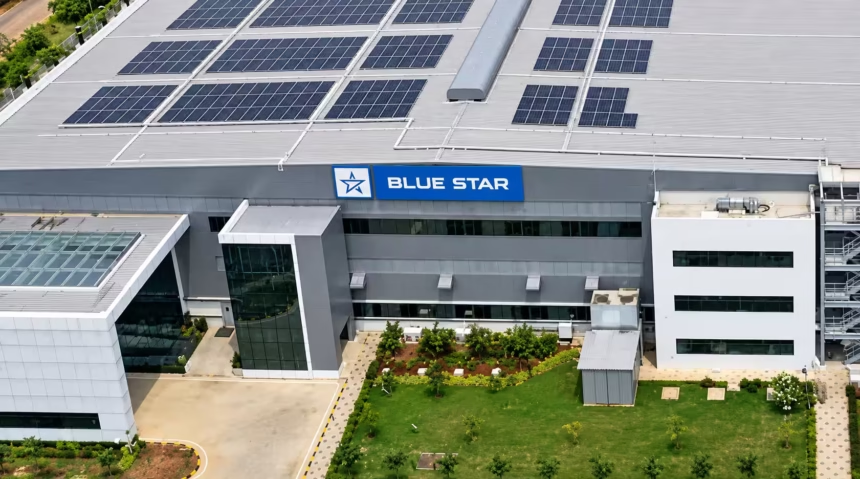
Blue Star reported strong revenue growth in the second quarter of FY2026-27, with consolidated revenue rising 21% to Rs 2,930.95 crore. Net profit increased 25.4% to Rs 123.91 crore, supported by air-conditioner demand, although higher material costs continued to pressure operating margins.
Blue Star Q2 Results Show Strong Revenue Growth
Blue Star Limited announced its Q2 FY2026-27 financial results on October 29, reporting higher revenue and consolidated net profit for the quarter ended September 30, 2026.
The company’s consolidated revenue from operations increased 21% year-on-year to Rs 2,930.95 crore, compared with Rs 2,422.37 crore in the corresponding quarter of the previous financial year.
Consolidated net profit rose 25.4% to Rs 123.91 crore against Rs 98.78 crore in Q2 FY2025-26.
The results reflect continued demand across the company’s air-conditioning, refrigeration and engineering businesses. However, the growth in reported profit needs to be viewed alongside operating performance, as the quarter included an exceptional gain from the sale of its MedTech business.
The results highlight a combination of stronger sales, increased operating costs and improving demand across selected business segments.
Blue Star Operating Profit Rises as Margins Decline
Despite the increase in revenue, Blue Star faced pressure on its operating profitability.
The company’s operating profit, measured as EBITDA excluding other income, increased 10.5% to Rs 202.58 crore in Q2 FY2027. It had reported operating profit of Rs 183.41 crore in the corresponding quarter last year.
However, the EBITDA margin declined to 6.9% from 7.6% a year earlier.
This difference between revenue growth and operating profit growth indicates that expenses increased faster than operating earnings. Higher material costs and limited opportunities to fully pass on cost increases affected profitability across businesses.
For investors, operating margins are an important indicator because they show how efficiently a company converts revenue into operating earnings.
Blue Star’s latest performance suggests that demand remains supportive, but protecting margins will be an important priority as the company enters the second half of FY2027.
Exceptional Gain From MedTech Business Sale Supports Net Profit
One important factor behind Blue Star’s reported net profit growth was an exceptional gain recognised during the quarter.
The company recorded an exceptional gain of Rs 23.02 crore from the sale of its MedTech business. This amount contributed to the reported increase in consolidated net profit.
However, the exceptional gain should be distinguished from recurring operating income.
Before exceptional items and the share of profit or loss from joint ventures, profit before tax increased marginally to Rs 133.61 crore from Rs 133.16 crore in the corresponding quarter last year.
This indicates that the growth in reported net profit was stronger than the underlying improvement in this particular pre-tax measure.
Investors generally examine both reported earnings and adjusted operating performance when assessing a company’s financial position. One-time gains can improve quarterly profit figures, but they do not necessarily indicate that the same level of earnings growth will continue in future quarters.
For Blue Star, the next few quarters will provide a clearer picture of whether stronger demand can translate into sustainable operating profit growth.
Extended Summer Supports Room Air Conditioner Demand
Demand for room air conditioners remained an important contributor to Blue Star’s Q2 performance.
An extended summer season supported sales of cooling products, while demand across the air-conditioning market remained an important factor for appliance manufacturers.
The company’s unitary products business, which includes room air conditioners and related products, recorded revenue of Rs 897.66 crore during the quarter, representing growth of approximately 29% year-on-year.
Seasonal demand plays a significant role in the air-conditioning industry. Summer temperatures, household purchasing decisions, replacement demand and distribution availability can influence quarterly sales.
A longer period of hot weather can extend the selling season for cooling appliances. This can support manufacturers through increased retail demand and stronger channel activity.
However, the performance of the air-conditioning business also depends on factors such as product pricing, raw material costs, competition and consumer spending.
Blue Star’s latest numbers indicate that cooling products remained a major growth contributor during the September quarter.
Engineering and Commercial Air Conditioning Business Expands
Blue Star’s electro-mechanical projects and commercial air-conditioning business continued to contribute the largest share of its quarterly revenue.
The segment generated revenue of approximately Rs 1,935.99 crore in Q2 FY2027, recording growth of around 16% compared with the previous year.
This business includes commercial air-conditioning solutions, engineering projects and related services.
Demand in this segment is connected to infrastructure development, commercial construction, industrial projects and investments in large buildings.
The company also reported revenue of Rs 97.30 crore from its professional electronics and industrial systems business, representing growth of approximately 51% year-on-year.
The segment’s growth indicates increasing contribution from specialised electronics and industrial solutions, although it remains smaller than the company’s other major businesses.
Together, these segments demonstrate that Blue Star’s revenue base extends beyond residential air conditioners. Commercial projects, industrial systems and refrigeration solutions remain important parts of its business operations.
Blue Star’s Order Book and Financial Position
Blue Star reported a carried-forward order book of Rs 7,229.22 crore as of September 30, 2026, compared with Rs 7,120.44 crore on September 30, 2025.
The order book provides an indication of projects and orders that the company has secured but has not yet fully executed.
A larger order book can support future revenue visibility, although actual revenue recognition depends on project execution, customer requirements and delivery schedules.
The company also reported a net cash position of Rs 289.43 crore at the end of the September quarter. This compares with net borrowings of Rs 417.06 crore a year earlier.
The improvement in its cash position provides additional financial flexibility. It can help the company manage working capital requirements, fund business operations and pursue growth opportunities.
Blue Star’s financial position will remain an important factor to monitor as it balances expansion with the need to improve operating profitability.
Blue Star Management Sees Growth Opportunities in H2 FY2027
Blue Star’s management indicated that demand for room air conditioners remained strong through the festive season.
The company also expects opportunities in data centre mechanical, electrical and plumbing projects, where increasing infrastructure requirements could support future order inflows.
Demand across commercial air-conditioning and commercial refrigeration businesses has also shown signs of improvement, according to management commentary.
However, the company identified several risks that could influence near-term performance.
A deficient monsoon could affect agricultural incomes and consumer demand, while higher interest rates may influence spending decisions. Commodity inflation could also create additional cost pressure.
Management has identified calibrated price revisions, product cost optimisation and operational efficiency improvements as priorities for strengthening profitability.
The company is targeting continued revenue growth momentum during the second half of FY2027 while focusing on improving margins.
What Blue Star’s Q2 Performance Means for the Industry
Blue Star’s latest results offer an indication of the demand environment in India’s air-conditioning and commercial cooling market.
The 21% revenue increase reflects growth across several business segments, with room air conditioners and engineering projects contributing significantly.
At the same time, the difference between revenue growth and operating profit growth highlights the challenges facing appliance and engineering manufacturers.
Companies must manage raw material inflation, production expenses, pricing decisions and competitive pressures while maintaining demand.
For Blue Star, the next phase will involve converting higher sales into stronger operating profitability.
Investors will also watch whether the company’s order book translates into timely project execution and whether festive-season demand remains strong.
The Q2 results therefore present a mixed but encouraging picture: business growth remains healthy, while cost management and margin improvement will determine the sustainability of earnings performance.
Key Takeaways
- Blue Star’s consolidated Q2 FY2027 revenue increased 21% to Rs 2,930.95 crore.
- Consolidated net profit rose 25.4% to Rs 123.91 crore, partly supported by a Rs 23.02 crore exceptional gain.
- Operating profit increased 10.5%, but EBITDA margin declined to 6.9% from 7.6%.
- The company reported a carried-forward order book of Rs 7,229.22 crore and a net cash position of Rs 289.43 crore.
Frequently Asked Questions
1. What was Blue Star’s Q2 FY2027 net profit?
Blue Star reported consolidated net profit of Rs 123.91 crore for the quarter ended September 30, 2026, compared with Rs 98.78 crore in the corresponding quarter of the previous financial year.
2. How much revenue did Blue Star generate in Q2 FY2027?
The company reported consolidated revenue from operations of Rs 2,930.95 crore, representing 21% year-on-year growth from Rs 2,422.37 crore.
3. Why did Blue Star’s profit increase by 25.4%?
Higher business revenue and an exceptional gain of Rs 23.02 crore from the sale of its MedTech business contributed to the increase in reported consolidated net profit.
4. What is Blue Star’s outlook for the second half of FY2027?
Management expects continued demand for room air conditioners, opportunities in data centre projects and improving demand in commercial air-conditioning and refrigeration. The company is also focusing on cost optimisation and operational efficiency to strengthen margins.