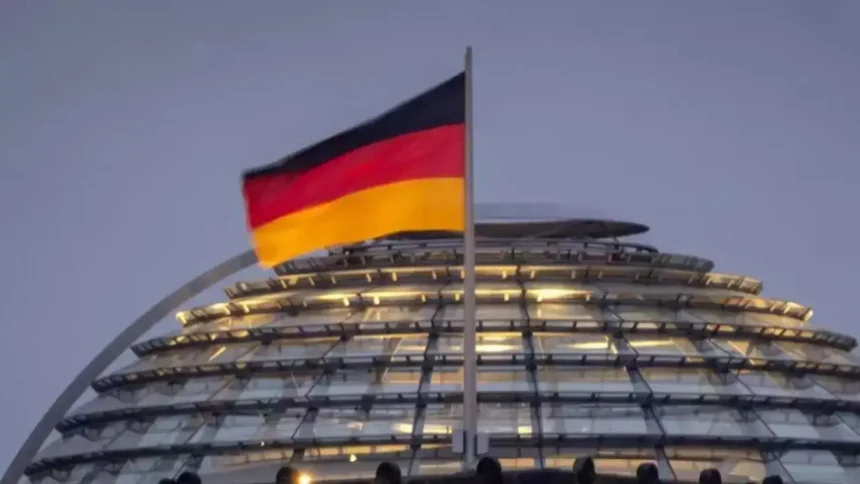
Germany has unveiled the €30 billion Deutschlandfonds, a new sovereign backed investment vehicle designed to mobilise private capital into the country’s energy transition and deep tech sectors. The Deutschlandfonds signals a strategic shift in Germany’s economic policy, aimed at accelerating innovation, strengthening industrial competitiveness, and closing the investment gap in future critical technologies.
The initiative comes as Europe’s largest economy looks to secure long term growth while managing energy security, climate commitments, and rising global competition in advanced technologies.
Deutschlandfonds targets private capital mobilisation at scale
The core objective of the Deutschlandfonds is to crowd in private investment rather than replace it. The fund will deploy public capital as anchor investment, with the explicit goal of attracting significantly larger pools of institutional and private money.
German policymakers have acknowledged that public spending alone is insufficient to finance the scale of transformation required in energy infrastructure and advanced technologies. By sharing risk and improving project bankability, the Deutschlandfonds is expected to unlock capital from pension funds, insurers, sovereign investors, and long term asset managers.
This structure reflects a broader shift in European policy thinking, where state capital is used to catalyse markets rather than dominate them.
Energy transition investment takes centre stage
A major portion of the Deutschlandfonds will be directed toward the energy transition. Germany faces a complex challenge of decarbonising its economy while maintaining industrial output and affordable energy supply.
Funding is expected to support renewable energy generation, grid modernisation, energy storage, hydrogen infrastructure, and industrial decarbonisation projects. These areas require heavy upfront investment with long payback periods, which has historically limited private participation.
By improving risk sharing and return visibility, the Deutschlandfonds aims to accelerate project execution and reduce Germany’s reliance on volatile energy imports over time.
Deep tech focus strengthens industrial competitiveness
Beyond energy, deep tech investment forms the second pillar of the Deutschlandfonds strategy. This includes sectors such as semiconductors, artificial intelligence, quantum computing, advanced materials, biotechnology, and climate technologies.
Germany’s traditional industrial strengths in manufacturing and engineering are increasingly dependent on leadership in these advanced technologies. However, deep tech ventures often struggle to secure late stage funding in Europe, leading to scale up challenges or relocation abroad.
The Deutschlandfonds is designed to bridge this gap by providing patient capital that supports companies through capital intensive development phases, helping retain innovation and intellectual property within the domestic economy.
Why Germany is acting now
The timing of the Deutschlandfonds reflects mounting economic and geopolitical pressures. Germany has faced slowing growth, industrial cost challenges, and increased competition from the United States and China, both of which deploy large scale state backed investment programmes.
Global capital is increasingly flowing toward jurisdictions with clear industrial strategies and strong policy support. The Deutschlandfonds sends a signal that Germany intends to compete actively for investment rather than rely solely on market forces.
It also aligns with broader European efforts to strengthen strategic autonomy in energy and technology, particularly after recent supply chain disruptions and energy price shocks.
How the fund structure is expected to work
The Deutschlandfonds will operate through a mix of equity investments, co investment platforms, and blended finance structures. Public capital will take first loss or subordinated positions in select cases, improving the risk profile for private investors.
Rather than picking individual startups, the fund is expected to work alongside professional fund managers, development banks, and industry partners. This approach reduces political risk, improves governance, and leverages private sector expertise in capital allocation.
Such structures are increasingly favoured globally as governments seek scale without micromanagement.
Market and investor reaction
Initial market reaction to the Deutschlandfonds announcement has been broadly positive. Industry groups have welcomed the focus on long term capital availability, particularly for infrastructure heavy sectors that struggle under traditional venture capital models.
Institutional investors view the fund as an opportunity to access stable, policy aligned projects with predictable returns. However, they will closely monitor execution details, governance standards, and regulatory clarity before committing capital.
The success of the Deutschlandfonds will ultimately depend on speed, transparency, and the ability to convert ambition into investable projects.
Implications for Europe and global capital flows
Germany’s move could influence policy across Europe. If successful, the Deutschlandfonds may serve as a template for other countries seeking to mobilise private capital at scale for strategic priorities.
It also strengthens Europe’s narrative in the global competition for capital, particularly as the United States continues to deploy aggressive incentives for clean energy and technology investment.
For global investors, the fund reinforces Germany’s position as a core destination for long duration capital tied to energy transition and advanced industrial growth.
Challenges and execution risks remain
Despite its scale and intent, the Deutschlandfonds faces execution risks. Regulatory complexity, permitting delays, and political consensus will all influence outcomes.
There is also the challenge of ensuring that capital reaches productive projects rather than being slowed by bureaucracy. Maintaining commercial discipline while pursuing policy goals will be critical.
The fund’s credibility will be built not on headline size, but on the quality and speed of capital deployment.
Takeaways
- Germany has launched a €30 billion Deutschlandfonds to crowd in private capital
- Energy transition and deep tech are the primary investment priorities
- The fund aims to strengthen long term industrial competitiveness
- Execution and governance will determine its real economic impact
FAQs
What is the Deutschlandfonds?
It is a state backed investment fund designed to mobilise private capital into energy transition and deep tech projects.
Why is private capital central to the strategy?
Public funds alone are insufficient to finance large scale transformation, making private participation essential.
Which sectors will benefit most?
Renewable energy, hydrogen, grids, semiconductors, AI, and other advanced technologies.
When will investments begin?
Deployments are expected to begin progressively as structures, partners, and project pipelines are finalised.