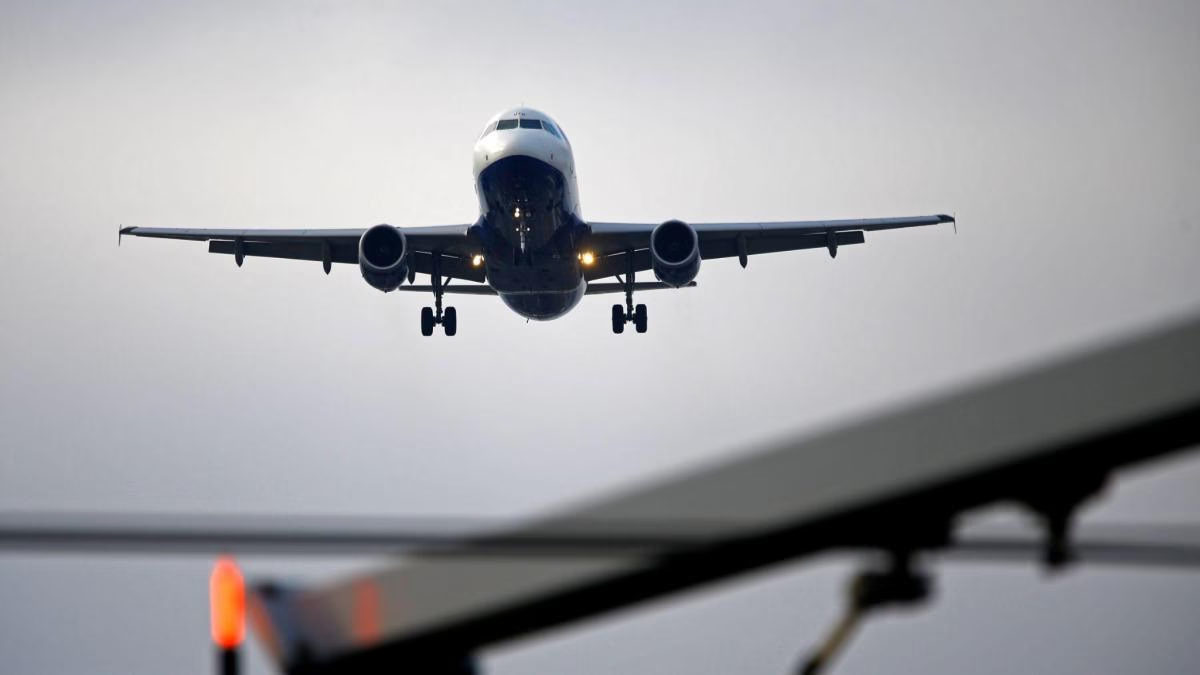
Airlines are diverging globally as fuel costs rise sharply amid geopolitical tensions, creating uneven financial performance across regions. While some carriers are passing costs to passengers, others are struggling with margins, reshaping pricing strategies and route planning worldwide.
Airlines diverge globally as fuel costs surge
Airlines diverge globally as fuel costs surge amid geopolitical tensions, making this a time sensitive development affecting the aviation industry. Rising crude oil prices are directly increasing aviation turbine fuel costs, which represent one of the largest expenses for airlines.
Geopolitical conflicts and supply disruptions have tightened global oil supply, pushing prices higher. Airlines across regions are responding differently depending on their financial strength, fuel hedging strategies, and market conditions.
Some airlines are able to absorb costs or pass them on through higher ticket prices, while others are facing pressure on profitability. This divergence is creating a varied performance landscape within the global aviation sector.
Fuel price volatility reshapes airline cost structures
Fuel costs typically account for a significant share of airline operating expenses, often ranging between 20 to 30 percent. When prices rise sharply, airlines must adjust their cost structures quickly to remain viable.
Carriers with strong balance sheets and effective fuel hedging strategies are better positioned to manage volatility. Hedging allows airlines to lock in fuel prices in advance, reducing exposure to sudden spikes.
However, not all airlines use hedging extensively, especially in markets where financial flexibility is limited. This creates disparities in how different carriers handle rising costs.
Operational efficiency is also becoming critical. Airlines are optimizing routes, improving fleet utilization, and adopting fuel efficient aircraft to mitigate the impact of higher costs.
Ticket pricing strategies vary across regions
One of the most visible outcomes of rising fuel costs is the change in ticket pricing. Airlines in some regions are increasing fares to offset higher expenses, while others are limiting price hikes to remain competitive.
In markets with strong demand, airlines have greater flexibility to pass costs onto passengers. Business travel recovery and steady leisure demand are supporting fare increases in these regions.
In contrast, price sensitive markets are seeing more cautious pricing strategies. Airlines are balancing the need to maintain demand with the pressure to cover rising costs.
This divergence in pricing reflects differences in market dynamics, competition levels, and consumer behavior across regions.
Geopolitical tensions disrupt global aviation networks
Geopolitical tensions are not only affecting fuel prices but also disrupting aviation networks. Airspace restrictions, route changes, and operational uncertainties are adding complexity to airline operations.
Certain routes have become longer due to airspace closures, increasing fuel consumption and operational costs. This further amplifies the financial impact of rising fuel prices.
Airlines operating in regions directly affected by geopolitical tensions are facing additional challenges, including reduced demand and increased operational risks.
The combined effect of higher fuel costs and operational disruptions is contributing to the uneven performance of airlines globally.
Financial performance gap widens among airlines
The current environment is leading to a widening gap in financial performance among airlines. Strong carriers with diversified revenue streams and efficient operations are managing to maintain profitability.
On the other hand, airlines with weaker balance sheets or high cost structures are facing significant pressure. Some are reporting lower margins, while others are implementing cost cutting measures.
This divergence is also influencing investor sentiment. Airlines that demonstrate resilience and adaptability are attracting more confidence, while others face increased scrutiny.
The situation highlights the importance of financial discipline and strategic planning in navigating volatile market conditions.
Long term impact on airline industry dynamics
The ongoing divergence among airlines is likely to have long term implications for the industry. Carriers may continue to focus on cost efficiency, route optimization, and fleet modernization to manage fuel volatility.
Sustainability initiatives are also gaining attention. Airlines are exploring alternative fuels and technologies to reduce dependence on traditional aviation fuel.
Consolidation could increase in certain markets as weaker players struggle to cope with rising costs. Partnerships and alliances may also become more important for maintaining competitiveness.
Overall, the industry is entering a phase where adaptability and efficiency will determine long term success.
What this means for travelers and markets
For travelers, rising fuel costs may translate into higher ticket prices and fewer route options in some regions. Airlines are likely to adjust schedules and capacity based on demand and cost considerations.
For markets, the divergence among airlines reflects broader economic and geopolitical influences. The aviation sector is closely tied to global trade, tourism, and economic activity.
As fuel prices and geopolitical conditions evolve, airlines will continue to adjust strategies to maintain stability and growth.
Takeaways
- Airlines are diverging globally due to rising fuel costs and geopolitical tensions
- Fuel price volatility is significantly impacting airline cost structures
- Ticket pricing strategies vary depending on regional demand and competition
- Financial performance gaps are widening among global carriers
FAQs
Q1. Why are fuel costs rising for airlines?
Fuel costs are increasing due to higher crude oil prices driven by geopolitical tensions and supply constraints.
Q2. How are airlines responding to rising fuel costs?
Airlines are adjusting ticket prices, optimizing operations, and using hedging strategies to manage costs.
Q3. Why are airlines performing differently across regions?
Differences in demand, financial strength, and market conditions are leading to varied performance.
Q4. Will ticket prices continue to rise?
Prices may increase in some regions, especially where demand is strong and airlines can pass on costs.