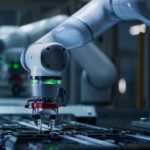
Global inflation concerns are resurfacing as rising technology hardware costs add fresh pressure to businesses and supply chains. Strong demand for AI infrastructure, semiconductor components, and advanced electronics is increasing production expenses, prompting investors and policymakers to closely monitor inflation risks.
Global inflation fears have returned to the financial spotlight as the cost of technology hardware continues to rise across international markets. Although inflation moderated in many major economies over the past year, growing demand for artificial intelligence infrastructure, advanced semiconductors, networking equipment, and data center hardware is creating new pricing pressures. Businesses that depend on these technologies are reassessing procurement strategies, while investors are evaluating whether higher hardware costs could influence broader inflation trends in the months ahead.
AI Infrastructure Demand Pushes Hardware Prices Higher
The rapid expansion of artificial intelligence has transformed the global technology market. Major cloud providers and technology companies continue investing billions of dollars in AI data centers, graphics processing units, high-bandwidth memory, networking equipment, and specialized servers.
This unprecedented demand has tightened supply for several advanced hardware categories. Although production capacity has expanded, manufacturers continue facing strong order books for premium chips and AI-related equipment. As a result, prices for certain high-performance components remain elevated despite improvements in overall semiconductor availability.
Unlike the widespread shortages experienced during the pandemic, today’s market is being driven primarily by sustained investment rather than emergency supply disruptions. The result is a more balanced market, but one where premium technology products continue commanding higher prices.
Technology Costs Reach Beyond the Electronics Sector
Rising hardware prices do not affect only technology companies. Modern industries rely heavily on electronic systems, making semiconductor costs an important factor across manufacturing, automotive production, healthcare equipment, telecommunications, logistics, and renewable energy.
Automobile manufacturers continue integrating more electronic features into vehicles, while factories increasingly depend on automation systems powered by advanced processors and sensors. Telecommunications companies are expanding 5G networks that require sophisticated networking hardware, and healthcare providers continue investing in digitally connected medical equipment.
These investments improve productivity and innovation, but they also increase capital expenditure for businesses. If companies face sustained cost increases, some may eventually pass part of those expenses to customers through higher product prices.
Central Banks Watch Inflation Expectations Carefully
Inflation is influenced by multiple factors including energy prices, wages, consumer demand, transportation costs, and global trade. Technology hardware represents only one component of this broader economic picture, but policymakers are paying close attention because digital infrastructure has become increasingly important for business investment.
Central banks generally distinguish between temporary price increases in individual sectors and widespread inflation affecting the broader economy. However, if higher technology costs persist alongside rising service prices or commodity prices, inflation expectations could become more difficult to manage.
Financial markets therefore continue monitoring inflation data, producer price indices, and corporate earnings reports for signs that businesses are experiencing sustained input cost pressures linked to technology procurement.
Global Supply Chains Continue to Adjust
Technology companies and manufacturers are responding by diversifying supply chains, increasing production capacity, and investing in new semiconductor facilities across several regions. Governments in North America, Europe, and Asia continue supporting domestic chip manufacturing through industrial policies aimed at improving long-term supply resilience.
These investments are expected to strengthen semiconductor production over the coming years, but new fabrication plants require significant capital and often take several years to become fully operational. In the short term, strong demand for AI hardware continues supporting elevated prices in certain product categories.
Businesses are also negotiating long-term supply agreements and expanding strategic inventories to reduce exposure to sudden market fluctuations. Improved planning has helped avoid the severe shortages seen earlier in the decade, even as demand remains exceptionally strong.
Investors Assess the Broader Economic Impact
Global investors are carefully evaluating whether rising technology hardware costs represent a temporary adjustment or the beginning of a longer inflationary trend. Equity markets have generally welcomed strong AI investment because it supports corporate growth, yet investors also recognize that persistent input cost inflation can pressure profit margins.
Companies with diversified supply chains, efficient procurement practices, and pricing power may be better positioned to manage higher technology expenses. At the same time, businesses heavily dependent on imported electronic components could face greater challenges if hardware costs remain elevated.
While current inflation dynamics remain far more balanced than during the post-pandemic surge, the technology sector has emerged as an important variable in the global economic outlook. The interaction between AI investment, semiconductor production, and hardware pricing will remain closely watched by businesses, policymakers, and financial markets throughout the year.
Key Takeaways
- Rising AI infrastructure demand is keeping prices elevated for several advanced technology hardware categories.
- Higher semiconductor and equipment costs are affecting industries beyond the technology sector.
- Central banks continue monitoring whether technology costs contribute to broader inflation pressures.
- Companies are strengthening supply chains and long-term procurement strategies to manage rising input costs.
Frequently Asked Questions
Q1. Why are global inflation concerns returning?
Renewed attention stems from rising technology hardware costs, continued AI investment, and concerns that higher production expenses could influence prices across multiple industries.
Q2. Which hardware products are seeing strong demand?
Advanced semiconductors, AI processors, high-bandwidth memory, servers, networking equipment, and data center infrastructure remain among the most sought-after technology products.
Q3. Will higher hardware costs automatically increase consumer inflation?
Not necessarily. Inflation depends on many factors, including wages, energy prices, demand, and supply conditions. Technology costs are only one part of the broader inflation picture.
Q4. How are businesses responding to rising technology costs?
Many companies are diversifying suppliers, signing long-term procurement agreements, improving inventory planning, and investing in supply chain resilience to reduce cost volatility.
(Internal Keyword Suggestions: global inflation fears, tech hardware costs, semiconductor prices, AI infrastructure investment, global supply chain, inflation news, technology hardware market, semiconductor industry, producer prices, AI data centers, global economy 2026, technology inflation)