
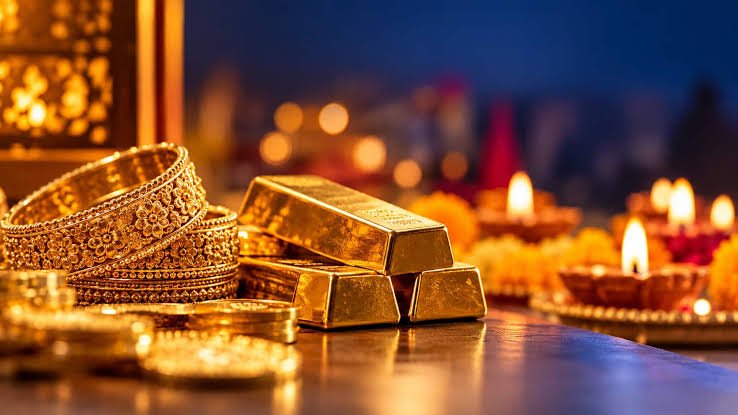
Gold and silver prices in India are attracting fresh attention ahead of the upcoming festive season, with buyers tracking daily movements before Dhanteras and Diwali. On October 28, 2026, bullion reference rates showed modest gains, even as both metals remained below their early-October levels, keeping affordability and market volatility in focus.
Gold and Silver Prices Today: October 28 Update
Gold and silver prices recorded modest recoveries in Indian reference markets on Wednesday, October 28, following a period of weakness earlier in the month. According to All India Bullion’s Mumbai reference rates, 24-carat gold was priced at approximately ₹1,45,106 per 10 grams, while 22-carat gold stood at around ₹1,32,917 per 10 grams. Silver of 999 purity was quoted at approximately ₹2,01,168 per kilogram in the early-morning snapshot.
These figures provide a reference for market conditions rather than a uniform retail price across India. Rates can vary by city, jeweller, purity, local premiums and applicable taxes.
The movement comes as households begin assessing their festive jewellery and gifting budgets. However, a small daily increase does not necessarily signal a sustained recovery. Buyers and investors are also watching international bullion prices, currency movements, crude oil prices and expectations surrounding US monetary policy.
October Correction Keeps Precious Metals in Focus
Despite the modest recovery recorded on October 28, gold and silver have experienced considerable pressure during the month.
All India Bullion’s historical data shows that its 999-purity gold reference rate declined from ₹1,50,706 per 10 grams on October 1 to ₹1,44,934 on October 28. This represents a decline of approximately 3.8% over the period.
Silver recorded a steeper correction. Its reference price fell from ₹2,26,077 per kilogram on October 1 to ₹2,00,991 on October 28, a decrease of roughly 11.1%.
The contrasting performance matters to households deciding whether to purchase jewellery now or wait for further price changes. Silver’s larger decline may attract attention from buyers considering coins, utensils and other silver products, while gold remains central to jewellery purchases and traditional festive gifting.
However, historical declines do not guarantee that prices will continue falling. Precious metals can change direction quickly when international economic expectations, currency values or investor demand shift.
Dhanteras and Diwali Buying Could Influence Retail Demand
Dhanteras, traditionally associated with purchasing gold, silver and household goods, falls on November 6 in 2026. Diwali follows on November 8.
The approaching festival dates are bringing precious-metal prices into focus for households planning purchases. In India, gold jewellery, coins and silver articles are commonly purchased for personal use, gifting and religious traditions during the festive season.
For many families, the decision to buy depends on more than the quoted rate. Wedding plans, household budgets, savings and the amount of jewellery required can influence whether purchases happen before or during the festival.
A lower market price can improve affordability, but the final jewellery bill also includes making charges and applicable taxes. Buyers comparing quotations should therefore look beyond the headline price per 10 grams.
Jewellers may also offer different designs, discounts or making-charge structures. Such offers can affect the final bill, but they do not necessarily indicate a corresponding reduction in the underlying market price of gold.
Although the festival calendar provides a reason to monitor demand, it is too early to conclude from the available price data alone that retail buying has increased sharply across the country.
International Markets and US Interest Rates Remain Important
Indian gold and silver prices are influenced by domestic demand as well as developments in international commodity markets.
Gold was trading near $4,047 per ounce in early trading on October 28, according to a market report published by Moneycontrol. The report also highlighted expectations surrounding US monetary policy, inflation concerns and the strength of the US dollar as important factors influencing bullion.
Interest-rate expectations matter because gold does not pay interest. When investors expect higher interest rates, interest-bearing assets may become more attractive relative to gold. A stronger US dollar can also put pressure on internationally traded precious metals by making them more expensive for buyers using other currencies.
Crude oil prices are another factor under observation because sustained increases can intensify inflation concerns and influence expectations about central-bank decisions.
For Indian consumers, the rupee’s exchange rate also matters. Since international bullion is generally priced in US dollars, a weaker rupee can increase the domestic cost of gold and silver, even if international prices remain unchanged.
These factors can move in different directions, which is why domestic prices do not always follow international bullion prices exactly.
What Buyers Should Check Before Purchasing Gold or Silver
With Dhanteras approaching, buyers can make more informed decisions by checking the current rate, purity and complete purchase cost before visiting a jewellery store.
For gold jewellery, 22-carat gold is commonly used, while 24-carat gold is generally associated with investment-grade bullion. Silver jewellery and articles may have different purity levels, so the quoted rate should match the product being purchased.
Buyers should also ask for a detailed bill showing the weight, purity, metal price, making charges and applicable GST. Comparing the final price across more than one jeweller can help identify differences in charges and offers.
Those buying coins or bars should check the stated purity, packaging and seller’s buyback policy. Resale conditions can differ from the original purchase terms.
For households with fixed festive budgets, deciding the quantity and spending limit in advance can reduce the pressure to make a purchase based on short-term price movements. Waiting for a further decline is also uncertain because prices can rise as quickly as they fall.
Gold and Silver Outlook Ahead of the Festive Season
The immediate direction of gold and silver prices will depend on a combination of international market conditions, currency movements, investor positioning and domestic demand.
The October data suggests that both metals have retreated from their levels at the start of the month, with silver recording the sharper decline. The modest recovery on October 28 provides a fresh point of reference, but it does not establish a lasting upward trend.
For jewellery buyers, the practical concern is whether current rates fit their budgets and whether additional charges make a purchase affordable. For investors, the focus is likely to remain on interest-rate expectations, the dollar and the risks associated with volatile commodity prices.
As Dhanteras and Diwali approach, gold and silver will remain important to India’s retail jewellery trade. Whether festive demand produces a sustained price increase, however, will need to be assessed through actual market data rather than seasonal expectations alone.
Key Takeaways
- On October 28, 2026, All India Bullion’s reference rates placed 24-carat gold at approximately ₹1,45,106 per 10 grams and 999-purity silver at ₹2,01,168 per kilogram in its early-morning snapshot.
- Gold’s reference price declined approximately 3.8% between October 1 and October 28, while silver fell around 11.1%.
- Dhanteras falls on November 6 and Diwali on November 8, increasing attention on festive jewellery and gifting budgets.
- International bullion prices, US interest-rate expectations, the dollar, the rupee and domestic demand can all influence Indian gold and silver rates.
Frequently Asked Questions
1. What is the gold price in India on October 28, 2026?
All India Bullion’s early-morning Mumbai reference rate placed 24-carat gold at approximately ₹1,45,106 per 10 grams and 22-carat gold at ₹1,32,917 per 10 grams. Retail prices vary by location and seller.
2. What is the silver price in India on October 28, 2026?
All India Bullion quoted 999-purity silver at approximately ₹2,01,168 per kilogram in its early-morning reference snapshot. Prices may differ across providers and markets.
3. When are Dhanteras and Diwali in 2026?
Dhanteras falls on November 6, 2026, while Diwali falls on November 8, 2026.
4. Will gold and silver prices fall further before Diwali?
There is no certainty that prices will decline further. International bullion movements, currency fluctuations, interest-rate expectations and domestic demand can all affect prices. Buyers should compare current rates and total purchase costs rather than rely on a predicted price movement.