
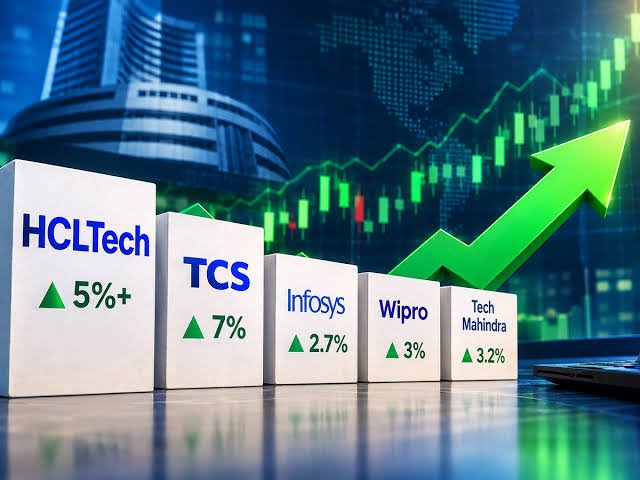
Indian IT stocks rallied on October 13, 2026, as investors responded to HCLTech’s September-quarter results and reassessed valuations across the technology sector. Gains in Tata Consultancy Services (TCS) and other IT companies lifted market sentiment, but questions about global demand, artificial intelligence and future earnings remain important for investors.
Indian IT Stocks Rally as TCS and HCLTech Gain
Indian technology stocks recorded strong gains during morning trading on October 13, with the Nifty IT index rising approximately 3.4%. Shares of TCS and HCLTech each gained around 5.4% during the session, according to Reuters. The broader Sensex and Nifty also moved higher as market sentiment improved.
The rally followed HCLTech’s second-quarter results for the 2026-27 financial year, announced on October 12. Investors also continued to assess TCS’s results, which were announced on October 8.
The gains came despite concerns about the outlook for global technology spending and the potential disruption caused by artificial intelligence. Indian IT companies depend substantially on overseas clients, particularly businesses in the United States and Europe. Their performance therefore reflects not only domestic market conditions but also corporate spending decisions in international markets.
The latest rally indicates renewed investor interest in the sector. However, a single trading session cannot establish whether a sustained recovery has begun.
TCS Q2 Results: Profit Growth and Revenue Performance
Tata Consultancy Services reported a consolidated net profit of ₹13,884 crore for the September quarter of FY27, an increase of approximately 14.9% from ₹12,075 crore in the corresponding quarter a year earlier. Revenue from operations rose to ₹73,188 crore from ₹65,799 crore, representing year-on-year growth of around 11.2%.
These figures suggest that TCS maintained growth despite an uncertain global technology environment. Investors will nevertheless need to examine the quality and sustainability of that growth, including operating margins, client spending, deal conversions and demand across business segments.
Large IT services companies typically earn revenue by helping businesses modernise technology systems, migrate workloads to cloud platforms, manage cybersecurity and develop digital solutions. Their performance depends on how much customers are willing to spend on these projects and how efficiently providers execute them.
TCS’s results therefore offer more than a headline profit figure. Investors should also consider whether clients are approving new projects, expanding existing contracts or delaying discretionary technology spending.
The company’s financial performance needs to be assessed alongside its future business outlook. Strong historical earnings can support confidence, but they do not guarantee that the same growth rate will continue in subsequent quarters.
HCLTech Q2 Results: Higher Profitability and Strong Deal Bookings
HCLTech delivered a strong quarterly performance, with consolidated revenue reaching ₹35,620 crore, up 11.5% year on year. Its net income increased 21.2% to ₹5,132 crore, while earnings before interest and tax, or EBIT, rose to a margin of 18.2%. The company also reported a significant improvement in profitability compared with the previous quarter.
In dollar terms, revenue reached approximately $3.72 billion, an increase of 2.2% year on year. Revenue growth measured in constant currency terms was 2.6%, a useful measure because it reduces the effect of exchange-rate movements.
Another important indicator was HCLTech’s total contract value from new deal wins, which reached approximately $3.26 billion during the quarter. New bookings can provide an indication of potential future business, although they do not translate immediately or automatically into revenue.
The company also reported growth in advanced AI revenue, reflecting rising demand for artificial intelligence-related services. Its financial results and deal bookings helped strengthen sentiment towards the broader IT sector.
For investors, the important question is whether HCLTech can convert its bookings into revenue while maintaining margins and meeting its full-year growth expectations.
What the Results Mean for IT Sector Valuations
Stock prices reflect expectations about future earnings, not just the profits companies have already reported. When results exceed market expectations or provide greater confidence about future business, investors may become more willing to pay higher valuations.
This helps explain why quarterly earnings can trigger sharp price movements. If investors previously expected weak performance, even a moderate improvement may lead to a positive market reaction.
The reverse is also possible. A company can report higher profits and still see its shares fall if investors had anticipated an even stronger outcome.
Indian IT stocks have faced pressure from concerns about slower client spending, uncertain global economic conditions and the possibility that AI tools could change traditional software services. Reuters reported that the Nifty IT index remained down approximately 23% year to date despite the October 13 rally.
That wider context matters because a sharp one-day recovery does not necessarily erase earlier losses. Investors should examine current valuations, earnings estimates and the reasons behind previous declines before interpreting the rally as evidence of a long-term turnaround.
Comparing companies only by share price movements can also be misleading. Different businesses have different growth rates, margins, service mixes and exposure to individual industries.
Artificial Intelligence: Opportunity and Risk for Indian IT Companies
Artificial intelligence has become a central issue for the Indian IT services industry. Companies are investing in AI-related solutions while helping clients integrate new tools into existing business operations.
HCLTech reported that its advanced AI revenue grew 78% year on year in constant currency terms, highlighting the growing contribution of this business to its technology services portfolio.
AI creates opportunities in areas such as enterprise automation, software development, data management, customer support and cybersecurity. IT services providers can help clients deploy these technologies, manage their infrastructure and address governance requirements.
However, AI also introduces uncertainty. Some clients may use automation to reduce the amount of traditional technology work they outsource. New tools could change project pricing, employee requirements and the number of hours needed to complete certain tasks.
The impact will depend on how quickly businesses adopt AI, how service providers adapt their offerings and whether new AI-related work offsets pressure on existing services.
Investors should therefore look beyond announcements about AI partnerships or products. Revenue growth, contract wins, margins and measurable customer demand offer more useful evidence of commercial progress.
Risks Investors Should Watch After the Rally
Despite the positive market reaction, several factors could influence Indian IT stocks over the coming quarters.
Global technology spending: Large clients may postpone projects if economic uncertainty increases or business confidence weakens. This can affect new contracts and revenue growth.
US and European demand: These markets are important for major Indian IT services providers. Changes in corporate spending, regulations or economic conditions can affect their performance.
Currency movements: Exchange rates influence reported revenue and profitability. The impact depends on a company’s overseas revenue, costs, hedging practices and currency exposure.
AI-led disruption: Automation may create new services while putting pressure on traditional outsourcing models. Companies need to demonstrate that their investments can generate sustainable business.
Valuations and market volatility: Shares can decline even after strong earnings if expectations become too optimistic or broader markets weaken.
Investors should also compare management guidance with actual results over multiple quarters. One strong report may improve sentiment, but consistency in revenue growth, profitability and cash generation is more useful when assessing long-term business performance.
What Investors Should Watch Next
The next phase of the earnings season will provide more information about the health of the Indian IT industry. Infosys is scheduled to announce its September-quarter results on October 23, 2026, according to its published earnings calendar.
Its results and commentary could offer further insight into demand trends, client budgets, AI adoption and the broader outlook for technology services.
Investors can compare the results of TCS, HCLTech and other major companies using a consistent set of measures: revenue growth, operating margins, deal bookings, management guidance and cash flow. These indicators help distinguish short-term market enthusiasm from improvements in underlying business performance.
For individual investors, the appropriate decision also depends on investment goals, risk tolerance, portfolio concentration and time horizon. A stock’s recent rise should not be the only reason to buy it, just as a temporary decline should not automatically be treated as a buying opportunity.
The October 13 rally has improved sentiment towards Indian IT stocks, but the sustainability of the recovery will depend on future earnings, client spending and how effectively companies adapt to technological change.
Key Takeaways
- Indian IT stocks rallied on October 13, 2026, with TCS and HCLTech among the leading gainers.
- TCS reported September-quarter net profit of ₹13,884 crore, while HCLTech reported net income of ₹5,132 crore.
- HCLTech’s improved margins, contract bookings and AI-related revenue helped strengthen investor sentiment.
- Global demand, AI disruption, valuations and future earnings remain important risks despite the recent gains.
Frequently Asked Questions
1. Why did Indian IT stocks rally on October 13, 2026?
The rally followed HCLTech’s quarterly results and continued investor assessment of TCS’s earnings. Gains in major technology shares lifted the Nifty IT index, although the sector continued to face broader concerns about demand and AI disruption.
2. How did TCS perform in Q2 FY27?
TCS reported consolidated net profit of ₹13,884 crore, up approximately 14.9% year on year. Revenue from operations increased to ₹73,188 crore, representing growth of around 11.2%.
3. What were the key highlights of HCLTech’s Q2 results?
HCLTech reported revenue of ₹35,620 crore, net income of ₹5,132 crore and an EBIT margin of 18.2%. Its new deal bookings reached approximately $3.26 billion, while advanced AI revenue recorded strong growth.
4. Should investors buy IT stocks after the rally?
A market rally alone is not enough to determine whether a stock is suitable for an investor. Investors should assess valuations, earnings growth, company guidance, business risks and their own financial objectives before making decisions.