
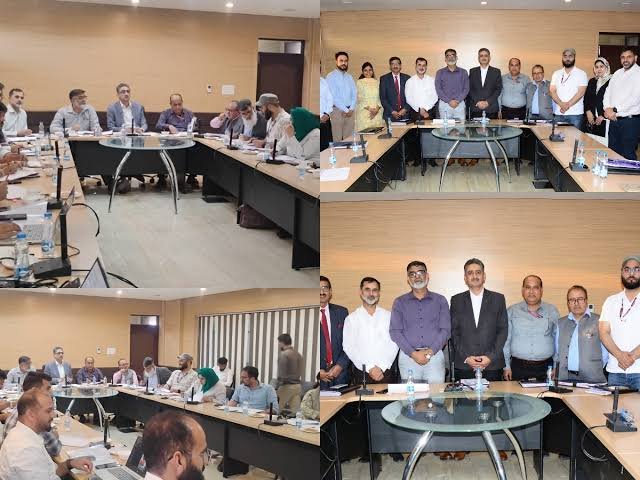
The Jammu and Kashmir Entrepreneurship Development Institute (JKEDI) has begun evaluating startup proposals from Kashmir under the J&K Startup Policy 2024-27. A two-day screening exercise, which began on October 28, 2026, is bringing young entrepreneurs before an expert committee to assess business viability, innovation and eligibility for seed funding. jkmonitor.org+1
JKEDI Screens 63 Startup Proposals Under J&K Startup Policy
The Jammu and Kashmir Entrepreneurship Development Institute has convened a Startup Screening Committee meeting to evaluate business proposals seeking seed funding under the Union Territory’s startup policy for 2024-27.
According to a report published on October 28, 2026, the first day of the screening exercise saw 35 aspiring startups from the Kashmir Division present their business ideas before the committee. Another 28 startups were scheduled to make presentations on the second day, taking the total number of participating ventures to 63.
The meeting was chaired by Mohammad Younis Malik, Director of JKEDI, and brought together representatives from government departments, financial institutions, academic institutions and industry.
The screening process is intended to identify business proposals with the potential to develop into viable enterprises. Instead of relying solely on the novelty of an idea, the committee is assessing whether proposed ventures can address real market needs, operate sustainably and expand over time.
The exercise forms part of the government’s broader effort to strengthen entrepreneurship in Jammu and Kashmir by improving access to early-stage financial assistance. jkmonitor.org+1
Expert Committee Assesses Innovation and Business Viability
The screening committee includes experts with experience in industry, banking, higher education, entrepreneurship and government administration. Their participation is intended to bring different perspectives to the evaluation of business proposals.
Among those attending the meeting were Rishpal Singh, Special Secretary in the Industries and Commerce Department; Sudershan Kumar, Managing Director of the Jammu and Kashmir Trade Promotion Organisation; and Javaid Ahmad Tenga, President of the Kashmir Chamber of Commerce and Industry.
Representatives from the Islamic University of Science and Technology, the National Institute of Technology Srinagar, the University of Kashmir, Sher-e-Kashmir University of Agricultural Sciences and Technology of Kashmir, and other institutions also participated.
The committee evaluated proposals on several parameters, including innovation, commercial viability, scalability, problem-solving potential and the ability to meet market demand.
These criteria are important because a promising idea does not automatically translate into a sustainable business. Founders must demonstrate that their products or services address a genuine need, that a viable customer base exists and that the business can develop beyond its initial stage.
The screening process also gives entrepreneurs an opportunity to present their business models and explain how financial support could help them move towards commercialisation.
According to the report, the committee observed that the ideas presented on the first day showed considerable promise. However, the final funding decisions remain subject to the prescribed approval process. jkmonitor.org+1
How the J&K Startup Policy 2024-27 Supports Entrepreneurs
The J&K Startup Policy 2024-27 is designed to encourage innovation, create employment opportunities and help emerging businesses establish themselves across the Union Territory. JKEDI serves as the policy’s nodal agency for implementing startup support measures.
One of the programme’s key provisions is seed funding assistance of up to ₹20 lakh for eligible startups. The funding is intended to help businesses develop prototypes, introduce innovative products or services, undertake marketing activities and scale their operations.
According to the official Startup Jammu and Kashmir portal, the assistance is provided in four equal instalments. The release of funding is linked to the startup’s progress and compliance with the applicable guidelines.
This structure is particularly relevant for early-stage businesses that may have an innovative concept but lack the financial resources to test it in the market. Developing a prototype, conducting product trials and attracting initial customers can require substantial investment before a startup begins generating consistent revenue.
The scheme is designed to bridge part of that early-stage funding gap. However, assistance is not automatic. Startups must meet the eligibility requirements, undergo evaluation and secure approval from the designated Startup Task Force Committee. Innovation Initiative of J&K+1
Why Seed Funding Matters for Kashmir’s Startup Ecosystem
Access to capital remains an important challenge for entrepreneurs during the early stages of building a business. Traditional lenders may require financial records, collateral or evidence of repayment capacity, while private investors often look for proof that a product has commercial potential.
Seed funding can help startups bridge the gap between developing an idea and demonstrating that customers are willing to pay for it.
For entrepreneurs in Kashmir, the opportunity to access institutional support can help convert local knowledge and market opportunities into formal businesses. Depending on their business models, ventures may explore areas such as agriculture, food processing, handicrafts, tourism, technology and digital services. These are potential areas of opportunity, not a confirmed breakdown of the proposals reviewed in the current screening exercise.
Support for early-stage enterprises can also have wider economic implications. Businesses that become commercially viable may create jobs, establish supplier relationships and generate demand for professional services.
However, the impact of a seed funding programme depends on more than the number of applications screened or proposals approved. The quality of mentoring, timely disbursement, market access and the ability of founders to manage their businesses are equally important.
The current evaluation is therefore one step in a longer process. The proposals must demonstrate that they can progress from an initial concept towards a functioning business with measurable commercial potential.
Screening Committee Recommendations Will Determine the Next Stage
The two-day exercise is part of a multi-stage approval process under the J&K Startup Policy. Following the screening, suitable proposals will be recommended for consideration by the Startup Task Force Committee, headed by the Commissioner Secretary of the Industries and Commerce Department.
This distinction is important for applicants. Participation in the presentation process or a positive initial assessment does not mean that a startup has received final funding approval.
The next stage will involve consideration of the proposals in accordance with the policy’s provisions and operational guidelines. Only cases that complete the required evaluation and approval process can proceed towards funding.
For founders, the process also highlights the need to prepare clear business plans, demonstrate the problem their products or services address and explain how the proposed funding will be used.
A realistic financial plan, a defined customer base and measurable milestones can help demonstrate whether a venture is ready to move beyond the idea stage.
The screening of 63 startups represents an opportunity to identify businesses with growth potential. The eventual economic impact will depend on which proposals are approved, how effectively the funds are deployed and whether supported businesses can build sustainable operations.
Key Takeaways
- JKEDI began screening startup proposals from Kashmir on October 28, 2026, under the J&K Startup Policy 2024-27.
- A total of 63 startups were scheduled to present their ideas across the two-day exercise, with 35 presenting on the first day.
- Eligible startups can receive seed funding assistance of up to ₹20 lakh in four equal instalments, subject to the applicable rules and approvals.
- Proposals recommended by the screening committee must undergo further consideration by the Startup Task Force Committee before funding approval.
Frequently Asked Questions
1. What is JKEDI’s latest startup funding initiative?
JKEDI is evaluating startup proposals from Kashmir under the J&K Startup Policy 2024-27 to identify eligible ventures for seed funding assistance.
2. How many startups participated in the screening process?
A total of 63 startups were scheduled to participate. Thirty-five presented their proposals on the first day, while another 28 were scheduled for the second day.
3. How much seed funding can eligible startups receive?
Eligible startups recognised under the policy can receive assistance of up to ₹20 lakh, disbursed in four equal instalments subject to progress monitoring and the applicable guidelines.
4. Does presenting a proposal guarantee funding?
No. The screening committee recommends suitable proposals for consideration by the Startup Task Force Committee. Final assistance depends on the prescribed evaluation and approval process.