
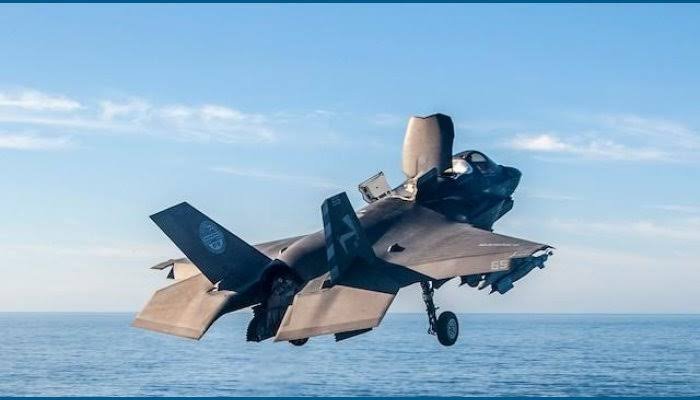
Lockheed Martin and the Pentagon have announced a 10-year framework agreement covering at least 850 F-35 Lightning II fighter jets. The arrangement aims to stabilise production, strengthen the defence supply chain and improve long-term planning, subject to congressional authorisation and funding.
Pentagon F-35 Deal Establishes Long-Term Production Plans
Lockheed Martin has reached a major agreement with the US Department of Defense to support the production and sustainment of at least 850 F-35 Lightning II fighter jets over the next decade. Announced on October 22, 2026, the framework covers US aircraft procurement, initial spare parts, modification kits and maintenance support for the global F-35 fleet. It also incorporates orders from international customers.
The agreement establishes a framework for production across 10 aircraft lots, with Lockheed Martin aiming to maintain an annual production rate of 156 aircraft. However, the announcement does not mean that all 850 aircraft have already been ordered under a final procurement contract. Congressional authorisation and appropriations are still required before the multiyear arrangement can be formally executed. <Cite refs={[“turn361367search0″,”turn361367search3”]}/>
The agreement reflects Washington’s broader effort to provide defence manufacturers with more predictable demand. Instead of relying entirely on separate annual procurement decisions, a multiyear framework can help the manufacturer and its suppliers plan production, workforce requirements and purchases of critical components.
For Lockheed Martin, the arrangement could provide greater visibility into future production requirements. For the Pentagon, the objective is to improve procurement efficiency and strengthen the industrial base supporting one of the US military’s principal combat aircraft.
Lockheed Martin Plans $7 Billion Investment in F-35 Production
A central feature of the agreement is Lockheed Martin’s commitment to self-fund at least $7 billion in initiatives supporting the F-35 programme. The investment is intended to improve manufacturing capacity, production efficiency, supplier readiness and repair infrastructure.
Defence aircraft manufacturing depends on an extensive network of suppliers providing engines, electronic systems, structural components and other specialised equipment. Delays in any of these areas can affect assembly schedules and the delivery of completed aircraft.
Long-term production visibility can encourage suppliers to invest in additional capacity and purchase materials in larger quantities. It can also help manufacturers plan staffing levels and reduce disruptions caused by uncertain order schedules.
Lockheed Martin expects the framework to support more efficient production and help address supply-chain constraints. The company has also highlighted the potential for long-term purchasing arrangements to reduce costs through improved planning and volume efficiencies. <Cite refs={[“turn361367search0″,”turn361367search9”]}/>
However, the expected benefits will depend on execution. The company must still coordinate suppliers, manage manufacturing schedules and demonstrate that the planned investments translate into improved delivery performance.
The $7 billion commitment should not be confused with the total value of the aircraft agreement. It represents Lockheed Martin’s planned investment in supporting the programme, rather than the full procurement cost of the jets.
F-35 Fighter Jets Remain Central to US Defence Strategy
The F-35 Lightning II is a family of fifth-generation combat aircraft developed through an international programme led by the United States. Lockheed Martin is the principal contractor, working with a network of defence companies and participating countries.
The aircraft family includes three main variants. The F-35A is designed for conventional runway operations, the F-35B supports short take-offs and vertical landings, and the F-35C is configured for aircraft carrier operations.
The programme combines stealth characteristics with advanced sensors, electronic systems and information-sharing capabilities. These features are intended to help pilots identify threats, coordinate with other forces and operate in contested airspace.
The aircraft is used by the US Air Force, Marine Corps and Navy, as well as international customers and partner nations. Its continued production therefore has implications beyond the US military, including maintenance, training, spare parts and interoperability among allied forces.
The new framework covers aircraft for US requirements and incorporates international customer orders. By maintaining a more predictable production rate, the agreement could help support the wider F-35 manufacturing and sustainment network. <Cite refs={[“turn361367search0″,”turn361367search5”]}/>
Defence Supply Chain and Jobs Could Benefit
The agreement has significant implications for the American defence manufacturing sector. According to Lockheed Martin, the F-35 programme supports approximately 317,000 US jobs and generates nearly $79 billion in annual economic activity.
These figures represent the company’s estimates of the programme’s broader economic footprint, rather than new jobs or additional economic output guaranteed by the agreement itself.
The industrial network supporting the aircraft includes manufacturers of engines, electronics, materials and specialised components. It also includes maintenance providers, engineering teams and facilities responsible for upgrades and repairs.
A stable production schedule can help these businesses make investment decisions with greater confidence. Suppliers may be better positioned to expand manufacturing capacity, train workers and secure long-lead materials when they have clearer visibility into future demand.
The framework also includes initial spare parts and 10 years of modification kits and sustainment provisions. This matters because military aircraft require continuing technical support throughout their service lives, not just during initial production.
Nevertheless, the final economic impact will depend on contract execution, funding, production schedules and the performance of suppliers. The headline job and economic activity estimates should therefore be viewed as programme-level projections, not a guarantee of future outcomes. <Cite refs={[“turn361367search0″,”turn361367search3”]}/>
Congressional Approval Remains a Key Hurdle
Despite the announcement, the F-35 framework still faces important legal and budgetary requirements. A multiyear procurement arrangement requires congressional authorisation and appropriations before the parties can finalise the formal contract.
This distinction is important because a framework agreement provides a basis for future procurement but does not automatically guarantee that every planned aircraft will be funded.
Defence spending decisions depend on legislative approval, budget priorities and the availability of appropriated funds. If the process is delayed or the final terms change, the timing of orders and production planning could also be affected.
The final agreement will need to establish detailed contractual terms, including pricing, schedules and the conditions governing performance and sustainment. These details will help determine how the arrangement operates in practice.
The Pentagon has been pursuing longer-term arrangements across parts of the defence industry to improve production capacity and strengthen the supply of critical equipment. The F-35 framework fits into this broader approach, although its success will depend on the final contract and the manufacturer’s ability to deliver against agreed requirements. <Cite refs={[“turn361367search3″,”turn361367search10”]}/>
What the Deal Means for Lockheed Martin’s Business
The F-35 programme is a major contributor to Lockheed Martin’s aeronautics business. A decade-long production framework could improve visibility into future manufacturing demand and help the company plan investments across its operations and supplier network.
For investors, the agreement signals a long-term commitment to the aircraft programme. However, a framework agreement should not automatically be treated as immediate revenue or a completed order backlog addition of the same value.
Financial results will depend on when contracts are formally awarded, how aircraft are delivered and when revenue is recognised. Production costs, supplier performance and sustainment expenses will also influence profitability.
The broader defence market is being shaped by military modernisation, geopolitical tensions and efforts by governments to strengthen industrial capacity. These factors support demand for advanced military equipment, but large defence programmes also face risks involving cost control, technology development and delivery schedules.
For the Pentagon and Lockheed Martin, the central test will be whether longer-term planning translates into more predictable production, improved readiness and better control over costs.
Key Takeaways
- Lockheed Martin and the Pentagon announced a 10-year framework covering at least 850 F-35 fighter jets.
- Lockheed Martin plans to self-fund at least $7 billion in initiatives to support production and sustainment.
- The agreement targets an annual production rate of 156 aircraft and includes spare parts, modification kits and maintenance support.
- Congressional authorisation and funding remain necessary before the framework can become a final multiyear procurement contract.
Frequently Asked Questions
1. What is the new Lockheed Martin F-35 deal?
It is a 10-year framework agreement between Lockheed Martin and the Pentagon covering at least 850 F-35 Lightning II fighter jets, alongside spare parts, modification kits and sustainment support.
2. What is the total value of the 850 F-35 aircraft agreement?
The official framework announcement did not specify a final total contract value. The aircraft pricing and formal procurement terms are expected to be established through the subsequent contracting process.
3. Why is Lockheed Martin investing $7 billion in the programme?
The company plans to self-fund at least $7 billion in initiatives intended to strengthen production capacity, improve manufacturing efficiency, support suppliers and expand repair infrastructure.
4. Has the Pentagon officially ordered all 850 fighter jets?
Not through a final multiyear procurement contract. The framework establishes the basis for a planned 10-year commitment, but congressional authorisation and appropriations are required before the arrangement can be formally executed.