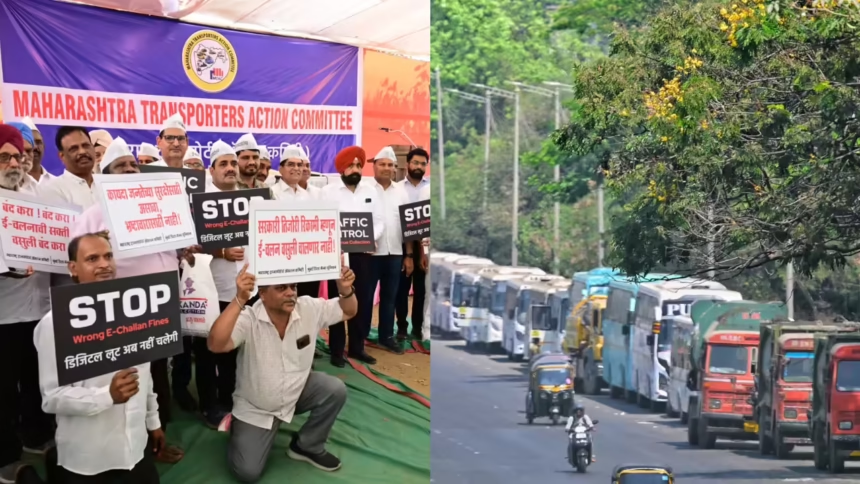
Transport unions in Maharashtra have called off their planned strike after receiving assurances from the state government regarding key industry concerns. The decision prevents potential disruption to logistics, fuel supply, and goods transportation across one of India’s most economically active states.
Maharashtra Transporters Call Off Planned Strike
Maharashtra transporters call off planned strike after government assurances addressed several demands raised by trucking and logistics associations. The decision brings relief to businesses, manufacturers, and supply chain operators who were concerned about potential disruptions to freight movement across the state.
Transport unions had earlier warned of a statewide strike involving truck operators, logistics companies, and freight carriers. Such strikes typically have a major impact on economic activity because road transport remains the backbone of India’s goods movement network.
Industry groups raised concerns related to operational costs, regulatory compliance requirements, and infrastructure challenges affecting the transport sector. Negotiations with state officials resulted in assurances that the government would review these issues and work toward practical solutions.
With these commitments in place, transport associations decided to withdraw the strike call, allowing goods movement to continue without interruption.
Importance of Road Transport in Maharashtra’s Economy
Road transport plays a central role in Maharashtra’s economic infrastructure. The state hosts major industrial hubs including Mumbai, Pune, Nashik, Nagpur, and Aurangabad. These regions depend heavily on trucking networks to move raw materials, finished goods, and agricultural products.
The logistics sector connects factories, ports, warehouses, and retail markets across the state and beyond. Maharashtra also houses major ports such as Jawaharlal Nehru Port near Mumbai, which handles a large share of India’s containerized cargo.
If a large scale transport strike had taken place, industries across multiple sectors could have faced delays in shipments, supply shortages, and rising transportation costs.
Manufacturers depend on continuous freight movement to maintain production schedules. Retail businesses rely on trucking networks to deliver goods from warehouses to stores. Agricultural produce also moves primarily through road transport to reach wholesale markets.
Calling off the strike therefore helped prevent disruptions across several parts of the economy.
Key Issues Raised by Transport Associations
Transport associations typically raise several concerns when announcing strike actions. Among the most common issues are rising fuel costs, toll charges, vehicle compliance regulations, and driver shortages.
Fuel prices are a major expense for trucking companies. Diesel costs directly affect the profitability of freight operators, particularly small fleet owners who operate on narrow margins.
Another challenge is regulatory compliance. Transport operators must follow vehicle fitness rules, emissions standards, and digital documentation requirements. While these rules improve safety and transparency, operators sometimes raise concerns about implementation complexity.
Infrastructure issues such as traffic congestion, road quality, and waiting times at checkpoints also affect trucking efficiency. When delays increase, operational costs rise for transport companies.
Government assurances to review some of these concerns helped convince transport unions to suspend the planned strike.
Impact on Supply Chains and Logistics Stability
The cancellation of the strike has helped maintain stability across supply chains in Maharashtra. Logistics networks are extremely sensitive to disruptions because even short stoppages can delay shipments and create bottlenecks.
Large industries such as automotive manufacturing, pharmaceuticals, chemicals, and consumer goods operate extensive supply chains that depend on continuous road transportation.
A transport strike can affect not only intercity freight but also last mile distribution within urban areas. This can delay delivery of essential goods including food supplies, medicines, and fuel.
By avoiding a strike, transporters and the government prevented potential shortages and price fluctuations in local markets.
Businesses and logistics companies typically welcome such resolutions because supply chain predictability is essential for efficient operations.
Government and Industry Cooperation Going Forward
The decision to call off the strike highlights the importance of cooperation between government authorities and transport industry stakeholders. Regular dialogue allows both sides to address operational concerns without resorting to disruptive actions.
As logistics demand grows due to expanding e commerce and manufacturing activity, the transport sector will remain a critical component of economic growth.
Governments are increasingly investing in road infrastructure, logistics parks, and digital freight systems to improve efficiency. Industry groups also play a role by sharing feedback on policy implementation and operational challenges.
Continued engagement between policymakers and transport associations can help prevent future conflicts while improving working conditions and operational efficiency within the logistics sector.
For now, the resolution of the strike issue has provided stability to Maharashtra’s transport network and the broader economy.
Takeaways
Maharashtra transporters have withdrawn their planned strike after receiving assurances from the state government.
Road transport is vital for industries, agriculture, and retail supply chains across the state.
Transport unions had raised concerns related to fuel costs, regulations, and operational challenges.
Avoiding the strike helped maintain stability in logistics, goods movement, and market supply.
FAQs
Why did Maharashtra transporters plan a strike?
Transport associations raised concerns about operational costs, regulatory requirements, and industry challenges affecting trucking businesses.
Why was the strike called off?
The strike was withdrawn after the state government assured transport unions that their concerns would be reviewed and addressed.
How would a transport strike affect the economy?
A strike could disrupt supply chains, delay goods movement, increase logistics costs, and create shortages in markets.
Why is road transport important in Maharashtra?
Road networks connect industrial hubs, ports, warehouses, and markets, making trucking essential for goods movement across the state.