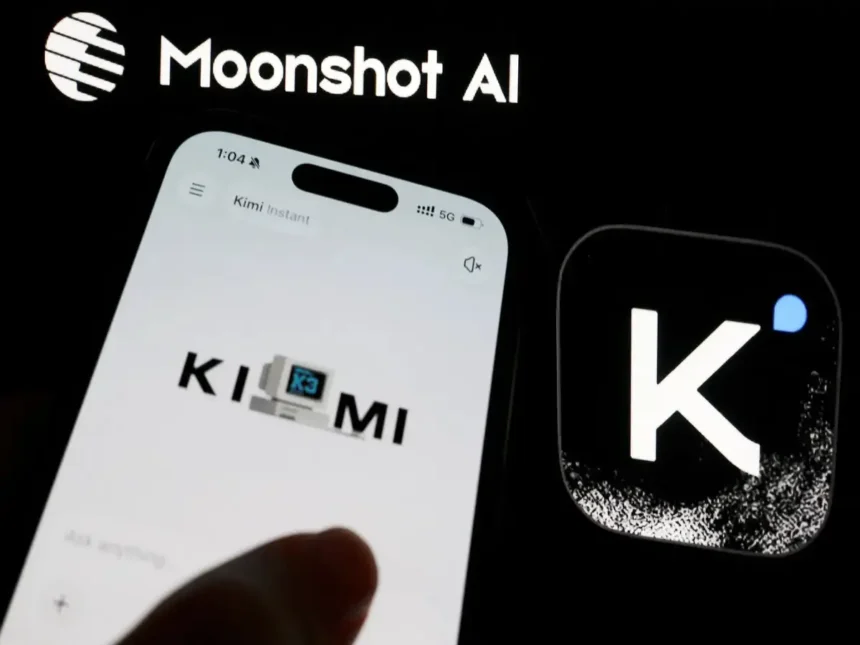
Moonshot AI has reportedly completed a private funding round at a valuation of about $50 billion and is preparing for a potential Hong Kong IPO in the first quarter of 2027. The Beijing-based AI company is also expected to begin testing investor interest this month.
Moonshot AI Moves Toward Hong Kong IPO
Moonshot AI is preparing for a potential initial public offering in Hong Kong in the first quarter of 2027 after reportedly reaching a private-market valuation of about $50 billion. The development puts the Chinese artificial intelligence company among the most closely watched potential technology listings in Asia.
According to people familiar with the matter cited by Bloomberg, Moonshot has completed what is expected to be its final private fundraising round before moving toward the public markets. The company could begin early investor meetings as soon as October to assess demand for a future listing.
The IPO plans are not yet final. People familiar with the process said the timing could still change, meaning the reported first-quarter 2027 target should be treated as a potential timetable rather than a confirmed listing date.
Moonshot is reportedly considering raising as much as $5 billion through the Hong Kong offering, which would make the deal one of the largest technology IPOs in the city’s recent market cycle.
Valuation Jumps From $35 Billion to $50 Billion
The latest reported valuation represents a substantial increase from Moonshot AI’s most recent disclosed private-market valuation.
In July, the Beijing-based startup raised about $3.5 billion in a funding round that valued the company at roughly $35 billion. That round was significantly larger than the $1 billion to $2 billion target initially associated with the fundraising process.
The jump toward a $50 billion valuation highlights how quickly investor expectations around leading Chinese AI companies have changed. Moonshot’s progress has been supported by strong interest in its Kimi AI platform and the performance of its newer models.
The latest funding valuation is based on private transactions rather than a public stock-market price. That distinction matters because the eventual IPO valuation will depend on market conditions, investor demand, regulatory developments and the company’s financial performance at the time of listing.
If Moonshot reaches the public market at or near the reported valuation, investors will have a new benchmark for assessing the financial value of China’s frontier AI industry.
Kimi K3 Boosts Moonshot AI’s Global Profile
A major factor behind Moonshot’s rising profile has been the development of its Kimi AI models. The company gained renewed international attention in July following the launch of Kimi K3, an open model that was reported to perform competitively with leading AI systems from companies including OpenAI and Anthropic.
The model’s arrival came at a time when competition in artificial intelligence was intensifying across the United States and China. Chinese AI companies have increasingly focused on improving model performance while keeping development and deployment costs competitive.
For Moonshot, stronger model capabilities have helped turn Kimi from a domestic AI product into an important part of the company’s international technology story.
That matters for the IPO because public-market investors are likely to evaluate Moonshot not only on its current revenue but also on whether it can convert technological progress into sustained commercial growth.
Revenue Growth Becomes Key Before IPO
Moonshot’s reported revenue trajectory will be closely watched as it moves closer to a potential listing.
People familiar with the company have indicated that its annual recurring revenue, or ARR, could reach about $2 billion by December, compared with roughly $1 billion currently. The company had previously reached around $300 million in ARR in June, according to Bloomberg reporting.
If those figures are achieved, the pace of revenue growth would provide an important argument for the company’s high private valuation.
However, investors will also want to understand how much of that revenue is recurring, how quickly customers are adopting its products and what costs are required to support the company’s AI infrastructure.
AI companies can require substantial spending on computing capacity, data, research and engineering. As a result, rapid revenue growth does not automatically translate into strong profitability.
The IPO process will therefore give investors a closer look at Moonshot’s financial structure, operating costs and long-term path toward sustainable earnings.
Hong Kong Becomes a Major AI Listing Hub
Moonshot’s reported plans arrive during a strong period for technology and AI listings in Hong Kong.
The city has become an increasingly important destination for Chinese technology companies seeking access to public investors. A successful Moonshot IPO could reinforce Hong Kong’s position as a major market for China’s artificial intelligence sector.
The potential offering also comes as investors globally debate how much value should be assigned to AI companies. In the United States, AI companies such as Anthropic are preparing for major public-market moves, while Chinese companies are also seeking to turn private-market enthusiasm into publicly traded valuations.
That creates an important comparison point for Moonshot. Investors will be able to assess the company against both Chinese AI competitors and major Western AI developers.
The broader AI investment cycle remains strong, but questions about spending, profitability and valuations have also become more prominent. Global AI infrastructure investment is expanding rapidly, increasing the financial requirements for companies building large-scale models and services.
Regulatory Risks Could Affect the IPO Timeline
Moonshot’s IPO plans also face regulatory uncertainty.
Chinese authorities have increased scrutiny of the country’s artificial intelligence sector, particularly around data security and the governance of advanced AI systems. Reports have indicated that regulators opened a data-security probe involving DeepSeek and Moonshot, adding another layer of uncertainty to the company’s plans.
Regulatory oversight is particularly important for AI companies because their products depend on large datasets, computing infrastructure and rapidly evolving model capabilities.
Any changes in rules covering data, algorithms, AI safety or technology exports could affect Moonshot’s operations or investor expectations.
For that reason, the reported first-quarter 2027 IPO target should not be viewed as guaranteed. The company may adjust the timing depending on regulatory approvals, market conditions and the response it receives from prospective investors.
What Moonshot’s IPO Could Mean for China’s AI Market
A successful Moonshot listing would give public investors a direct way to participate in one of China’s leading AI companies. It could also provide a clearer market valuation for a sector that has so far been dominated by private funding rounds.
The reported $50 billion valuation will be closely examined because it reflects expectations about future AI growth rather than simply current earnings.
Moonshot’s challenge will be proving that its technological progress can translate into durable commercial demand. Its reported ARR growth is encouraging, but investors will also need evidence that the business can scale without an unsustainable increase in infrastructure and operating costs.
The company will also have to compete with established Chinese technology groups and global AI developers with much larger resources.
For now, the reported IPO preparations show that China’s AI investment cycle is moving into a new phase, where investors are beginning to demand public-market evidence behind the enormous valuations created in private markets.
Takeaways
- Moonshot AI has reportedly reached a private valuation of about $50 billion and is targeting a Hong Kong IPO in the first quarter of 2027.
- The company is considering raising as much as $5 billion through the potential offering.
- Moonshot’s valuation had reached about $35 billion after a $3.5 billion funding round in July.
- Regulatory scrutiny, AI infrastructure costs, revenue growth and investor demand could influence the eventual IPO timing and valuation.
FAQs
What is Moonshot AI valued at?
Moonshot AI has reportedly reached a private-market valuation of about $50 billion following its latest funding round. Its previous reported valuation was around $35 billion in July 2026.
When could Moonshot AI go public?
Moonshot AI is reportedly targeting a Hong Kong IPO in the first quarter of 2027. However, the timeline is not final and could change depending on market and regulatory conditions.
How much could Moonshot AI raise in its IPO?
People familiar with the matter have said Moonshot is considering raising as much as $5 billion through the potential Hong Kong listing.
Why is Moonshot AI attracting investors?
Moonshot has gained attention through its Kimi AI products and the reported performance of its Kimi K3 model. Its rapid revenue growth and position within China’s competitive AI industry have also contributed to investor interest.