
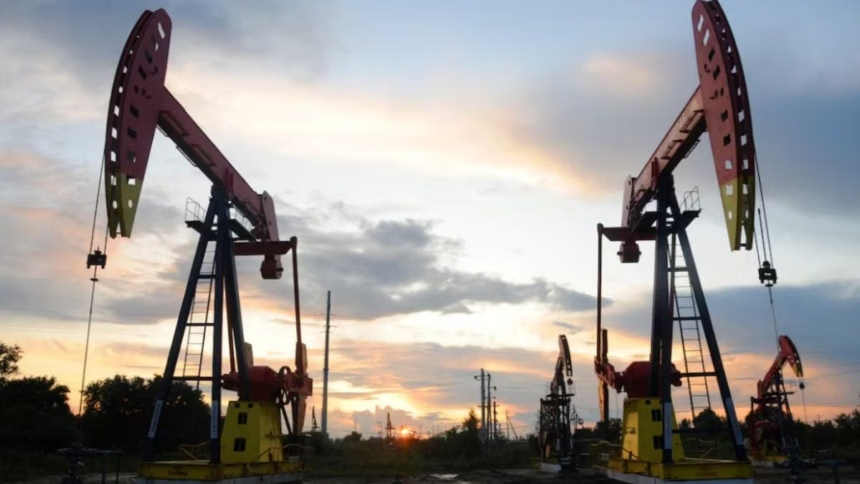
Oil prices moved higher on November 20, 2026, after Houthi missile attacks on Saudi Arabia’s capital, Riyadh, and reports of tanker incidents in the Strait of Hormuz revived concerns about Middle Eastern energy supplies. However, Brent and WTI crude remained on track for a third consecutive weekly decline amid expectations of a global supply surplus.
Oil Prices Rise Amid Fresh Middle East Tensions
Global oil prices gained on Friday as traders reacted to renewed geopolitical risks in the Middle East. The latest Houthi attacks on Riyadh increased concerns about the security of Saudi Arabia and the wider regional energy supply network.
According to Reuters, Brent crude futures rose by $0.79, or 0.9%, to $92.77 per barrel by 0404 GMT on November 20. US West Texas Intermediate (WTI) crude futures for December delivery increased by $0.25, or 0.3%, to $83.46 per barrel. The more actively traded January WTI contract gained 0.9% to $83.15.
The gains followed a period of pressure on crude prices, with both international benchmarks heading towards their third consecutive weekly decline.
The market reaction reflects the importance of geopolitical developments in determining short-term oil price movements. Even when global supplies appear sufficient, threats to major energy-producing regions and shipping routes can encourage traders to reassess their positions.Reuters+1
Houthi Attacks on Riyadh Increase Regional Security Concerns
The latest attacks have brought Saudi Arabia’s security situation back into focus for international energy markets.
The Iran-aligned Houthi movement launched missile attacks targeting Riyadh, according to reports published on November 20. The developments represent another escalation in the conflict involving Saudi Arabia and the Houthi group.
Saudi Arabia is one of the world’s most important oil producers and plays a significant role in global energy supply. Consequently, any escalation involving the kingdom attracts attention from oil traders, energy companies and governments.
The concern is not limited to direct damage to oil infrastructure. Continued military tensions can affect shipping confidence, insurance costs, transportation routes and expectations about future crude availability.
For international markets, the possibility of disruptions can influence prices even before an actual reduction in oil production or exports takes place.
The latest developments have therefore encouraged some buying in the crude market, although the overall weekly price trend remains negative.Investing.com South Africa+1
Strait of Hormuz Tanker Incidents Add to Oil Supply Fears
Alongside the attacks on Riyadh, developments in the Strait of Hormuz have added another layer of uncertainty to the global oil market.
According to Reuters, two oil tankers reportedly struck naval mines in the Strait of Hormuz and caught fire. The information was attributed to a statement from Iran’s Revolutionary Guards Navy carried by Iranian state media.
The Strait of Hormuz is one of the world’s most strategically important energy shipping routes. It connects the Persian Gulf with the Gulf of Oman and the Arabian Sea, providing a major export passage for crude oil and petroleum products from several Gulf producers.
Any disruption to tanker movement through this waterway can create significant concerns for international buyers.
Oil shipments from countries including Saudi Arabia, Iraq, Kuwait, the United Arab Emirates and Iran depend on the wider Gulf shipping network. Restrictions or security threats in the region could complicate export schedules and increase transportation costs.
The latest tanker reports have therefore contributed to concerns about the reliability of Middle Eastern oil supplies.
However, the reported incidents should not automatically be interpreted as a complete shutdown of the shipping route. Market participants are assessing the extent of the disruption and its potential impact on actual oil deliveries.Investing.com South Africa+2
Why Brent and WTI Are Still Heading for Weekly Losses
Despite Friday’s gains, the broader oil market remains under pressure.
Brent crude was expected to record a weekly decline of approximately 3.5%, while the December WTI contract was heading towards a fall of nearly 6%.
One of the main reasons is the growing expectation of a global oil supply surplus.
Crude shipments through the Strait of Hormuz had largely recovered to around pre-war levels, according to the Reuters report. This recovery helped ease some earlier concerns about the availability of Middle Eastern oil.
At the same time, expectations of stronger supply relative to demand have limited the market’s ability to sustain higher prices.
When traders anticipate that global production will exceed consumption, they generally become less willing to pay higher prices for immediate deliveries.
This creates a situation in which geopolitical tensions can produce short-term price increases without reversing the broader market direction.
The current movement in oil prices demonstrates this contrast. Fresh security concerns have encouraged buying, but expectations of additional supply continue to weigh on both major crude benchmarks.Reuters+1
OPEC+ Meeting Adds Another Factor to Oil Market Outlook
The upcoming OPEC+ meeting is another important factor influencing crude oil prices.
Ministers from the Organisation of the Petroleum Exporting Countries and allied producers, including Russia, are scheduled to hold meetings on November 29 to discuss their production policy for 2027.
OPEC+ decisions matter because the group coordinates oil production levels among some of the world’s major exporters. Production cuts can help support prices by limiting available supply, while decisions to increase output can add pressure to the market.
Analysts expect coordinated production cuts to remain an important consideration for traders ahead of the meeting.
The outcome could influence expectations about crude availability during the coming months. If producers maintain restrictions, the market could receive additional price support. However, a larger-than-expected increase in production could strengthen concerns about oversupply.
For now, traders are balancing geopolitical uncertainty against expectations of global supply growth.Investing.com South Africa+1
Russia’s Oil Industry Faces Additional Production Pressure
Developments involving Russia are also contributing to uncertainty in the global energy market.
According to Reuters, Ukrainian drone attacks on Russian refineries and export infrastructure have affected the country’s oil processing capacity. Combined crude processing volumes at Russian refineries reportedly fell by 45% since late October.
Any sustained reduction in refinery operations can affect the availability of petroleum products and influence international fuel markets.
Russia remains a major participant in global energy trade and is also part of the OPEC+ producer group. Disruptions to its refining and export infrastructure therefore have implications beyond its domestic energy industry.
Russian President Vladimir Putin also warned that Moscow would respond strongly following Ukrainian attacks on the bridge connecting Russia and Crimea. He said Russia was abandoning the idea of a moratorium on attacks against energy sectors and shipping.
These developments add another geopolitical risk to an oil market already dealing with tensions in the Middle East.Investing.com South Africa+1
What Rising Oil Prices Mean for India
India is particularly sensitive to international crude oil price movements because it imports a substantial share of its petroleum requirements.
When global crude prices increase, Indian oil marketing companies, refiners and other energy businesses can face higher input costs. The extent of the impact depends on the duration of the price movement, currency exchange rates, refining margins and domestic pricing decisions.
A sustained increase in crude prices could also create pressure on transportation, logistics, aviation and manufacturing businesses.
For Indian consumers, international oil prices are an important factor influencing domestic petrol, diesel and other petroleum product costs. However, retail fuel prices do not automatically change with every movement in global crude benchmarks.
Government taxation, refinery economics, marketing margins and pricing decisions also influence the final price paid by consumers.
The latest increase in Brent crude is therefore worth watching, particularly if Middle Eastern tensions continue or shipping disruptions become more widespread.
At the same time, the expected weekly decline in international crude benchmarks suggests that the market has not yet moved into a sustained upward trend.
Global Energy Markets Face Conflicting Signals
The broader energy market is dealing with two opposing developments. Geopolitical tensions are creating immediate concerns about supply security, while expectations of adequate global production are limiting the upside in crude prices.
The International Energy Agency (IEA) has also highlighted the long-term consequences of the ongoing Middle East conflict.
In its latest assessment, the agency warned that the conflict has caused an unprecedented disruption to global oil and gas trade. It also indicated that global oil demand could fall by more than 4% by 2035 if governments accelerate electrification, energy efficiency and the adoption of alternative fuels in response.
This points to another important factor shaping the energy industry. While short-term geopolitical events influence daily prices, longer-term changes in energy consumption could reshape global demand patterns.
For oil-producing countries, energy companies and investors, managing these changing conditions will remain a major challenge.Reuters+1
What Lies Ahead for Oil Prices?
The immediate direction of oil prices will depend on developments in the Middle East, the security of commercial shipping routes and expectations surrounding global crude supply.
Traders will closely monitor whether the Houthi attacks lead to further military escalation and whether tanker incidents in the Strait of Hormuz affect actual shipments.
The November 29 OPEC+ meeting will also be important in determining how producers approach output levels for 2027.
For now, Friday’s price increase reflects renewed geopolitical risk rather than a confirmed long-term shortage of crude oil.
If shipping conditions remain stable and expectations of a supply surplus continue, oil prices could remain under pressure despite occasional increases driven by regional tensions.
However, any major disruption to exports from the Gulf region could change market expectations quickly.
Key Takeaways
- Brent crude increased 0.9% to $92.77 per barrel, while December WTI rose 0.3% to $83.46 on November 20.
- Houthi missile attacks on Riyadh and reported tanker incidents in the Strait of Hormuz revived concerns about Middle Eastern oil supplies.
- Despite Friday’s gains, Brent and WTI remained on track for their third consecutive weekly decline because of expectations of a global supply surplus.
- The November 29 OPEC+ meeting could influence crude production expectations and the direction of global oil prices.
Frequently Asked Questions (FAQs)
1. Why did oil prices rise on November 20, 2026?
Oil prices increased following Houthi missile attacks on Riyadh and reports of tanker incidents in the Strait of Hormuz. These developments raised concerns about possible disruptions to Middle Eastern oil supplies.
2. What was the price of Brent crude on November 20, 2026?
Brent crude futures rose 0.9% to $92.77 per barrel by 0404 GMT, according to Reuters.
3. Why is the Strait of Hormuz important for global oil supplies?
The Strait of Hormuz is a major shipping route connecting the Persian Gulf with international markets. Several major oil-producing countries depend on it to transport crude oil and petroleum products.
4. How could rising crude oil prices affect India?
Higher international crude prices can increase import costs for India and create pressure on refiners, oil marketing companies, transportation businesses and other fuel-dependent industries. The impact on domestic fuel prices depends on several additional factors.