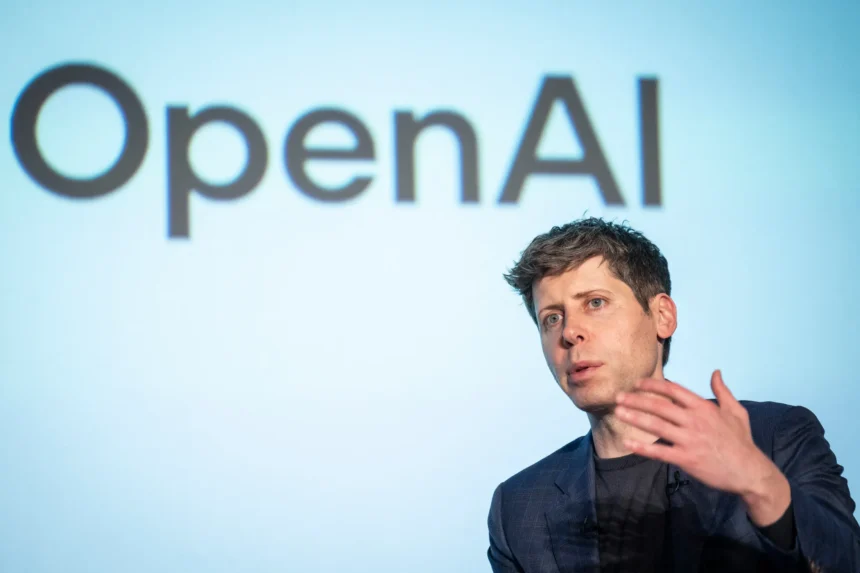
Top executives from major artificial intelligence companies met with G7 leaders this week as governments intensify efforts to shape AI regulation. The discussions come amid growing concerns about AI safety, national security, economic competitiveness, and the future governance of increasingly powerful AI systems.
The meeting between OpenAI, Anthropic, and DeepMind leadership and G7 officials highlights how AI policy has become one of the most important issues facing governments and technology companies. As artificial intelligence capabilities advance rapidly, policymakers are seeking ways to encourage innovation while addressing concerns related to security, misinformation, labor markets, and public trust.
The discussions reflect a broader shift in which AI is no longer viewed solely as a technology sector issue. It is increasingly being treated as a strategic economic and geopolitical priority by the world’s leading economies.
Why G7 Leaders Are Prioritizing Artificial Intelligence
Artificial intelligence policy has moved to the center of global political discussions because of the technology’s growing influence on economies, governments, and societies.
The G7 countries, which include Canada, France, Germany, Italy, Japan, the United Kingdom, and the United States, are seeking coordinated approaches to AI governance. Policymakers are concerned that inconsistent regulations across countries could create confusion for businesses while also weakening efforts to manage potential risks.
Governments are particularly focused on issues such as AI transparency, cybersecurity threats, deepfake content, election integrity, intellectual property rights, and workforce disruption.
The presence of executives from leading AI companies suggests policymakers want direct input from organizations building advanced AI models before introducing new regulatory frameworks.
OpenAI, Anthropic and DeepMind Hold Key Influence
The participation of leaders from OpenAI, Anthropic, and DeepMind reflects the growing influence of a small group of companies that are shaping the future of artificial intelligence.
OpenAI is widely recognized for developing advanced generative AI systems used by millions of individuals and businesses worldwide. Anthropic has emerged as a major player focused on AI safety and responsible development. Meanwhile, Google DeepMind remains one of the world’s most influential AI research organizations.
These companies are investing billions of dollars into model development, computing infrastructure, and AI research. Their technologies are increasingly being adopted across sectors including healthcare, finance, education, manufacturing, and software development.
As a result, their perspectives carry significant weight in policy discussions about how AI should be regulated globally.
AI Regulation Tensions Continue to Grow
A major theme emerging from global AI discussions is the tension between innovation and regulation.
Technology companies generally support clear rules but often caution against regulations that could slow innovation or reduce competitiveness. Governments, meanwhile, face pressure to establish safeguards before AI systems become even more powerful and widely deployed.
Different regions have adopted different approaches. The European Union has pursued a more comprehensive regulatory framework through its AI Act. The United States has largely focused on risk management and industry cooperation. Other countries are developing their own policies based on national priorities.
This divergence has created concerns about regulatory fragmentation, where businesses face different compliance requirements across markets.
G7 leaders are increasingly interested in finding areas of common agreement that could help create more predictable global standards.
National Security and Economic Competition Drive Discussions
Beyond safety concerns, AI is now deeply connected to economic competitiveness and national security.
Governments view advanced AI capabilities as critical to future productivity growth, technological leadership, and strategic influence. Nations are investing heavily in AI infrastructure, semiconductor supply chains, research programs, and talent development.
At the same time, concerns about cyber threats, autonomous systems, misinformation campaigns, and military applications of AI continue to grow.
These factors have transformed AI from a purely commercial technology into a strategic asset. The discussions between G7 leaders and AI executives therefore extend beyond business regulation and into broader questions of global power and technological leadership.
Many policymakers believe that countries capable of leading AI development could gain significant long-term economic advantages.
What the Meeting Means for Businesses and Consumers
The outcomes of these discussions could influence how AI technologies are developed, deployed, and regulated over the coming years.
Businesses are watching closely because future regulations may affect compliance requirements, product development strategies, data governance practices, and investment decisions. Technology companies want clarity regarding the rules that will govern advanced AI systems.
Consumers also have a stake in the debate. Decisions made by policymakers could affect privacy protections, content authenticity standards, transparency requirements, and safeguards against harmful uses of AI.
While no single meeting is expected to resolve every policy question, the growing collaboration between governments and industry leaders signals that AI governance is becoming a global priority.
The challenge ahead will be balancing innovation with accountability as artificial intelligence continues to reshape economies and societies.
Key Takeaways
• G7 leaders met with executives from OpenAI, Anthropic, and DeepMind to discuss AI governance and regulation.
• Governments are increasingly focused on AI safety, transparency, cybersecurity, and economic competitiveness.
• AI policy tensions center on balancing innovation with regulatory oversight.
• National security and technological leadership are becoming central themes in global AI discussions.
FAQ
Q1. Why are G7 leaders discussing artificial intelligence?
AI is increasingly affecting economic growth, security, productivity, and public policy, making it a priority issue for major economies.
Q2. Which AI companies participated in the discussions?
Reports indicate participation from leaders associated with OpenAI, Anthropic, and DeepMind, three of the most influential AI developers globally.
Q3. What are the main concerns surrounding AI regulation?
Key concerns include safety, misinformation, cybersecurity risks, privacy, intellectual property, and workforce impacts.
Q4. How could these discussions affect businesses?
Future AI regulations may influence compliance requirements, product development, data governance practices, and international market access.
(OpenAI G7 meeting, AI policy tensions, artificial intelligence regulation, Anthropic AI, DeepMind news, AI governance, G7 technology policy, AI safety debate, global AI regulation, technology industry news)