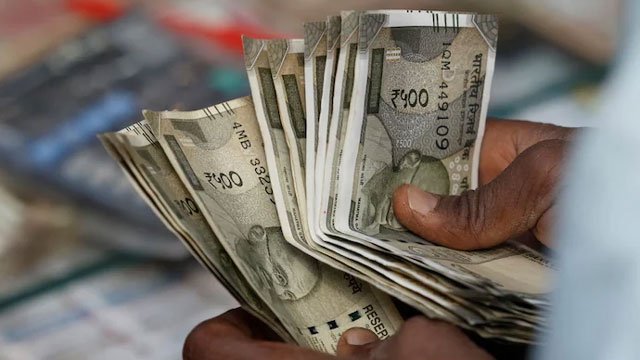
The Indian rupee weakened sharply to 93.31 per dollar as rising crude oil prices and escalating Middle East tensions triggered capital outflows and currency pressure, raising concerns about inflation, import costs, and near-term macroeconomic stability.
Rupee slide linked to crude oil and geopolitical stress
The rupee fall to 93.31 per dollar reflects immediate stress from surging crude prices and global uncertainty. India imports a majority of its crude oil, which means any spike in prices directly impacts dollar demand.
As oil crossed the $100 per barrel mark, importers rushed to hedge dollar exposure, pushing the rupee lower. At the same time, tensions in the Middle East disrupted risk sentiment across global markets.
The currency move is part of a broader emerging market reaction, where investors typically exit riskier assets during geopolitical crises and shift funds to safer currencies like the US dollar.
Impact of weak rupee on inflation and economy
A weaker rupee increases the cost of imports, particularly crude oil, electronics, and industrial inputs. This feeds directly into inflation, which remains a key concern for policymakers.
Higher inflation reduces consumer purchasing power and increases input costs for businesses. Sectors like aviation, logistics, and manufacturing face immediate margin pressure due to rising fuel and import expenses.
For policymakers, the challenge intensifies. The Reserve Bank of India may need to maintain tighter monetary conditions to control inflation, even if growth slows.
This creates a complex situation where currency stability, inflation control, and economic growth pull policy in different directions.
Foreign outflows and dollar demand spike
One of the key drivers behind the rupee depreciation is sustained foreign institutional investor outflows. When global uncertainty rises, funds move out of emerging markets like India.
These outflows increase demand for dollars while reducing supply, weakening the rupee further. Equity market declines often amplify this trend, as foreign investors sell stocks and repatriate funds.
Additionally, oil marketing companies and large importers increase dollar purchases during such periods, adding to the pressure on the currency.
This combination of external and domestic demand factors creates sharp, sudden moves in the exchange rate.
RBI intervention and currency management strategy
The Reserve Bank of India has historically intervened in currency markets to smooth volatility rather than defend a specific level. It uses foreign exchange reserves to manage sharp fluctuations.
India holds significant forex reserves, which provide a buffer against extreme currency swings. However, continuous intervention is not always sustainable if global pressures persist.
The central bank is expected to monitor liquidity conditions, inflation trajectory, and global cues before making any aggressive moves.
Market participants will closely track RBI actions, including potential liquidity tightening or open market operations, to stabilize the rupee.
What happens next for rupee and markets
The direction of the rupee will depend heavily on crude oil trends and geopolitical developments in the Middle East. If oil prices remain elevated, pressure on the currency is likely to continue.
Investors will also watch US monetary policy signals, as higher interest rates in the United States strengthen the dollar globally.
For India, stable capital inflows and controlled inflation will be key to preventing further depreciation. Export-oriented sectors may benefit from a weaker rupee, but overall macro risks increase.
In the short term, volatility is expected to remain high across currency and equity markets.
Takeaways
- Rupee weakened to 93.31 per dollar due to rising crude prices and geopolitical tensions
- Higher oil import costs are increasing inflation and economic pressure in India
- Foreign investor outflows and strong dollar demand are driving currency depreciation
- RBI is likely to intervene selectively to manage volatility rather than defend a fixed level
FAQs
Why did the rupee fall to 93.31 against the dollar?
The fall was driven by a surge in crude oil prices, increased dollar demand from importers, and global risk aversion due to Middle East tensions.
How does a weak rupee affect common consumers?
It leads to higher fuel prices, costlier imports, and overall inflation, which reduces purchasing power.
Will the RBI take action to stabilize the rupee?
The RBI may intervene in forex markets and adjust liquidity to manage volatility, but it typically avoids fixing a specific exchange rate.
Is a weaker rupee always negative for the economy?
Not entirely. Exporters can benefit, but prolonged weakness increases inflation and macroeconomic risks.